

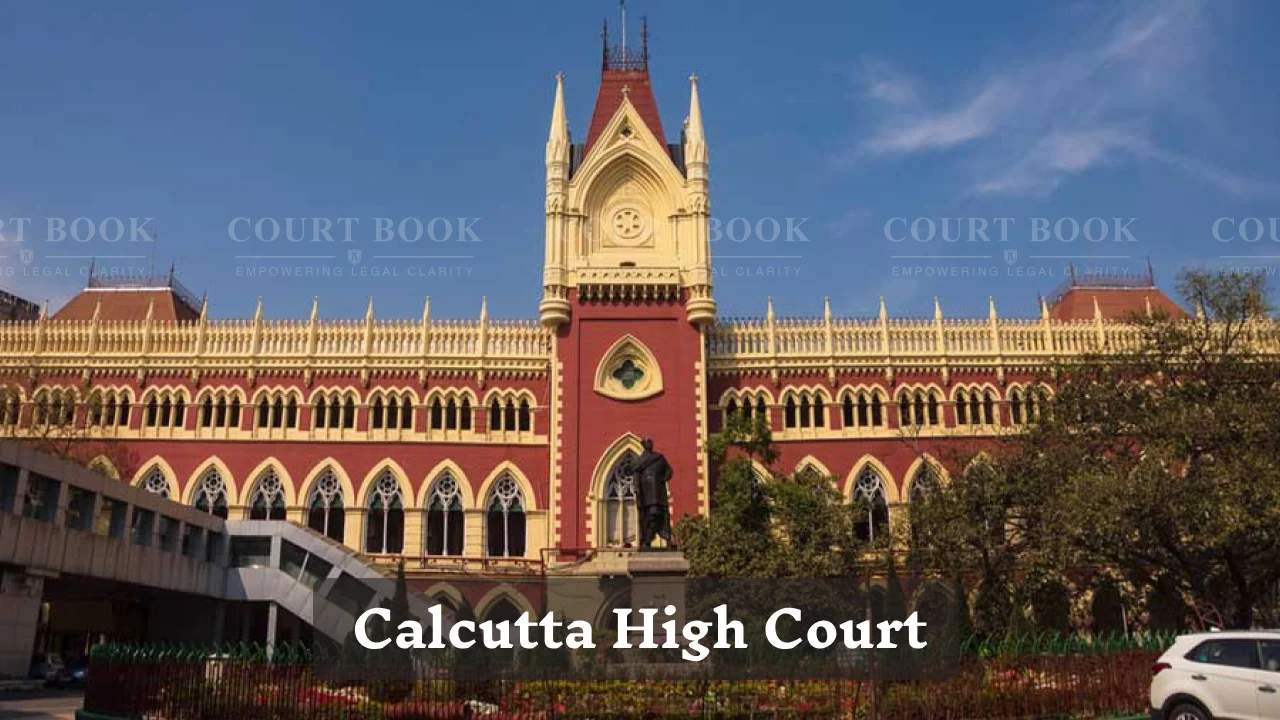
In a significant ruling on pay parity in government service, the Calcutta High Court has directed the Union of India to step up the salary of a senior officer who was drawing less pay than his junior in the same cadre.
The Division Bench of Chief Justice Sujoy Paul and Justice Partha Sarathi Sen set aside an earlier order of the Central Administrative Tribunal, Calcutta Bench that had rejected the officer’s plea.
The court delivered its judgment on February 3, 2026.
Read also:-Gujarat HC Clears Way for Police Recruit, Says Minor, Quashed FIR Can’t Block Appointment
Background of the Case
The petitioner, Pallab Kanti Chattopadhyay, had approached the Tribunal seeking “stepping up” of his pay - a service law principle that allows a senior employee’s salary to be raised if a junior in the same post and cadre is drawing higher pay.
He argued that throughout his career, he had been senior to his colleague Amitabha Chakraborty. Except for a brief period when the junior held an ad hoc ex-cadre post, the petitioner consistently drew equal or higher pay.
However, after both were directly recruited as Field Officers on the same date in June 1988, the junior began receiving higher pay. The department fixed the petitioner’s salary at Rs. 1640, while his junior was placed at Rs. 1760 in the same pay scale.
The petitioner claimed this disparity was unjustified and sought correction.
Tribunal’s View
The Tribunal had dismissed the application in 2012. It held that the petitioner had not filed a seniority list to prove he was senior. It also observed that part of the cause of action arose before November 1, 1982 - before the Tribunal came into existence - and therefore it lacked jurisdiction.
Additionally, the Tribunal reasoned that the principle of stepping up would not apply because the junior’s earlier pay had been different due to his ad hoc posting as Junior Research Assistant.
Arguments Before the High Court
Before the High Court, counsel for the petitioner presented a detailed comparative chart showing service history, promotions, and pay drawn by both officers.
It was emphasized that:
• The petitioner was never junior to the private respondent.
• After reversion from the ad hoc post, both officers were drawing the same pay as Junior Draftsmen.
• Upon promotion as Draftsman, the petitioner drew more pay than his junior.
• Both were appointed as Field Officers on the same day in 1988.
The petitioner clarified he was not challenging the junior’s earlier ad hoc promotion or pay fixation. His sole request was pay parity from the date the junior began drawing more salary in the same cadre.
The department, however, supported the Tribunal’s decision.
Court’s Observations
The Bench carefully examined the service records and noted that the petitioner’s seniority was never disputed by the department.
“The Tribunal miserably failed to see that no attack is made by the petitioner to the ad hoc promotion,” the court observed.
The judges made it clear that the dispute was limited to pay stepping up from 1988 - well after the Administrative Tribunals Act came into force. Therefore, the Tribunal had full jurisdiction to decide the issue.
On merits, the court relied on the Supreme Court’s ruling in Commissioner & Secretary to Govt. of Haryana vs. Ram Sarup Ganda (2011), which laid down that stepping up applies when:
• Senior and junior hold the same post
• They are in the same cadre
• They are in the same pay scale
• The junior draws more pay
Applying this principle, the Bench found that both officers were in the same cadre and pay scale when appointed as Field Officers. The petitioner was senior and had even drawn more pay at earlier stages.
The court held that the junior’s earlier ad hoc stint could not justify permanent pay advantage, especially when that pay was not protected after reversion.
The Decision
Setting aside the Tribunal’s 2012 order, the High Court allowed the writ petition.
The court directed the respondents to step up the petitioner’s pay in the scale of Rs. 1640–2900 at par with his junior from the date the disparity began.
All consequential benefits are to be granted within 90 days from production of the judgment.
The writ petition stands allowed.
Case Title: Pallab Kanti Chattopadhyay vs Union of India & Ors.
Case No.: C.O.C.T. 2 of 2013
Case Type: Civil Revisional Jurisdiction (Writ Petition)
Decision Date: 03 February 2026
Download Judgment

