

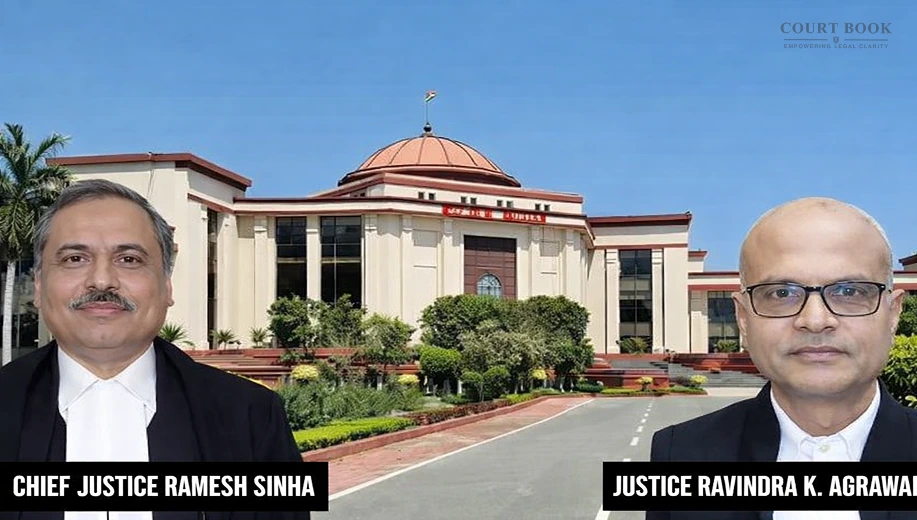
The Chhattisgarh High Court has expressed serious concern over the conduct of police officials in a case arising from a minor dispute at a cinema hall in Durg district, stressing that even routine law enforcement actions must strictly respect constitutional rights. While stopping short of granting compensation or ordering immediate punitive action, the court directed the police leadership to review the conduct of the officers involved and ensure strict compliance with arrest and custodial safeguards.
Background of the Case
The case stemmed from an incident on the night of 22 October 2025 at PVR Cinemas in Surya Mall, Bhilai. According to the petitioners, a trivial and accidental physical contact occurred between the wife of one petitioner and another moviegoer while entering the seating area. A brief verbal exchange followed, after which theatre staff called the police.
Read also:- Delhi HC Allows Cash Transfer for School Uniforms, Clears Govt Policy Under RTE Act
The situation escalated when police personnel from Smriti Nagar Chowki arrived. The petitioners alleged that despite the minor nature of the dispute, the police registered multiple criminal cases against them under the Bharatiya Nyaya Sanhita and detained them overnight. They claimed they were subjected to physical and mental harassment, delayed medical examination, illegal handcuffing, and public humiliation, including being paraded on city roads.
The State, however, strongly denied these allegations. It argued that the police acted on a written complaint by a woman who accused the petitioners of misbehaviour and assault, and that CCTV footage and medical reports supported the prosecution version. The State also claimed that any appearance of public parading was due to a mechanical failure of a police vehicle.
Read also:- Supreme Court Declines to Intervene in Lawyer Contempt Case, Urges Apology to Jharkhand HC
Arguments Before the Court
Counsel for the petitioners contended that the arrests violated settled Supreme Court guidelines laid down in Arnesh Kumar v. State of Bihar, Satender Kumar Antil v. CBI, and D.K. Basu v. State of West Bengal. It was argued that the alleged offences did not warrant immediate arrest and that the police ignored mandatory safeguards meant to protect personal liberty.
On the other hand, the Advocate General maintained that the petitioners were not innocent victims, asserting that they had assaulted police personnel and that one constable had even suffered a fracture. The State insisted that all procedures, including production before a magistrate and medical examination, were followed lawfully.
Read also:- Supreme Court Grants Bail to Bhopal Dentist in Wife’s Death Case, Flags Gaps in Dowry Allegations
Court’s Observations
A Division Bench comprising Chief Justice Ramesh Sinha and Justice Ravindra Kumar Agrawal noted that the allegations raised serious questions about the manner in which police power was exercised. The court observed that claims of unlawful arrest, delayed medical care, and humiliation “strike at the very core” of Articles 21 and 22 of the Constitution, which protect life, liberty, and dignity.
At the same time, the bench acknowledged the affidavit filed by the Director General of Police, which denied custodial torture and justified police actions as lawful. However, after examining the record, including video footage and prior judicial observations, the court found that certain aspects of the incident revealed procedural lapses and warranted concern.
“The police authorities are expected to act with greater care, diligence, and adherence to established safeguards,” the bench observed, underlining that even unintentional lapses can erode public confidence in the rule of law.
Read also:- Chhattisgarh HC Upholds Gift Deed Cancellation, Says Senior Care Can Be an Implied Condition
Decision
Declining to engage in a detailed fact-finding exercise at this stage, the High Court disposed of the writ petition with clear directions. It ordered the Director General of Police to remind all concerned officers of their constitutional obligations and the binding Supreme Court guidelines governing arrest, remand, and custodial treatment.
The court also directed that any deviation from these safeguards must invite prompt departmental action. Importantly, it recorded strong disapproval of the conduct attributed to the Station House Officer involved, noting that his actions reflected a “casual and hasty approach” to the exercise of police powers.
The Director General of Police was instructed to examine the officer’s conduct at an appropriate level, take corrective or disciplinary measures if required, and issue standing instructions across the force to prevent recurrence of such incidents. With these directions, the petition was disposed of without costs.
Case Title:- Sujeet Sao & Others v. State of Chhattisgarh & Others
Case Number:- Writ Petition (Criminal) No. 11 of 2026
Date of Order:- 21 January 2026
Counsel for Petitioners:
• Mr. Awadh Tripathi, Advocate
Counsel for State:
• Mr. Vivek Sharma, Advocate General
• Assisted by Mr. Praveen Das, Additional Advocate General


