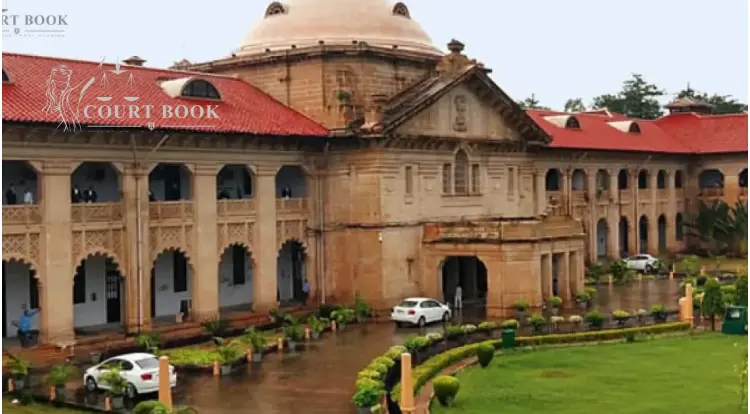
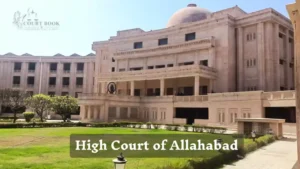
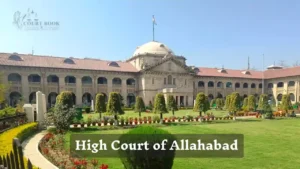
The Lucknow Bench of the Allahabad High Court, the Division Bench delivered a detailed verdict in a chilling acid attack case that claimed the lives of two women in Pratapgarh district.
The case, Jagdamba Harijan vs State of U.P., arose from a midnight attack in May 2014 that left a young bride and her mother-in-law with severe burn injuries. Both later died during treatment.
The High Court upheld the conviction but modified the sentence.
Background of the Case
According to the prosecution, the incident occurred in the intervening night of May 7–8, 2014, at around 2:00 AM in village Dhandhar, Pratapgarh district.
Read also:- Karnataka HC Makes Crowd Control SOP Binding Till New Law Is Enacted After Tragedy Concerns
The complainant, Dinesh Verma, stated that he heard screams from inside his house. When he rushed in with a torch, he saw acid being poured on his mother Phoolan Devi and his sister-in-law Suman Devi, who were sleeping on the same cot.
An FIR was registered on May 9, 2014, under Sections 326A (acid attack), 452 (house trespass), and 323 IPC. After both women died due to burn-related complications, Section 304 IPC (culpable homicide not amounting to murder) was added.
Medical reports confirmed that both victims suffered extensive deep burns. The cause of death was septicemic shock resulting from ante-mortem burn injuries.
The bench carefully examined arguments regarding delay in filing the FIR, alleged inconsistencies in witness testimony, and claims of defective investigation.
On the delay in filing the FIR, the court noted that the family was prioritising medical treatment. The judges observed that “providing immediate medical aid must come before lodging an FIR in such grave situations.”
The defence had argued that the deaths occurred due to septicemia and not directly due to the acid attack. Rejecting this, the bench held that septicemia was a consequence of deep acid burns. The judgment noted that lack of treatment, even if assumed, would not break the chain of causation because the injuries themselves required urgent medical care.
The court also addressed claims that the eyewitnesses were “interested witnesses” since they were family members. The bench remarked that presence of close relatives at the scene was natural, especially in a midnight attack inside the house. There was no reason shown why they would falsely implicate the accused.
Importantly, the forensic report confirmed traces of sulphuric acid on seized materials, strengthening the prosecution case.
The High Court concluded that the prosecution had successfully proved the charges beyond reasonable doubt under Sections 304, 326A and 452 IPC.
The bench found no infirmity in the trial court’s appreciation of evidence and upheld the conviction.
However, the court turned to the question of punishment.
Read also:- J&K High Court Sets Aside CAT Order Granting Post-Facto Nod for Professor’s UAE Job Without Prior Sanction
The trial court had awarded life imprisonment. The defence submitted that the accused had already spent nearly 14 years in jail and had no prior criminal record.
Balancing the gravity of the offence with principles of reformation, the High Court reduced the life sentence to a fixed term of 14 years of rigorous imprisonment, while maintaining the fines and other penalties.
The court directed that the appellant shall be released after completing the 14-year term, subject to legal calculations of custody and remission.
With this modification, the appeal was partly allowed.
Case Title:- Jagdamba Harijan vs State of Uttar Pradesh
Case Number:- Criminal Appeal No. 1841 of 2018
Bench:-
• Justice Rajesh Singh Chauhan
• Justice Abdhesh Kumar Chaudhary
Date:- Delivered on: 12 February 2026
Download Order






-300x169.webp)