

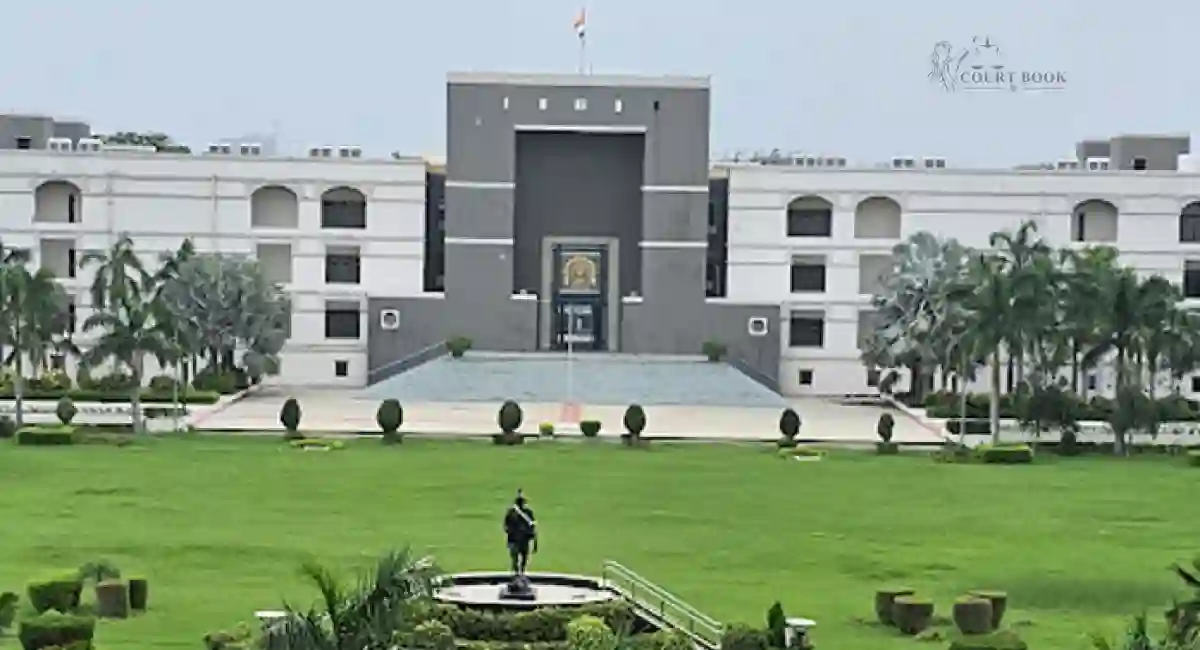
The Gujarat High Court has clarified an important procedural question: Can a party file an appeal if a trial court refuses to condone delay in restoring a dismissed civil suit?
Justice Devan M. Desai answered this in the affirmative, holding that such an appeal is maintainable under the Civil Procedure Code. The Court set aside a district court order that had rejected a civil miscellaneous appeal on the ground that it was not maintainable.
Read also:-Sikkim High Court Closes NHM Transfer Dispute After Amicable Settlement Between Employee
Background of the Case
The petition was filed by Rathva Meenaben Pahadsinh and another, who were the original plaintiffs in a civil suit.
Their Regular Civil Suit No. 227 of 2016 was dismissed in November 2017 under Order IX Rule 8 of the Civil Procedure Code after they remained absent when the matter was called out.
According to the petitioners, they came to know about the dismissal only in August 2019 during correspondence with the Police Commissioner’s office. They then filed an application under Order IX Rule 9 of the Code to restore the suit, along with a request to condone the delay under Section 5 of the Limitation Act.
However, the trial court refused to condone the delay and dismissed the restoration plea in September 2021. The petitioners challenged this order before the District Court by filing a Civil Miscellaneous Appeal.
The District Court, however, dismissed the appeal itself, holding that such an appeal was not maintainable.
This led the petitioners to approach the High Court under Articles 226 and 227 of the Constitution.
Read also:-Patna High Court Dismisses Plea for Compensation Over Alleged Illegal Detention, Flags Lapses
Petitioners’ Arguments
Counsel for the petitioners argued that when a delay condonation application is rejected, the main restoration application under Order IX Rule 9 effectively stands dismissed.
He relied on Order XLIII Rule 1(c) of the Civil Procedure Code, which allows an appeal against an order rejecting an application to set aside dismissal of a suit.
The counsel cited Supreme Court decisions including Jaswant Singh v. Parkash Kaur and Shyam Sundar Sarma v. Pannalal Jaiswal, contending that the word “rejecting” includes rejection on any ground - including limitation.
He submitted that the application under Section 5 of the Limitation Act was not independent. It was part of the main restoration plea. Therefore, once delay was refused, the restoration plea also failed, making the order appealable.
Read also:-Madras High Court Rules Grandparents Not ‘Family’ for Stamp Duty Concession in Settlement Deeds
Court’s Observations
Justice Desai closely examined Order XLIII Rule 1(c), which provides that an appeal shall lie from “an order under Rule 9 of Order IX rejecting an application for an order to set aside the dismissal of a suit.”
The Court noted that rejecting a delay condonation application in such cases “virtually amounts to dismissal” of the restoration application itself.
Referring to Supreme Court precedent, the bench observed:
“When the right of appeal has been given on ‘rejecting’ an application, the said right cannot be limited only to cases where the application is rejected on merits.”
The Court explained the distinction between Order IX Rule 9 and Rule 13. While Rule 9 applies when a suit is dismissed due to the plaintiff’s absence, Rule 13 applies when an ex parte decree is passed against a defendant.
Yet, in both situations, if the restoration application is rejected, an appeal is provided under Order XLIII.
The judge said that once delay is not condoned, “the Court has rejected the application under Rule 9 of Order IX,” and therefore, the statutory right of appeal cannot be denied.
Read also:-Gujarat HC Sends 17-Year-Old Girl to Mehsana Children Home After She Refuses to Return
Error by the District Court
The High Court found that the Additional District Judge had committed a “jurisdictional error” by holding that the civil miscellaneous appeal was not maintainable.
The law, as interpreted by the Supreme Court, makes it clear that rejection of a restoration application - even on the ground of limitation - is appealable.
Decision
Allowing the petition, the High Court quashed and set aside the District Court’s order dated June 30, 2022.
The matter has been remanded to the District Court with a direction to decide the civil miscellaneous appeal for condonation of delay on merits and strictly in accordance with law.
The Court clarified that the District Court must decide the matter independently, without being influenced by observations made in the High Court’s judgment.
With this, the petition was allowed.
Case Title: Rathva Meenaben Pahadsinh & Anr. v. Solanki Karansinh Gemalsinh & Ors.
Case No.: R/Special Civil Application No. 19963 of 2022
Decision Date: 02 February 2026


