

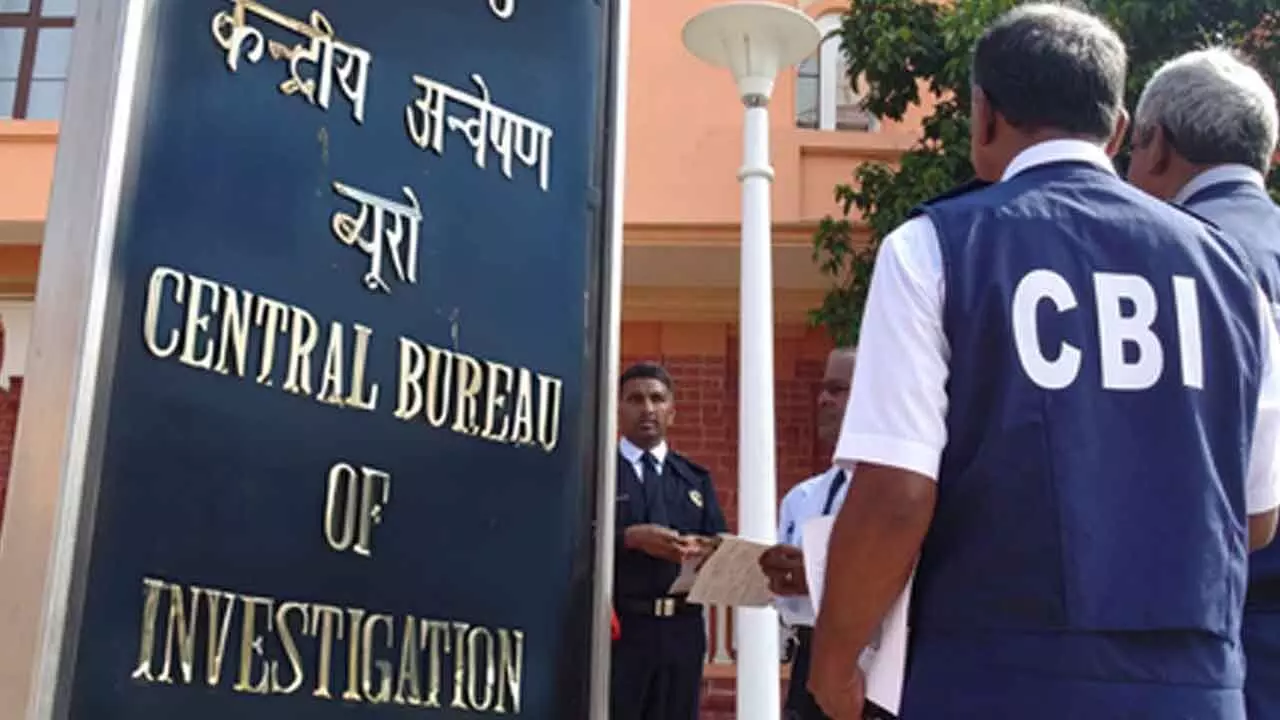
The Himachal Pradesh High Court has dismissed a criminal revision petition filed by Pali Diwan, refusing to interfere with a trial court order that declined to discharge her in a Central Bureau of Investigation (CBI) case linked to alleged forged documents used to obtain government grant-in-aid.
Justice Rakesh Kainthla, while pronouncing the judgment, made it clear that at the stage of framing charges, the court only needs to see whether there is a prima facie case - not whether the accused will ultimately be convicted.
Read also:-Bombay High Court Allows Single Mother to Change Daughter’s Name, Caste in School Record
Background of the Case
The case arises out of a CBI chargesheet alleging that Pali Diwan, a partner/director associated with M/s Resource Foods Private Limited, applied for a non-recurring grant-in-aid from the Ministry of Food Processing Industries (MoFPI) for setting up an Integrated Food Chain Project in Nalagarh, Himachal Pradesh.
According to the prosecution, forged and fabricated invoices and certificates were submitted along with the proposal to secure the grant. The CBI alleged that quotations sent by vendors were altered - including changes in price, dates, and names - before being submitted to the Ministry.
Statements recorded during investigation suggested that certain vendors denied issuing the invoices relied upon for the grant. One quotation allegedly saw its value jump from ₹7.8 lakh to ₹1.18 crore. Another was said to have been altered from ₹1.72 lakh to ₹39.5 lakh.
On this basis, the trial court had earlier refused to discharge Diwan, finding sufficient grounds to proceed.
Read also:-Jharkhand HC Seeks Answers on 437 Custodial Deaths, Orders Home Secretary to Clarify Judicial
Petitioner’s Arguments Before the High Court
Appearing for the petitioner, counsel argued that merely applying for a government grant cannot amount to a criminal act. It was contended that there was no direct allegation that Diwan personally forged or submitted fake documents.
The defence also raised technical objections:
• Photocopies of invoices were relied upon instead of originals.
• The handwriting expert’s opinion was based on photocopies.
• Specimen signatures were allegedly taken without proper legal procedure.
• Criminal law does not recognise automatic liability merely because someone is a director or partner.
The counsel pressed that there was no material showing her active role in any forgery.
Read also:-Karnataka High Court Cuts Jail Term in ATM Cloning Case, Enhances Fine to ₹2 Lakh Each
CBI’s Stand
The CBI, through its Special Public Prosecutor, maintained that Diwan was not being implicated simply because of her position in the company. Instead, she was allegedly part of a conspiracy to submit forged documents to secure public funds.
The agency argued that the photocopies submitted to the Ministry bore original signatures and that vendors had clearly denied issuing the invoices relied upon.
It was also submitted that original documents could not be traced despite efforts, but that this was a matter to be tested during trial - not at the stage of discharge.
Read also:-Karnataka High Court Cuts Jail Term in ATM Cloning Case, Enhances Fine to ₹2 Lakh Each
Court’s Observations
Justice Kainthla carefully examined Supreme Court precedents on the scope of discharge under Section 227 of the Criminal Procedure Code.
The court reiterated that at the stage of framing charges, a detailed evaluation of evidence is not required.
Quoting from settled law, the bench observed that the court must only see whether “there are sufficient grounds to proceed” and not whether conviction is certain.
On the argument regarding conspiracy, the court noted that direct evidence of conspiracy is rare. It can be inferred from circumstances showing a meeting of minds.
The court recorded that statements collected during investigation indicated that quotations were altered before being submitted to the Ministry. “Prima facie, these statements show that the petitioner had submitted a proposal annexing forged documents,” the judgment noted.
On the issue of specimen signatures, the High Court rejected the challenge, relying on Supreme Court authority which recognises the power of investigating agencies to obtain specimen handwriting during investigation.
Regarding photocopies, the court said this question could only be decided during trial. The absence of original documents at this stage could not automatically entitle the accused to discharge.
Importantly, the bench clarified that Diwan was not being prosecuted merely because she was a director or partner. The allegation, according to the record, was of active submission of forged material.
Read also:-Supreme Court Upholds Life Term in 2009 Indore Murder Case, Cites Strong Circumstantial Evidence
The Decision
Concluding that a prima facie case exists, the High Court refused to interfere with the trial court’s order.
“Learned Trial Court had rightly held that a prima facie case exists for framing charges against her, and no interference is required,” the court held.
The criminal revision petition was dismissed.
The court further clarified that its observations were limited to the disposal of the petition and would not affect the merits of the trial.
Meta Title (English)
HP High Court Dismisses Pali Diwan Discharge Plea
Meta Title (Hindi)
एचपी हाई कोर्ट ने पाली दीवान की याचिका खारिज की
Meta Description
Himachal Pradesh High Court dismisses Pali Diwan’s plea for discharge in CBI grant fraud case, says prima facie evidence exists to frame charges.
Meta Keywords
Himachal Pradesh High Court, Pali Diwan case, CBI grant fraud, discharge application dismissed, MoFPI grant case, Section 227 CrPC, forged invoices case, criminal conspiracy IPC, HP High Court judgment 2026, CBI cases in India
Case Title & Details
• Case Title: Pali Diwan vs Central Bureau of Investigation
• Case No.: Cr. Rev. No. 532 of 2024
• Case Type: Criminal Revision Petition
• Decision Date: 1 January 2026


