

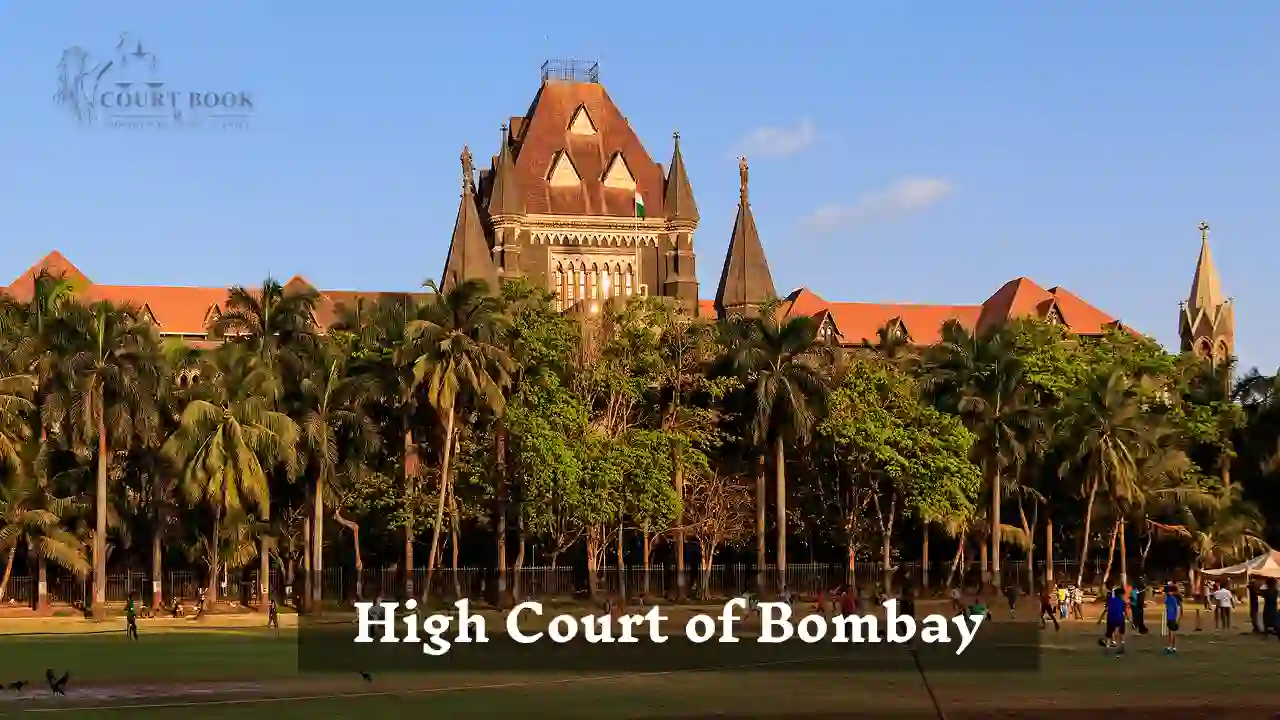
A routine-looking permission to cut coconut trees in Pune turned into a sharp reminder on environmental law, as the Bombay High Court pulled up civic authorities for following the rulebook only on paper. While the trees were already gone, the court used the case to underline why public notices on tree felling cannot be vague or cosmetic.
The matter was heard by a Division Bench of Justices Bharati Dangre and Manjusha Deshpande, who delivered an oral judgment after hearing detailed arguments from both sides.
Read also:-Humiliation Is Not Justice: Allahabad High Court Strikes Down Placard Punishment for Student
Background of the Case
The dispute arose from permission granted by the Tree Authority Department of the Pune Municipal Corporation (PMC) to cut four coconut trees located at Erandwane, Pune.
The application was made by a private landowner in July 2020. Shortly after, notices were issued inviting objections, and by August 2020, approval was granted. The trees were eventually felled.
However, Abhijeet Mohan Anturkar, a resident from the neighbourhood, approached the High Court claiming that the entire exercise violated the Maharashtra (Urban Areas) Protection and Preservation of Trees Act, 1975.
His core argument was simple: the public notice published in the newspaper did not give enough details for citizens to object meaningfully.
What the Petitioner Argued
Counsel for the petitioner told the court that the newspaper notice published in Lokmat merely mentioned zones and departments, without identifying:
• the exact location of the trees
• the number of trees
• the reason for cutting
• who had sought the permission
“The law expects transparency, not a scavenger hunt,” the submission suggested in substance.
The petitioner argued that directing citizens to search the PMC website for details defeats the very purpose of public participation.
Court’s Observations
The bench agreed. Referring to an earlier binding judgment in Rohit Manohar Joshi v. Tree Authority, Thane, the court stressed that public notices must be meaningful, not mechanical.
The judges noted that a person can raise objections only if they know what is being cut and where.
“The notice is a perfunctory exercise,” the bench observed, adding that citizens cannot be expected to browse municipal websites to locate details buried under multiple permissions.
The court also highlighted that while notices pasted directly on the trees did contain details, there was no reason why the same information could not have been published in newspapers.
On the Felling Already Done
By the time the case was heard, the four coconut trees had already been cut. Because of this, the petitioner did not press for reversal or restoration.
Acknowledging this, the bench said, “As on today, practically no relief can be granted.”
Still, the judges made it clear that this did not make the lapse irrelevant.
Warning on Legal Consequences
The court drew attention to Section 21 of the Trees Act, which treats illegal felling as an offence. It allows not only fines equal to the value of the tree but also imprisonment.
Importantly, the bench noted that even officials who fail to follow the procedure can face consequences.
“The contravention of the provisions of the Act must be looked into with all seriousness,” the court said.
Directions Issued
While disposing of the writ petition, the court issued broader directions:
• Tree Officers must record reasons in writing while granting permissions
• Such records must be preserved for judicial scrutiny
• Municipal bodies must strictly follow earlier High Court guidelines
• The order is to be circulated across all municipal corporations and councils in Maharashtra
The contempt petition filed along with the writ petition was also disposed of as not pressed.
Read also:-Supreme Court Clears Delay Hurdle in Land Compensation Appeals, Applies Limitation Act to
Court’s Decision
With these observations and directions, the Bombay High Court disposed of the writ petition, closing the case but leaving behind a clear message: environmental safeguards cannot be reduced to formalities.
Case Title: Abhijeet Mohan Anturkar v. Tree Authority Dept., PMC & Ors.
Case No.: Writ Petition No. 3752 of 2021
Decision Date: 02 February 2026


