

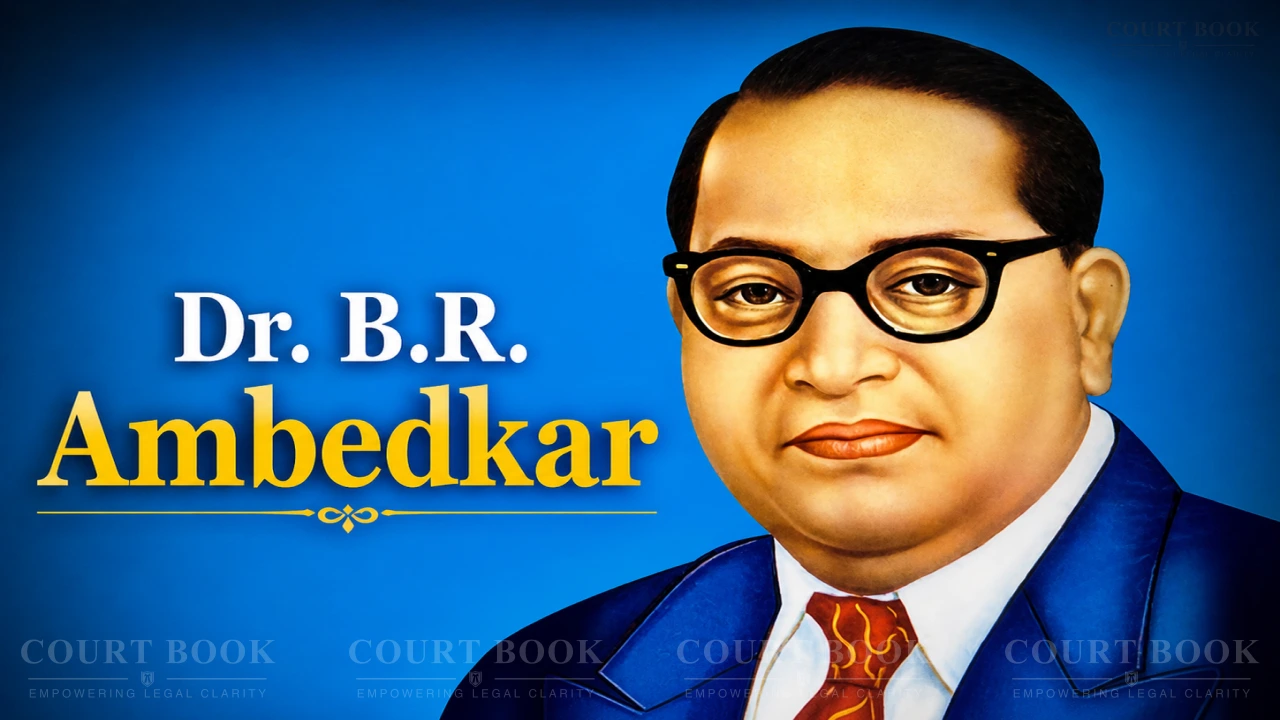
In a striking order that blended law with reform, the Madras High Court quashed criminal proceedings against two accused after finding that their apology was sincere and backed by meaningful corrective actions. The case arose from an incident involving alleged disrespect to the image of Dr. B.R. Ambedkar.
Background of the Case
The prosecution alleged that during celebrations marking Ambedkar’s birth anniversary, posters bearing his image were put up at a bus stand in Sivagangai district. One accused allegedly tore a poster and acted in a disrespectful manner, while the other recorded and circulated the video on social media.
Based on a complaint, police registered an FIR under the Scheduled Castes and Scheduled Tribes (Prevention of Atrocities) Act, 1989. After investigation, the case was taken on file as a sessions case.
Later, the accused approached the High Court seeking quashing of proceedings on the basis of a compromise with the complainant.
Justice L. Victoria Gowri noted that the case could not be treated as a routine private dispute.
“The incident concerns not merely individual conduct but touches upon constitutional values,” the Court observed.
The judge highlighted that Dr. B.R. Ambedkar represents ideals of justice, equality, and fraternity, and any act affecting his image carries broader social implications.
Before considering the compromise, the Court had earlier directed the accused to undertake specific reformative steps. These included reading books on Ambedkar’s life, distributing copies to school students, paying costs to a cancer institute, and appearing for an oral test before the Court.
On the next hearing, the Court verified compliance not just through documents but by interacting with the accused. The bench recorded that they had “read, understood and reflected” on Ambedkar’s contributions and expressed visible remorse.
The Court emphasized that in appropriate cases, justice need not be limited to punishment alone.
“There exists a reformative path where accountability is achieved through education, reflection and social responsibility,” the bench noted.
It found that the accused had undergone a genuine transformation and that the complainant had voluntarily agreed to settle the matter.
While dealing with the case, the Court also issued broader directions to the State of Tamil Nadu. It asked the government to consider including lessons on Dr. B.R. Ambedkar in school curriculum, focusing on his role in the Constitution and social reform.
The Court stressed that constitutional awareness must be taught early to prevent ignorance that can lead to social discord.
Allowing the petition, the Court quashed the criminal proceedings pending before the trial court. It accepted the compromise memo and recorded compliance with all earlier directions, including restitution, educational work, and payment of costs.
The Court also directed the State authorities to report compliance with its educational directions in due course.
Case Details
Case Title: G. Rajesh @ Rajeshkumar & Anr vs State of Tamil Nadu
Case Number: Crl.O.P.(MD) No.22813 of 2025
Judge: Justice L. Victoria Gowri
Decision Date: 30 April 2026
Download Order

