

The Allahabad High Court declined to interfere with lower court orders rejecting a plea seeking registration of an FIR against a Member of Parliament over an alleged controversial statement. The Court emphasized the importance of freedom of speech and the need for concrete material before initiating criminal action.
Background of the Case
The petition was filed by Simran Gupta under Article 227 of the Constitution, challenging two orders passed by courts in Sambhal. The petitioner had sought registration of an FIR under Section 152 of the Bharatiya Nyaya Sanhita, 2023, alleging that a statement made by an MP during a televised interview in January 2025 threatened the sovereignty and unity of India.
According to the plea, the statement referred to a “fight” involving an organisation, a political party, and the Indian State. The petitioner claimed that such remarks could create instability and promote discontent.
However, both the trial court and the revisional court rejected the request, noting absence of supporting material.
Read also:- Madras HC Quashes SC/ST Case After Accused Show Reform Through Ambedkar Study, Apology and Social Work
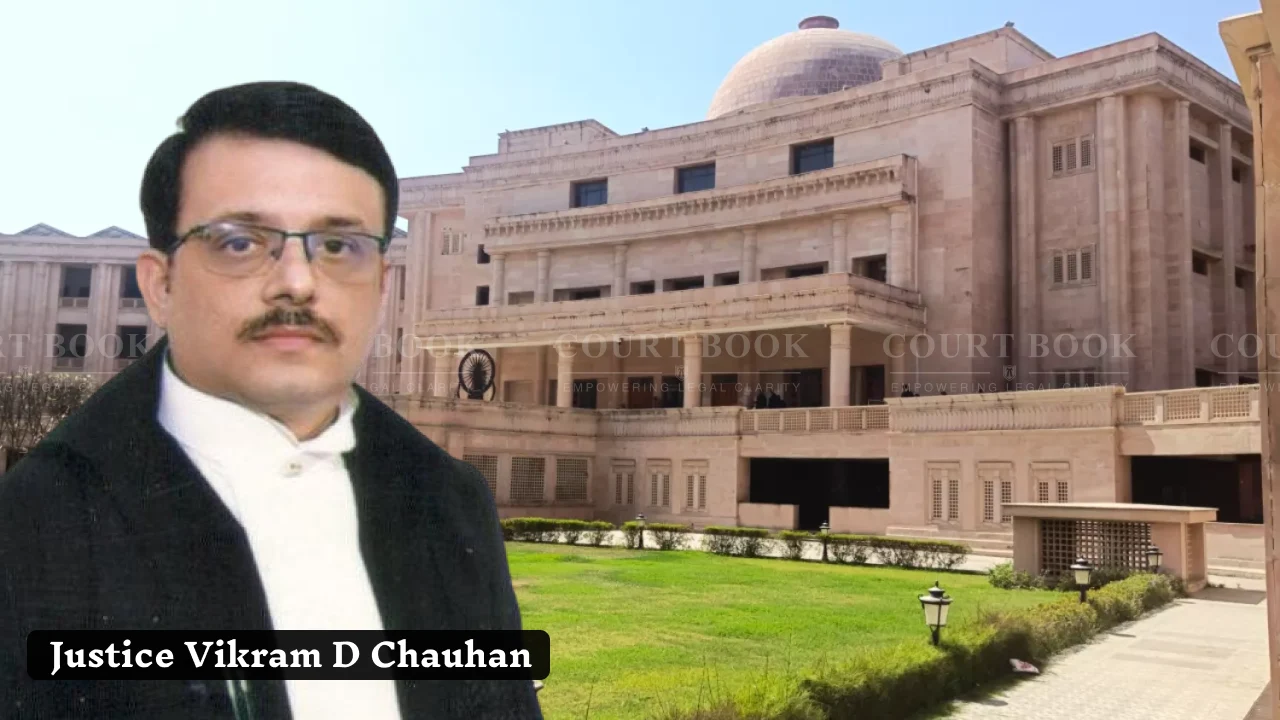
Justice Vikram D. Chauhan examined whether the statement amounted to an offence under Section 152, which deals with acts endangering sovereignty.
The Court highlighted that freedom of speech under Article 19(1)(a) is a fundamental right, subject only to reasonable restrictions. It observed that mere criticism or expression of dissent even if unpopular cannot automatically be treated as a criminal offence.
“The burden lies on the complainant to show that the speech falls within the scope of reasonable restrictions and constitutes an offence,” the Court noted.
Importantly, the judge stressed the distinction between advocacy and incitement. The Court said that unless speech leads to or attempts to incite rebellion, secession, or public disorder, it remains protected.
The Court found that only a fragment of the alleged speech was placed on record, without full context or supporting material.
It further observed that the petitioner failed to demonstrate how the statement actually triggered or attempted to trigger unlawful activities. Even a year after the statement, no evidence of resulting disturbance or rebellion was shown.
The Court remarked that words like “fight” can have different meanings depending on context, especially in political discourse where it may signify ideological opposition rather than violence.
“Suspicion or imagination cannot form the basis for criminal prosecution,” the bench observed.
Holding that both lower courts had correctly assessed the matter, the High Court refused to exercise its supervisory jurisdiction under Article 227.
The petition was dismissed, with the Court concluding that no prima facie offence was made out and that the impugned orders suffered from no legal infirmity.
Case Details
Case Title: Simran Gupta vs State of U.P. and Another
Case Number: Matters Under Article 227 No. 14562 of 2025
Judge: Justice Vikram D. Chauhan
Decision Date: 1 May 2026
Download Order

