

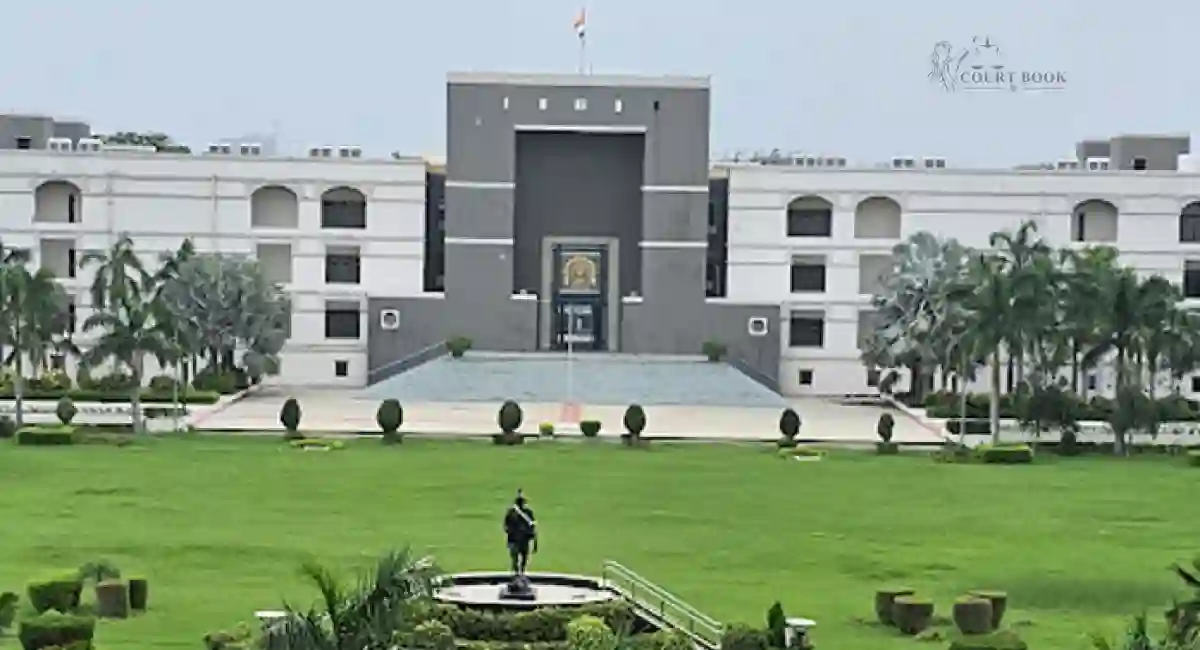
The Gujarat High Court dismissed the State’s appeal challenging the acquittal of several accused in a 2002 communal violence case from Vadodara. The Division Bench found no compelling reason to overturn the trial court’s decision, emphasizing gaps in evidence and inconsistencies in witness testimonies.
Background of the Case
The case traces back to February 28, 2002, a day after the Godhra train incident, when widespread unrest was reported across Gujarat. According to the prosecution, a large mob allegedly gathered near Khodiarnagar in Vadodara and carried out acts of violence.
It was alleged that the accused, along with others, formed an unlawful assembly, attacked residential areas, looted property, and set houses and shops on fire. The prosecution further claimed that the deceased, Samsuddin @ Kasamkhan, was assaulted and thrown into the fire, leading to his death.
Following investigation, charges were filed under serious provisions of the Indian Penal Code, including rioting, arson, and murder. However, in 2003, the Sessions Court acquitted all accused, prompting the State to file an appeal before the High Court.
The State argued that the trial court had erred in appreciating evidence and had wrongly acquitted the accused. The prosecution emphasized that:
• An eyewitness had identified the accused in court.
• The trial court placed undue importance on minor inconsistencies, such as delayed recovery of remains.
• Medical opinion should not override direct eyewitness testimony.
“The findings recorded by the trial Court are perverse and not borne out from the evidence,”
the State’s counsel argued before the bench.
After examining the record, the High Court found several weaknesses in the prosecution’s case.
The bench noted that medical evidence failed to conclusively establish that the recovered remains belonged to the deceased.
“It cannot be ascertained from the said bones whether they belonged to a male or a female,” the Court observed, referring to expert testimony.
Further, key witnesses did not support the prosecution’s claims in a consistent manner. The original complainant reportedly expressed lack of knowledge about the identity of the attackers. Other witnesses also stated that the incident occurred at night, making identification difficult.
Importantly, even the testimony of the deceased’s wife, who identified some accused, did not clearly attribute specific acts to them. The Court noted that her statement only suggested their presence in the crowd and did not establish active participation in the alleged offence.
The bench reiterated the settled legal position regarding appeals against acquittal. It observed that unless the trial court’s findings are clearly unreasonable or perverse, appellate courts should be slow to interfere.
Citing Supreme Court precedents, the bench stated:
“It is a cardinal principle… that if another view is possible, the appellate Court should not substitute its own view unless the findings are manifestly erroneous.”
After considering the evidence and legal principles, the Gujarat High Court concluded that the trial court’s view was a plausible one based on the material available.
“No case is made out to interfere with the impugned judgment and order of acquittal,” the bench held.
Accordingly, the criminal appeal filed by the State was dismissed, and the acquittal of the accused was upheld.
Case Details
Case Title: State of Gujarat vs Fillipbhai Magalbhai Mistry & Ors.
Case Number: R/Criminal Appeal No. 697 of 2003
Judge: Justice Nirzar S. Desai & Justice D.N. Ray
Decision Date: 18 April 2026
Download Order

