

The Supreme Court set aside the conviction of a father-in-law in a dowry cruelty case while refusing to interfere with the acquittal of all accused in a bride burning incident. The Court carefully examined conflicting evidence, particularly two contradictory dying declarations, before reaching its conclusion.
Background of the Case
The case arose from a tragic incident in April 2001, where a young woman sustained severe burn injuries within nine months of her marriage. According to the prosecution, she was allegedly harassed for dowry by her husband and in-laws.
Initially, the trial court convicted the husband, father-in-law, and mother-in-law under charges including murder and cruelty. However, the Madhya Pradesh High Court later acquitted them of murder while maintaining conviction under Section 498A of the Indian Penal Code (cruelty), reducing the sentence to time already served.
Multiple appeals reached the Supreme Court-one by the father-in-law challenging his conviction, and others by the State and the victim’s brother seeking restoration of murder charges.
Read also:- Arrest Memo Enough to Explain Charges: Uttarakhand HC Rejects Plea Challenging CBI Arrest
A central issue before the Court was the presence of two conflicting dying declarations.
• In the first statement, the woman alleged that her husband and in-laws set her on fire after demanding a car as dowry.
• In the second declaration, she stated that she poured kerosene on herself and set herself ablaze.
The Court noted that such inconsistencies created serious doubt about the reliability of the prosecution’s version.
Further, the testimonies of family members alleging dowry harassment were found to contain material improvements and contradictions when compared to their earlier statements to police.
The bench observed that while dying declarations hold strong evidentiary value, they must be assessed in light of surrounding circumstances.
“The variation in the two dying declarations… casts doubt on their veracity,” the Court noted, adding that the second declaration appeared more reliable in the given facts.
The Court also highlighted that:
• No independent witness supported the allegation of dowry demand.
• Neighbours did not corroborate claims of harassment.
• The accused themselves had taken the victim to the hospital, which weakened the prosecution’s theory of intentional killing.
On the issue of witness testimony, the Court remarked that the improvements made during trial appeared to be an afterthought rather than genuine recollection.
The Court found that the prosecution failed to establish the demand for dowry beyond reasonable doubt.
It observed that such an important allegation would not have been omitted in initial police statements if it were genuine. The absence of corroboration made reliance on these claims unsafe.
Read also:- Supreme Court Orders ₹164.91 Crore Refund to Auction Buyer in DDA Land Dispute, Sets Aside Conveyance Deed
The Court reiterated established principles governing criminal trials:
• Guilt must be proven beyond reasonable doubt.
• If two interpretations of evidence are possible, the one favouring the accused must prevail.
• Dying declarations can form the basis of conviction but must be reliable and free from suspicion.
After evaluating the evidence, the Supreme Court:
• Allowed the appeal of Narendra Singh (father-in-law) and set aside his conviction under Section 498A IPC.
• Dismissed the appeals filed by the State and the complainant, thereby upholding the acquittal of all accused in the murder charge.
“The evidence… would not be sufficient to establish the charge,”
the bench concluded while granting relief to the appellant.
Case Details
Case Title: Narendra Singh vs State of Madhya Pradesh & Connected Appeals
Case Number: Criminal Appeal Nos. 302, 307 & 309 of 2014
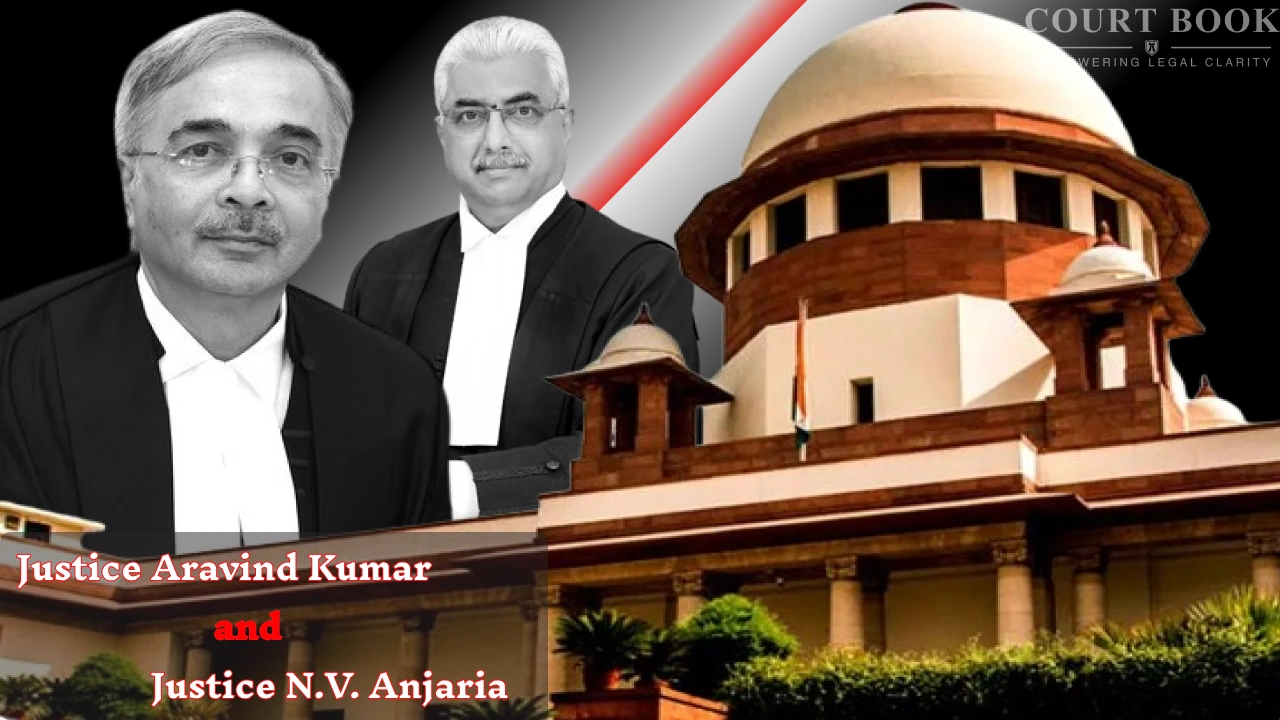
Judges: Justice Aravind Kumar & Justice N.V. Anjaria
Decision Date: April 30, 2026
Download Judgment

