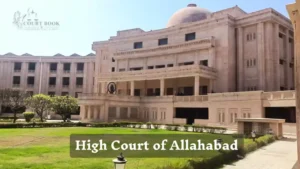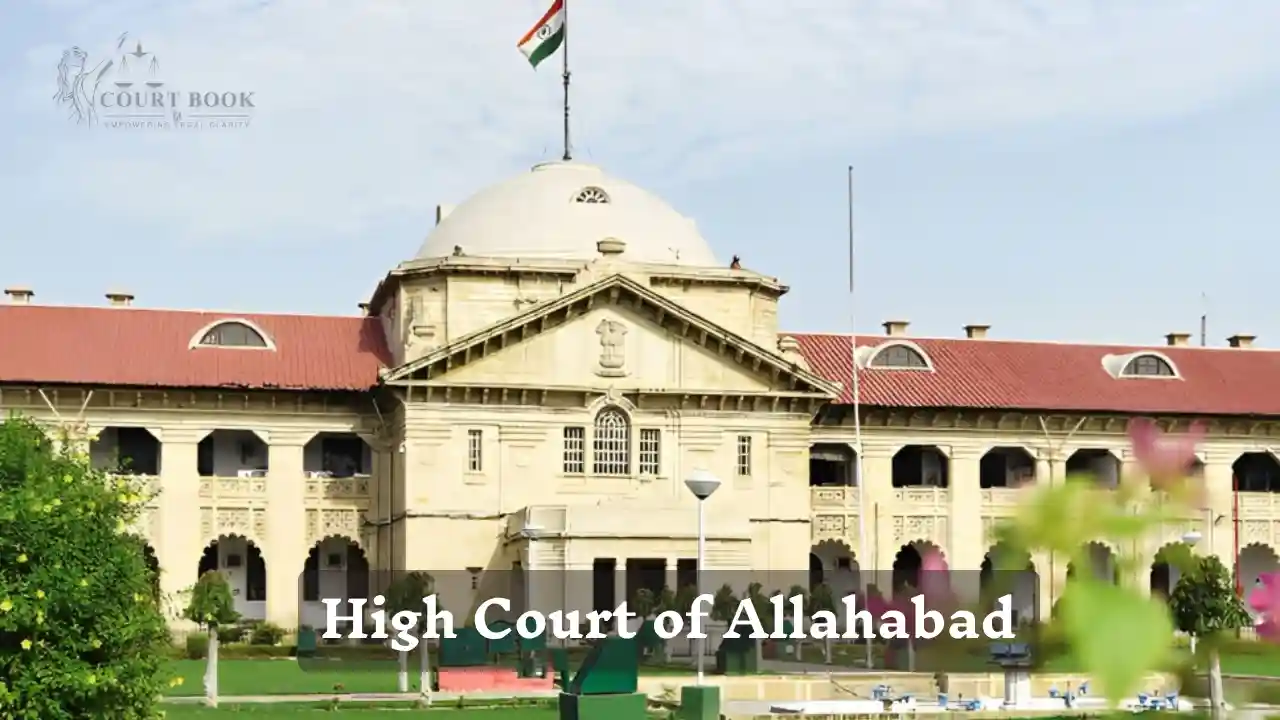
The Allahabad High Court’s Lucknow Bench set aside the suspension of members of an Internal Complaints Committee (ICC), holding that the action was taken without proper reasoning. The court emphasized the need to protect the independence of quasi-judicial bodies while dealing with sensitive workplace harassment cases.
Background of the Case
The matter arose from two connected petitions (Writ-A No. 9112 of 2025 and Writ-A No. 9114 of 2025) filed by government employees who were part of an ICC constituted under the Sexual Harassment of Women at Workplace Act, 2013.
According to the record, a complaint of sexual harassment was filed on July 27, 2025. An ICC was constituted the next day and directed to submit its report almost immediately. The committee conducted proceedings and, on July 31, 2025, submitted a report exonerating the accused officer.
Soon after, the accused officer was suspended. Within days, the ICC members themselves were also suspended through orders dated August 5 and 6, 2025, leading them to approach the High Court.
Counsel for the petitioners argued that the ICC report was recommendatory and there was no finding that the members acted with mala fide intent. They also contended that punishing committee members for their findings would undermine fairness in such inquiries.
Read also:- Allahabad High Court Halts UP Seed Corporation Tender Over “Arbitrary” Bid Rejection
On the other hand, the State maintained that the committee ignored key evidence and acted in a biased manner to protect the accused. It pointed to an audio recording allegedly showing inconsistencies in the proceedings.
Justice Manish Mathur examined two core issues: whether ICC recommendations are binding, and whether the suspension orders were legally valid.
On the first issue, the court held that ICC recommendations under the 2013 Act are mandatory in nature, not merely advisory.
“The intent of the legislature… indicates that such recommendations are required to be complied with by the employer,” the bench observed.
However, the court drew a clear line when it came to action against ICC members. It reiterated that members of such committees perform quasi-judicial functions, and their decisions cannot be questioned merely because a different view is possible.
“The correctness or legality of the decision cannot be a ground to proceed departmentally… it is only the conduct in discharge of duties which can form the basis,” the court noted.
The bench also stressed that disciplinary action requires a clear prima facie finding of misconduct, not just disagreement with the outcome.
Examining the suspension orders, the court found them lacking in reasoning. There was no indication that authorities had recorded satisfaction that the allegations were serious enough to warrant major penalty, as required under service rules.
The court remarked that the orders were passed “in a very cursory manner without forming any prima facie satisfaction.”
It also flagged the undue haste in the inquiry process, noting that the committee had been asked to submit its report within an unrealistically short timeframe, contrary to prescribed rules.
The High Court quashed the suspension orders dated August 5 and 6, 2025, holding them unsustainable in law. However, it granted liberty to the authorities to pass fresh orders, if necessary, in accordance with law and proper reasoning.
The petitions were allowed, with liberty to the authorities to take fresh action in accordance with law.
Case Details:
Case Title: Pratibha & Others vs State of U.P. & Others; Km. Sunita Devi vs State of U.P. & Others
Case Number: Writ-A No. 9112 of 2025 & 9114 of 2025
Judge: Justice Manish Mathur
Decision Date: April 20, 2026
Download Order