

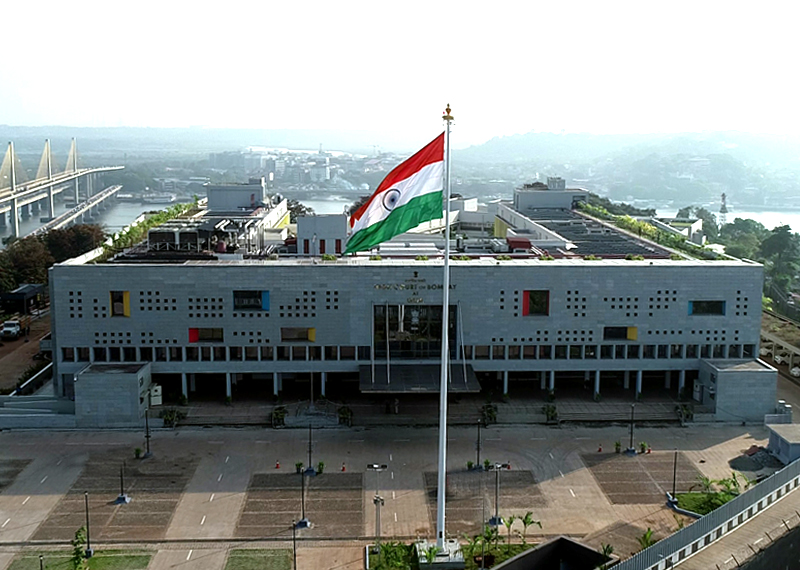
The Bombay High Court has held that decrees passed by Indian courts cannot be treated as “foreign judgments” under Portuguese civil procedure laws still followed in Goa. The Court directed authorities to act on such decrees without insisting on further validation.
Background of the Case
The case arose from a writ petition filed by Blinston Savio Fernandes seeking cancellation of his marriage certificate after a divorce decree was granted by a Family Court in Bangalore in January 2022.
The marriage, solemnised in December 2006, had already been dissolved through mediation proceedings under Indian law. However, when the petitioner approached the Sub-Registrar in Goa to cancel the marriage registration, the request was refused.
Read also:- Supreme Court Clears Father-in-Law in Dowry Cruelty Case, Upholds Acquittal in Bride Burning Allegations
The Registrar argued that since the decree was issued by a court outside Goa, it should be treated as a “foreign decree” under the Portuguese Code of Civil Procedure, 1939, which continues to apply in certain aspects within the state.
This meant the petitioner was asked to first obtain confirmation from the High Court before the decree could be acted upon.
Faced with this recurring issue, the Division Bench comprising Justice Valmiki Menezes and Justice Amit S. Jamsandekar framed a central legal question:
Can a decree passed by a competent Indian court be treated as a foreign decree under the Portuguese Code of Civil Procedure, 1939?
The Bench undertook a detailed examination of Goa’s legal history and the continued application of Portuguese-era laws. It noted that after Goa became part of India in 1961, these laws continued only because they were adopted by Indian legislation.
Referring to earlier Supreme Court rulings, the Court emphasized that laws of Portuguese origin now operate as Indian law.
“The Portuguese Civil Code… is an Indian law. It is no longer a foreign law,” the Bench observed while extending the same reasoning to procedural law.
The Court clarified that the term “foreign” in the Portuguese Code must be understood in its natural sense-referring to courts outside India, not courts from other Indian states.
It further pointed out that under the Code of Civil Procedure, 1908, a “foreign court” is one situated outside India. Therefore, treating Indian court judgments as foreign was legally incorrect.
Read also:- Arrest Memo Enough to Explain Charges: Uttarakhand HC Rejects Plea Challenging CBI Arrest
The Bench found the Registrar’s refusal to act on the divorce decree to be unjustified.
“The objections raised… are arbitrary, perverse and contrary to law,” the Court stated firmly.
It held that once a competent Indian court passes a decree, authorities in Goa are bound to recognise and implement it without requiring any additional confirmation from the High Court.
Allowing the petition, the Court issued clear directions:
• The Sub-Registrar was ordered to cancel the marriage certificate within one week.
• All Registrars and Sub-Registrars in Goa were instructed not to treat Indian court decrees as foreign.
• Authorities were directed not to insist on High Court confirmation for such decrees.
• Pending applications involving similar objections must be decided within two weeks.
• A compliance report must be submitted within three weeks.
The Court also directed that copies of the judgment be circulated to all registration authorities in the state to ensure uniform implementation.
Case Details
Case Title: Blinston Savio Fernandes vs. Leandra Marie Fernandes
Case Number: Writ Petition No. 265 of 2026
Judges: Justice Valmiki Menezes & Justice Amit S. Jamsandekar
Decision Date: April 29, 2026
Download Judgment

