

The Supreme Court has upheld the validity of corporate guarantees executed by Reliance Infratel Limited and restored the status of the SBI-led consortium as financial creditors under insolvency law.
The dispute arose from insolvency proceedings against Reliance Infratel Limited (RITL). A consortium led by State Bank of India had extended substantial loans to group entities-Reliance Communications Limited (RCOM) and Reliance Telecom Limited (RTL).
To secure these loans, RITL executed corporate guarantees in 2017. However, Doha Bank challenged the validity of these guarantees, raising concerns about their timing, disclosure in financial statements, and stamping.
Read also:- Supreme Court Acquits Co-Accused in Karnataka Murder Case, Flags Weak Circumstantial Links
The National Company Law Tribunal (NCLT) and later the National Company Law Appellate Tribunal (NCLAT) ruled against the SBI consortium, refusing to recognize them as financial creditors and directing reconstitution of the Committee of Creditors (CoC).
The Supreme Court examined three central questions:
• Whether corporate guarantees qualify as “financial debt” under the Insolvency and Bankruptcy Code (IBC)
• Whether the lenders’ claims were properly submitted and verified
• Whether findings of NCLT and NCLAT were legally sustainable
The bench carefully reviewed the nature of corporate guarantees and their role in financial transactions.
“The liability arising from a corporate guarantee squarely falls within the ambit of financial debt,” the Court observed, emphasizing that such guarantees create enforceable obligations similar to the borrower’s liability.
On the issue of timing, the Court rejected the argument that guarantees were suspicious because the company was already in financial distress. It noted that restructuring efforts were ongoing when the guarantees were executed.
Addressing disclosure concerns, the Court relied on records showing that the existence of guarantees had been acknowledged and disclosed in financial statements. It clarified that non-disclosure, even if assumed, would not invalidate an otherwise lawful guarantee.
On stamping objections, the Court made it clear that insufficient stamping is a curable defect and does not render a document void.
“The Stamp Act is a fiscal measure… not intended to defeat legitimate claims,” the bench noted.
The Court also found fault with the tribunals’ approach to evidence. It held that relevant documents could be produced at the appellate stage and that the rejection of claims on technical grounds was unjustified.
Read also:- Gauhati High Court Modifies Murder Conviction to Culpable Homicide in Land Dispute Killing Case
The Supreme Court concluded that:
• The corporate guarantees executed by RITL constitute “financial debt” under Section 5(8) of the IBC
• The SBI-led consortium qualifies as financial creditors
• The findings of NCLT and NCLAT were perverse and legally unsustainable
Accordingly, the Court set aside the orders of both tribunals. It directed the Resolution Professional to reconstitute the Committee of Creditors by including the SBI consortium and to continue the insolvency resolution process in accordance with law.
The appeal was allowed, with no order as to costs.
Case Details
Case Title: State Bank of India & Ors. v. Doha Bank Q.P.S.C. & Anr.
Case Number: Civil Appeal No. 8527 of 2022
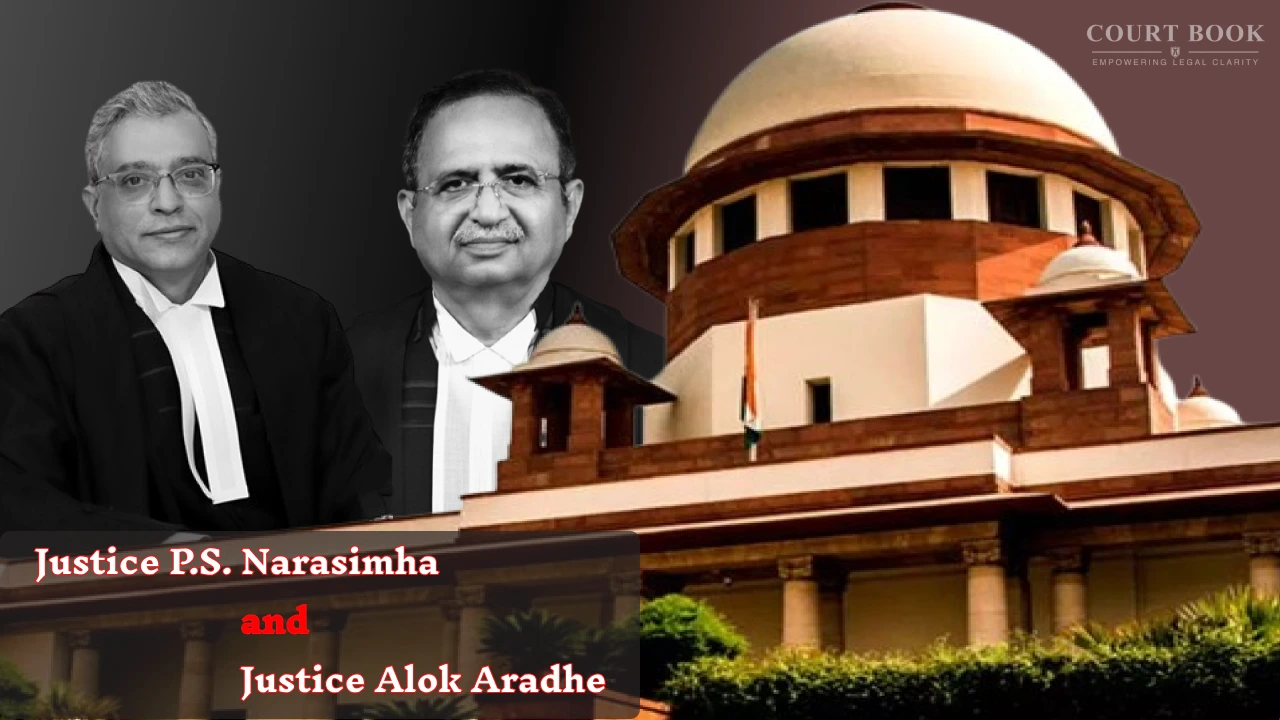
Judge: Justice Alok Aradhe and Justice Pamidighantam Sri Narasimha
Decision Date: April 28, 2026
Download Judgment

