

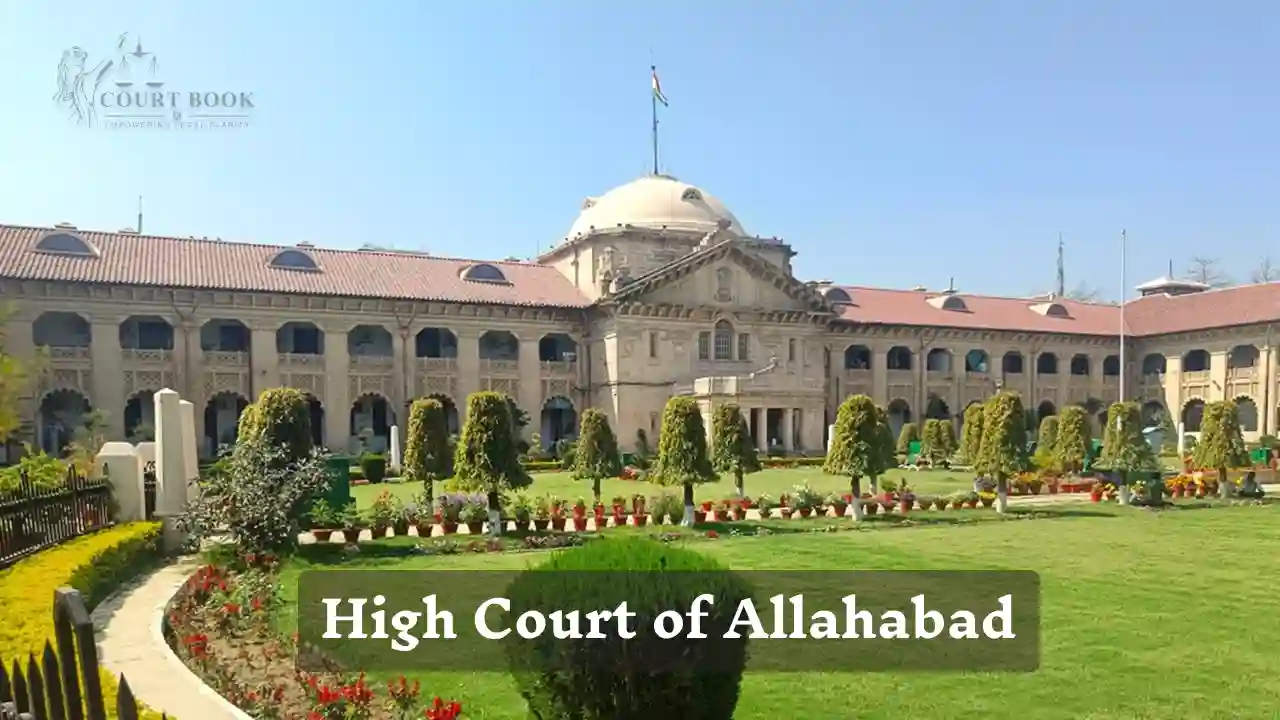
In a significant ruling, the Allahabad High Court has held that a birth certificate issued under law cannot be disregarded unless it is cancelled or proven to be forged. The Court directed a Jawahar Navodaya Vidyalaya in Banda to grant admission to a student whose candidature had been rejected based on a medical age assessment.
Background of the Case
The case arose when a student sought admission to Class VI at PM Shri School Jawahar Navodaya Vidyalaya, Duredi, Banda. His birth certificate, issued by the Gram Panchayat, recorded his date of birth as 1 July 2013, placing him within the eligibility criteria prescribed in the admission prospectus.
However, school authorities denied admission relying on a medical opinion obtained through an ossification test conducted by the Chief Medical Officer, which suggested a higher age. The petitioner challenged this decision, arguing that a statutory birth certificate carries legal validity and cannot be ignored without proper grounds.
Justice Siddharth Nandan closely examined whether authorities could override a statutory document with a medical estimate.
The Court noted that a birth certificate issued under the Registration of Births and Deaths Act, 1969 carries a presumption of correctness. It emphasized that this presumption remains intact unless the document is legally cancelled or proven to be forged.
“The certificate issued under a statutory provision has binding effect,” the Court observed, adding that authorities cannot question such documents “on their own whims and fancies.”
The bench also highlighted the limited reliability of ossification tests, pointing out that such medical opinions can have a variation of up to two years and are only advisory in nature.
Referring to precedents of the Supreme Court, the Court reiterated that documentary evidence like birth certificates must take precedence over medical opinion when determining age.
The Court found that the school had not disputed the authenticity of the birth certificate. Despite this, it relied solely on the medical report to deny admission.
This approach, the Court said, was inconsistent with legal principles and also contrary to the mandate of the Right to Education Act, 2009, which promotes access to education without arbitrary barriers.
Setting aside the denial, the Court directed the concerned Navodaya Vidyalaya to admit the student to Class VI for the academic session 2026–27 without delay.
Additionally, the Court issued broader directions to prevent similar disputes. It instructed authorities governing Navodaya Vidyalayas to rely on statutory documents such as:
• Matriculation certificates
• School records of first admission
• Birth certificates issued by competent authorities
Medical opinion, the Court clarified, should only be sought when such documents are unavailable.
The writ petition was allowed with directions to grant admission to the petitioner. The Court also ordered circulation of its guidelines to ensure uniform compliance across institutions.
Case Details
Case Title: Vimal Singh vs Union of India & Others
Case Number: Writ-C No. 14707 of 2025
Judge: Justice Siddharth Nandan
Decision Date: April 10, 2026
Download Order

