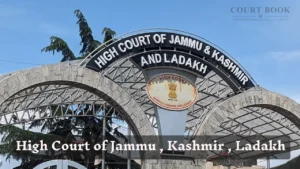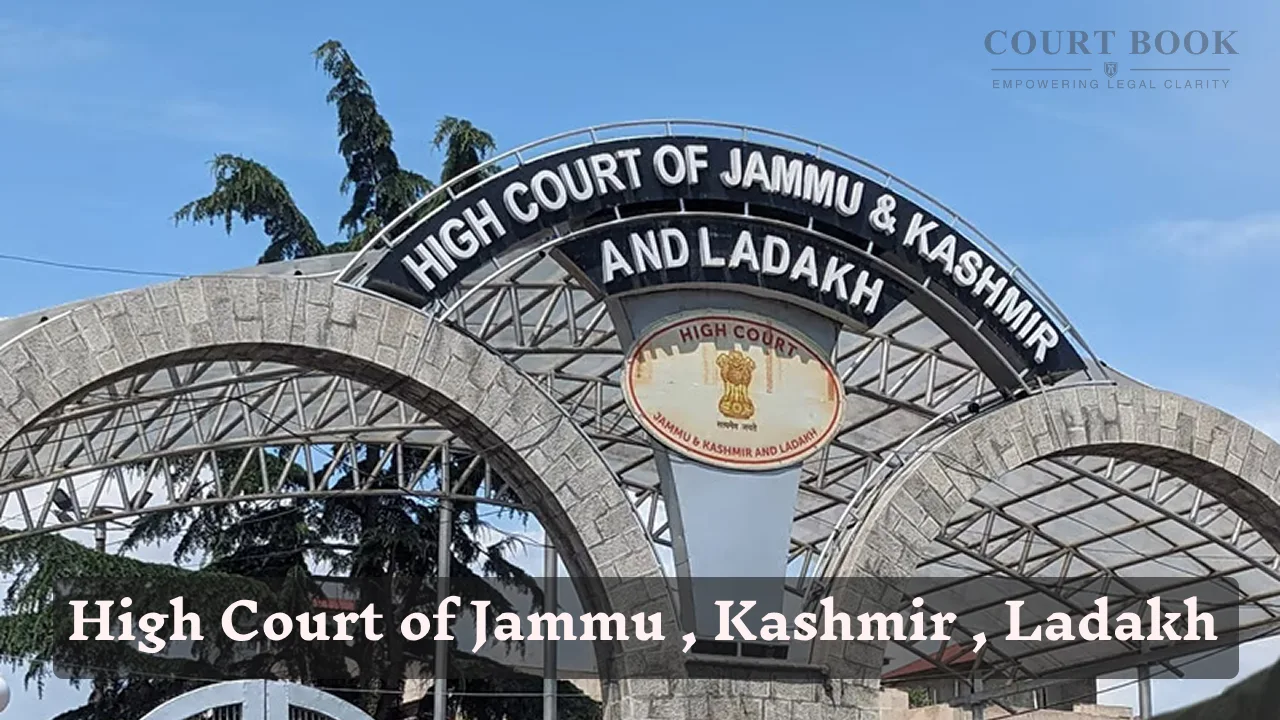
In a significant ruling, the High Court of Jammu & Kashmir and Ladakh has quashed criminal proceedings in a matrimonial dispute, observing that vague and generalized allegations cannot sustain serious charges like cruelty and intimidation.
Background of the Case
The dispute arose from a marriage solemnized in September 2016 between the complainant and her husband, an Army personnel. Within months, tensions surfaced, leading to a complaint filed by the wife in November 2017.
She alleged cruelty, mental and physical harassment, and dowry demands by her husband and his family members. The complaint also accused the husband of having a relationship with another woman, Arti Devi.
Based on the complaint, an FIR was registered under Sections 498-A and 506 RPC, followed by a chargesheet and framing of charges by the trial court.
The accused family members approached the High Court seeking quashing of the proceedings. They argued that:
• The allegations were vague, general, and lacked specific details.
• The complaint was a “counterblast” to earlier legal actions initiated by the husband, including a petition for annulment of marriage and a criminal complaint.
• One of the accused, Arti Devi, had no legal relationship with the husband and could not be prosecuted under Section 498-A.
After examining the record, the Court found that the allegations lacked essential details such as dates, specific incidents, or clear acts of cruelty.
“The allegations are wholesale and omnibus in nature,” the Court noted, adding that merely naming family members without specific roles cannot justify criminal prosecution.
The bench emphasized that courts must guard against misuse of dowry harassment laws in matrimonial disputes. It observed that,
“Vague and generalized allegations, if not scrutinized, may lead to misuse of legal processes.”
On the inclusion of Arti Devi, the Court held that a person who is neither related by blood, marriage, nor adoption cannot be treated as a “relative” under Section 498-A.
The Court found that:
• The complaint lacked specific and verifiable accusations.
• The criminal case appeared to be filed with an ulterior motive, particularly in response to earlier proceedings initiated by the husband.
• Continuing the prosecution would amount to an abuse of the process of law.
It also relied on established legal principles that allow courts to quash proceedings where allegations are inherently improbable or malicious.
Allowing both petitions, the High Court quashed:
• FIR No. 49/2017 dated 15 November 2017
• Chargesheet dated 02 February 2018
• Trial court order dated 14 August 2018 framing charges
The Court concluded that the proceedings were “manifestly attended with mala fide” and could not be sustained in law.
Case Details
Case Title: Mela Ram & Ors. vs State of J&K & Anr.; Arti Devi vs State of J&K & Anr.
Case Number: CRM(M) No. 261/2019 c/w CRM(M) No. 263/2019
Judge: Justice Shahzad Azeem
Decision Date: 16 April 2026
Download Judgment