

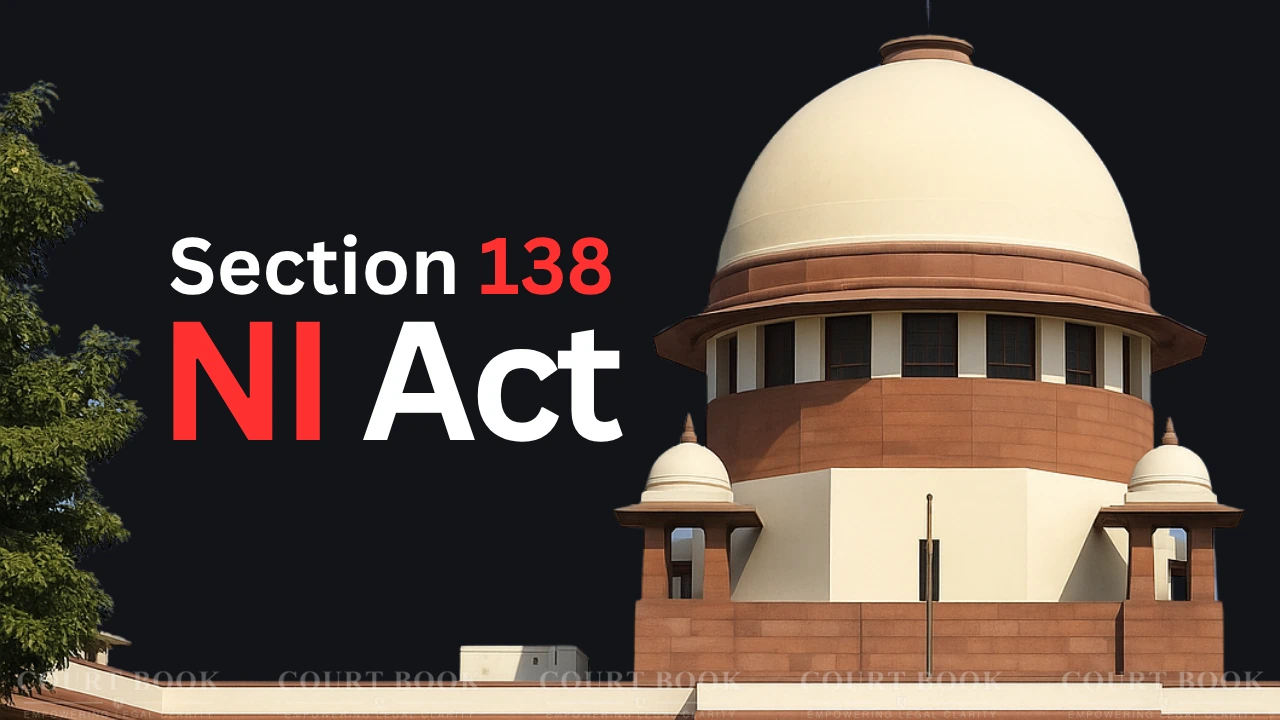
In a significant ruling on cheque bounce cases, the Supreme Court clarified that disputes over whether a debt is legally enforceable cannot be decided prematurely. The Court restored a complaint that had been dismissed even before trial, emphasizing the importance of due process under the law.
Background of the Case
The case arose from a financial dispute linked to a matrimonial settlement. The appellant, Renuka, had ongoing disagreements with her husband over alleged fraudulent share transfers.
As part of a proposed settlement, the husband agreed to transfer properties and pay ₹50 crore. A third party described as a close associate issued a cheque of ₹50 crore to safeguard the arrangement.
Read also:- Wife’s False Complaints Amount to Mental Cruelty, Divorce Stands: Calcutta High Court
However, when the cheque was presented, it was dishonoured with the remark “payment stopped by drawer.” After issuing a legal notice and receiving no payment, the appellant filed a complaint under Section 138 of the Negotiable Instruments Act.
Initially, a Magistrate found sufficient grounds and issued process against the accused. But this order was later set aside by the Sessions Court, a decision that the High Court also upheld.
Senior Advocate Mukul Rohatgi, appearing for the appellant, argued that the lower courts had erred by examining the existence of a legally enforceable debt at an early stage. He submitted that once basic requirements such as issuance of cheque, dishonour, and statutory notice are met, the case must proceed to trial.
On the other side, Senior Advocate Dr. A.M. Singhvi contended that the cheque was not linked to a legally enforceable liability, as the underlying settlement agreement was incomplete and not binding on the cheque issuer.
Read also:- Kerala HC Accepts Apology but Cracks Down on Posts, Seeks Report in Major Tender Case
The bench closely examined the legal position under Section 138 and Section 139 of NI Act.
It noted that at the stage of issuing process, courts only need to verify whether the basic ingredients of the offence are present. These include: issuance of cheque, its dishonour, service of notice, and failure to pay within time.
“The statutory presumption operates in favour of the complainant,” the Court observed, adding that the burden shifts to the accused only during trial.
The judges made it clear that questioning the existence of a legally enforceable debt requires evidence and cannot be decided summarily.
“Disputed questions… have to be determined at the trial on the basis of evidence,” the bench remarked.
Read also:- Supreme Court Quashes Cheque Bounce Case Against Director, Says Mere Board Role Not Enough for Liability
The Supreme Court held that both the Sessions Court and the High Court had committed an error in dismissing the complaint at a pre-trial stage.
It ruled that the statutory presumption under Section 139 could not be brushed aside without giving the complainant an opportunity to present evidence.
Accordingly, the Court set aside the orders of the lower courts and restored the complaint for trial on merits. It also clarified that the case must be decided independently, without being influenced by any observations made in the judgment.
Case Details
Case Title: Renuka vs State of Maharashtra & Anr.
Case Number: Criminal Appeal arising out of SLP (Crl.) No. 7829 of 2023
Judge: Justice Atul S. Chandurkar (with Justice J.K. Maheshwari)
Decision Date: April 7, 2026
Download Judgment

