

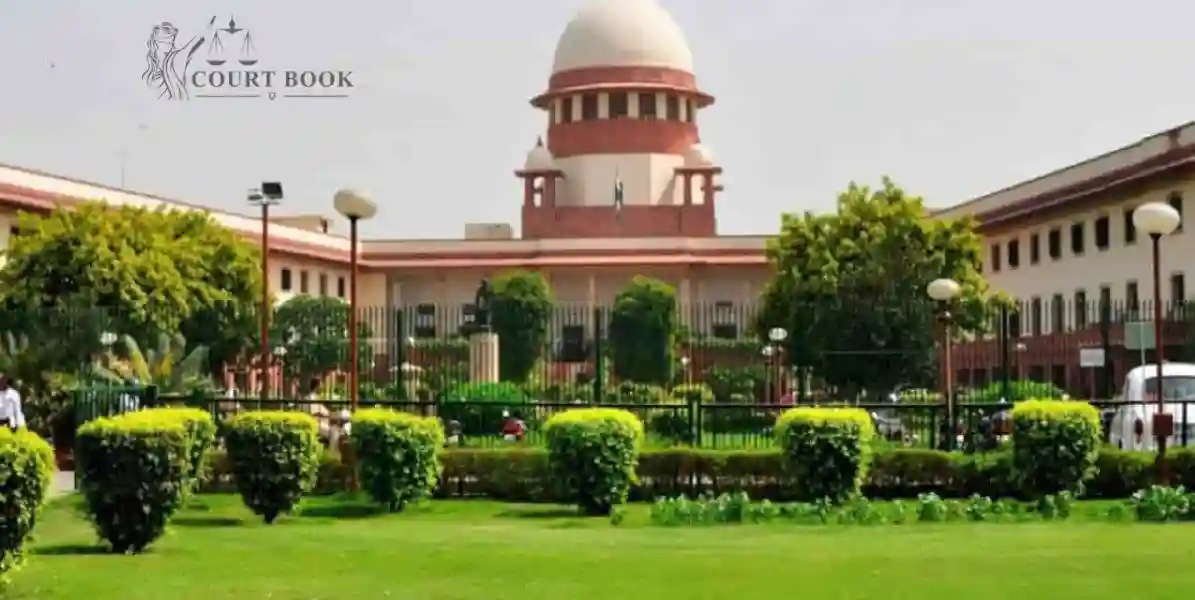
In a significant ruling balancing urban development and environmental concerns, the Supreme Court has upheld the redevelopment of land near Delhi’s Bijwasan Railway Station, ruling that the area cannot be treated as a “deemed forest.” The Court dismissed an appeal challenging the project, reinforcing the legal sanctity of statutory Master Plans.
Background of the Case
The dispute arose from a redevelopment project initiated by the Rail Land Development Authority (RLDA) over a 12.4-hectare land parcel near Bijwasan Railway Station. The project, part of Delhi’s Master Plan 2021, envisages a mixed-use development alongside an integrated passenger terminal.
An application was earlier filed before the National Green Tribunal (NGT), claiming that the land qualified as “deemed forest” due to the presence of over 1,000 trees. The NGT dismissed the plea, finding no sufficient material to support the claim.
Read also:- Can You Undo What Your Lawyer Said in Court? HC Delivers Strong Verdict in Haryana Murder Case
Subsequently, two advocates approached the Supreme Court, arguing that the land’s ecological characteristics required protection under the Forest (Conservation) Act, 1980.
The appellants contended that the land had dense vegetation and met the criteria of “deemed forest” as evolved in earlier Supreme Court judgments. They argued that cutting trees without central approval would violate environmental protections.
On the other hand, the RLDA and other respondents maintained that the land was historically agricultural and not recorded as forest in any official documents. They also pointed out that any tree-related permissions would be obtained as required by law.
The bench of Justice Dipankar Datta and Justice Augustine George Masih closely examined the concept of “forest” and “deemed forest.”
“The determination of whether land is forest cannot be made in isolation,” the Court observed, emphasizing the importance of historical land use and official records.
The judges noted that the land was originally agricultural and later incorporated into a statutory Master Plan for urban development. They made it clear that subsequent tree growth alone cannot change the legal character of land.
Read also:- Driving Licence Process Under Scanner: MP High Court Issues Notice on Road Safety Concerns
Importantly, the Court held:
“The sanctity and statutory binding force of the Master Plan will have primacy and shall prevail.”
The Court also cautioned against mechanically applying environmental doctrines without considering the broader planning framework.
Key Legal Findings
• Land not recorded as forest at the time of Master Plan cannot later be declared “deemed forest” merely due to vegetation growth.
• The relevant date for determining land status is the date of the Master Plan’s enforcement.
• Urban planning instruments like Master Plans carry statutory force and cannot be unsettled by later developments.
While rejecting the appeal, the Court took note of assurances given by authorities regarding environmental compliance. These included:
• Obtaining necessary permissions before any tree removal
• Maintaining 20% of the area as green cover
• Undertaking tree transplantation and compensatory afforestation
The bench also directed that native species should be preserved and promoted wherever possible.
Concluding that the land does not qualify as forest under law, the Supreme Court upheld the NGT’s order and dismissed the appeal. It ruled that no prior approval under the Forest (Conservation) Act, 1980 was required for the project.
“The material on record does not establish that the land in question is forest land,” the Court held, bringing the dispute to a close.
Case Title: Naveen Solanki & Anr. vs Rail Land Development Authority & Ors.
Case Number: Civil Appeal No. 10656 of 2024
Judge: Justice Dipankar Datta & Justice Augustine George Masih
Decision Date: March 20, 2026
Download Judgment

