

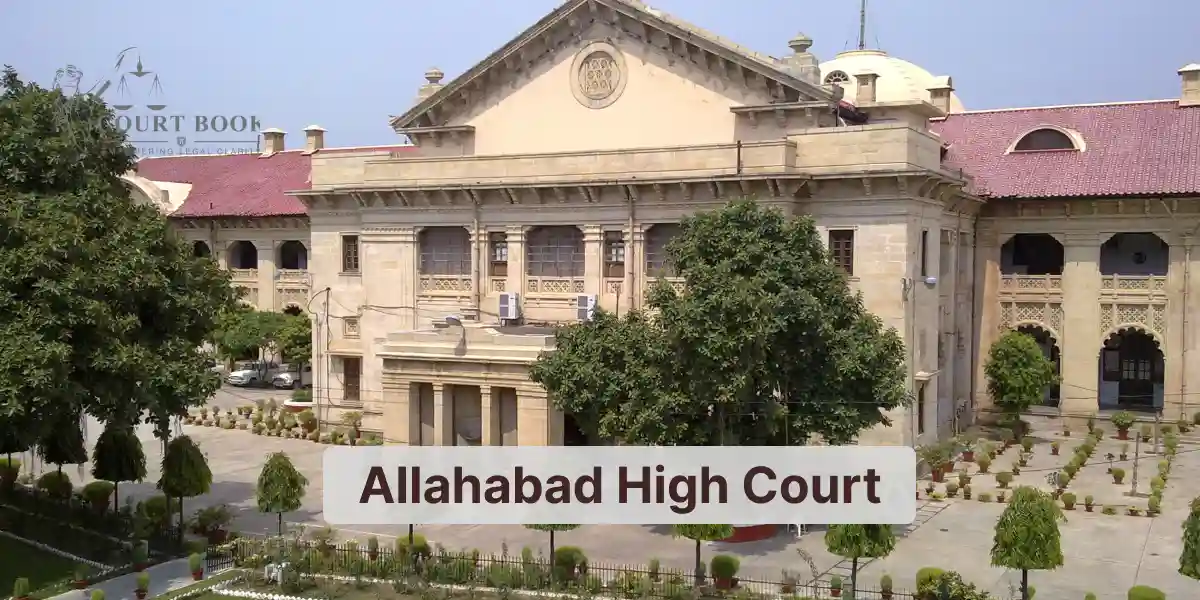
The Allahabad High Court has issued a detailed ruling explaining how courts should proceed when an accused absconds during different stages of a criminal case under the Bharatiya Nagarik Suraksha Sanhita (BNSS).
Justice Praveen Kumar Giri delivered the ruling while refusing to quash non-bailable warrants issued against Ravi alias Ravindra Singh in an Agra criminal case.
Background of the Case
The applicant was accused in a 2020 FIR registered under Sections 307 and 504 IPC. After investigation, a chargesheet was filed and he was later granted bail by the High Court.
The prosecution told the court that after framing of charges, the accused repeatedly remained absent and delayed the trial. Non-bailable warrants were issued against him, followed by proclamation and attachment proceedings.
The applicant argued that the trial court acted illegally by directly issuing a non-bailable warrant without first following other legal procedures.
While dealing with the plea, the High Court explained that there are four stages in criminal proceedings where an accused may abscond, and separate procedures apply in each situation.
1. Accused Absconds During Investigation
The court said this situation arises when the accused disappears before filing of the police report or chargesheet. In such cases, police can seek warrants, proclamation orders and attachment of property while continuing investigation.
2. Accused Was Never Arrested But Absconds After Summons
The second category covers cases where the accused was not arrested during investigation, or his arrest was stayed, but he later stops appearing after being summoned by the court.
The High Court said courts can issue non-bailable warrants, proclamation proceedings and take steps for cancellation of bonds in such cases.
3. Accused on Bail Absconds During Trial
The third stage relates to an accused who was already granted bail during investigation but later absconds after appearing before the trial court.
The bench said courts can initiate proceedings under Sections 92, 84 and 85 BNSS relating to arrest on breach of bond, proclamation and attachment of property.
4. Accused Absconds After Framing of Charges
The High Court said the fourth category applies where an accused disappears after charges are framed despite being on bail or anticipatory bail.
The judgment clarified that in such cases courts may proceed with non-bailable warrants, proclamation proceedings, forfeiture of bail bonds, attachment of property and even trial in absentia under Section 356 BNSS.
“The accused is required to appear before the court in person unless exemption has been granted,” the bench observed.
The High Court found that the applicant remained absent for a long period despite repeated opportunities and earlier recall of warrants.
Holding that the trial court had followed the law properly, the court dismissed the application seeking quashing of the non-bailable warrant proceedings.
Case Details
Case Title: Ravi Alias Ravindra Singh vs State of U.P. and Another
Case Number: Application U/S 528 BNSS No. 7980 of 2026
Judge: Justice Praveen Kumar Giri
Decision Date: May 5, 2026
Download Order

