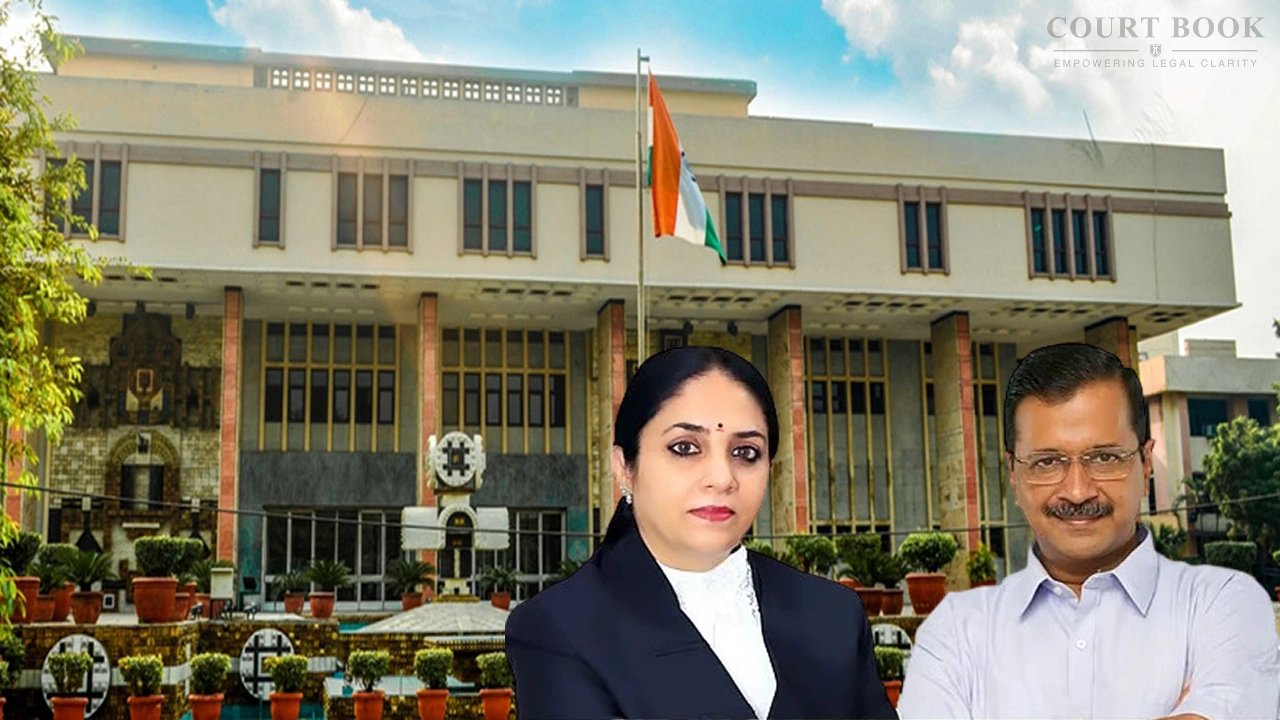
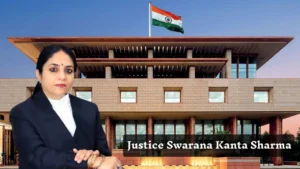
The Delhi High Court declined requests seeking recusal of Justice Swarana Kanta Sharma from hearing a high-profile criminal revision filed by the Central Bureau of Investigation (CBI). The plea had been moved by several discharged accused, including prominent political figures, citing an “Mere Apprehension of Bias Not Enough.”
Background of the Case
The matter arises from a revision petition filed by the CBI challenging a trial court’s discharge order dated 27 February 2026. The accused persons-including Arvind Kejriwal, Manish Sisodia and others-were discharged at the stage of charge after examination of extensive evidence.
Soon after, the CBI approached the High Court. During the initial hearing on 9 March 2026, the Court issued notice and made certain prima facie observations, which later became the basis for recusal applications filed by multiple respondents.
The applicants argued that earlier observations made by the Court, including in bail and related proceedings, created a reasonable apprehension that the matter may not be heard with a fully open mind.
They also raised concerns over:
• Prima facie remarks in the 9 March 2026 order
• Alleged procedural haste
• Prior judicial findings in connected cases
• Public perception and fairness
Appearing in person, Arvind Kejriwal told the Court that while he did not question the judge’s integrity, he feared he may not receive justice due to perceived bias.
Rejecting the arguments, the Court drew a clear distinction between actual bias and mere apprehension.
“The issue before me was not actual bias, but the apprehension in the mind of the litigant,” the judge noted, adding that such apprehension must be tested on settled legal principles.
The Court emphasized that:
• A litigant’s unease cannot be the sole ground for recusal
• Prima facie observations are part of normal judicial functioning
• Interim orders do not amount to final conclusions
• Recusal cannot be used as a tool for forum shopping
In a pointed remark, the Court stated:
“Test of bias cannot be manufactured by a litigant.”
Addressing the central grievance, the Court explained that preliminary observations made at the stage of issuing notice are tentative and necessary.
“A prima facie view is only a first impression and may change after full hearing,” the bench observed, cautioning against treating such remarks as final findings.
It further noted that accepting the applicants’ argument would make it impossible for courts to pass interim orders or grant urgent relief.
The Court also rejected allegations arising from:
• Prior judgments in related matters
• Attendance at legal events
• Alleged political or ideological associations
It termed such claims as speculative and warned that accepting them would undermine judicial independence.
“Judicial integrity cannot be put to trial by a litigant,” the judgment stated.
After examining all submissions, the Court dismissed the recusal applications filed by the respondents. It held that no reasonable or legally sustainable apprehension of bias had been established and confirmed that the matter would continue to be heard by the same bench.
Case Details
Case Title: CBI v. Kuldeep Singh & Ors.
Case Number: CRL.REV.P. 134/2026
Judge: Justice Swarana Kanta Sharma
Decision Date: 20 April 2026
Download Order


-300x169.webp)
 Act (UAPA)-300x169.webp)