

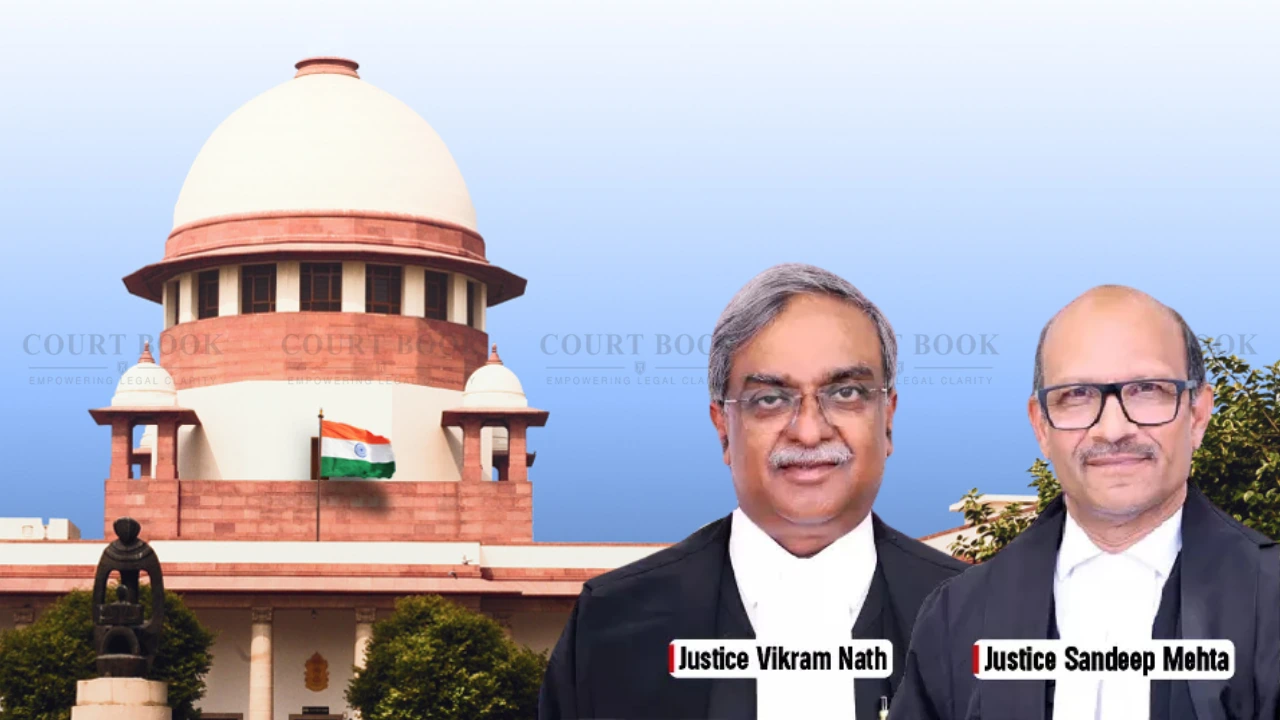
In a significant ruling on foreign exchange law, the Supreme Court has set aside penalty and confiscation orders passed against a company and its directors under the Foreign Exchange Management Act (FEMA). The Court held that the adjudication process had been improperly influenced and must restart from the show cause notice stage.
Background of the Case
The case, J. Sri Nisha vs Special Director, Directorate of Enforcement & Anr., arose from proceedings initiated against M/s Accord Distilleries & Breweries Pvt. Ltd. and its directors.
Authorities alleged that the appellants had acquired shares in a Singapore-based company without prior approval from the Reserve Bank of India, thereby violating FEMA provisions. Based on these allegations, assets of the appellants were seized under Section 37A of FEMA.
Read also:- Gujarat HC Warns of Contempt Against GPSC Officials Over ‘Arthashastra’ Answer Key Row
However, the Competent Authority later refused to confirm the seizure, noting a lack of evidence showing any actual payment or ownership of valuable foreign securities.
Despite this, parallel adjudication proceedings continued, culminating in a penalty and confiscation order.
The Bench comprising Justices Vikram Nath and Sandeep Mehta closely examined the interplay between seizure proceedings and adjudication under FEMA.
The Court emphasized that the Competent Authority’s refusal to confirm seizure was not a mere procedural step but a substantive finding. It observed that:
“The refusal to confirm the seizure… reflects a considered finding that the foundational requirement of a ‘reason to believe’ was not satisfied.”
Read also:- Madras High Court Raises Alarm Over Politically Driven Law Officer Appointments in Tamil Nadu
The Court further clarified that although courts usually do not interfere at the show cause notice stage, exceptions exist. It noted:
“Interference… is permissible in exceptional circumstances, such as where the notice suffers from patent lack of jurisdiction or amounts to abuse of process.”
Importantly, the Bench found fault with the High Court’s approach, stating that it had overlooked the impact of the Competent Authority’s findings.
The Supreme Court took note of the fact that the Adjudicating Authority relied heavily on High Court observations while passing its final order.
It held that this effectively undermined the pending appeal against the Competent Authority’s order. According to the Court:
“Such a course of action… tantamounts to abdicating the powers of the Appellate Authority.”
The Court stressed that when an appeal is pending, its outcome could materially affect the adjudication proceedings.
Setting aside multiple orders, the Supreme Court ruled that:
• The Madras High Court’s judgment dismissing the writ petitions was unsustainable
• The adjudication order imposing penalty and confiscation was contrary to law
• The proceedings must restart from the show cause notice stage
The Court directed that:
“The Appellate Authority shall first decide the appeal… within a period of two months.”
Only after this decision, the adjudication proceedings may resume and be concluded independently.
Case Details
Case Title: J. Sri Nisha vs Special Director, Directorate of Enforcement & Anr.
Case Number: Civil Appeal arising out of SLP (C) No. 23415 of 2025 & connected matters
Judges: Justice Vikram Nath & Justice Sandeep Mehta
Decision Date: April 1, 2026
Download Judgment

