

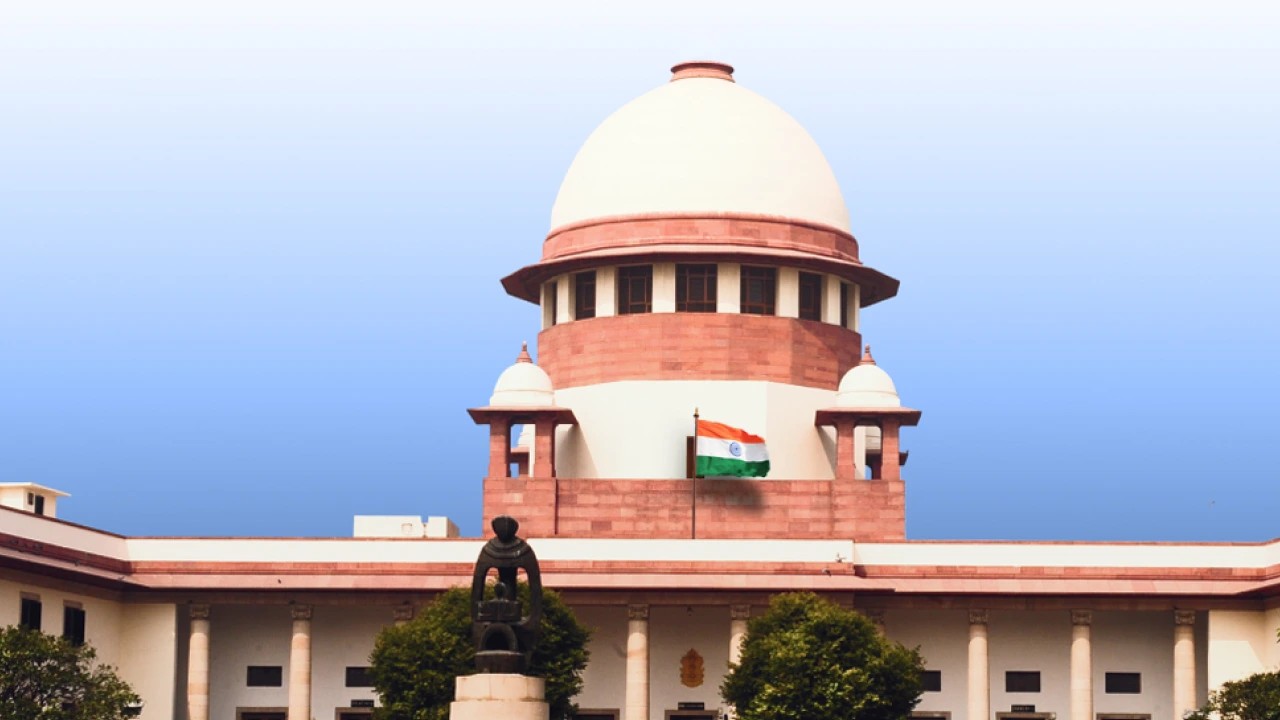
The Supreme Court has held that the decree in the present partition dispute operated as both a preliminary and final decree because it conclusively determined the parties’ rights and the mode of execution.
A Bench of Justice K.V. Viswanathan and Justice S.V.N. Bhatti passed the judgment while allowing appeals filed by Jennifer Messias against orders of the Madhya Pradesh High Court that had halted execution proceedings in a partition matter.
Justice S.V.N. Bhatti, writing for the Bench, described the prolonged litigation as a ‘Comedy of Errors’ arising from repeated procedural complications.
Background of the Case
Jennifer Messias and her husband Peter Messias had jointly purchased a flat in Jabalpur in 1991. Following their judicial separation, Jennifer filed a partition suit seeking division and possession of her half share in the property.
In 2012, the trial court declared that Jennifer was entitled to half ownership and possession of the property. The court also granted mesne profits of ₹1,500 per month and appointed a commissioner to explore partition by metes and bounds. The decree contemplated further steps through a Commissioner if partition by metes and bounds was not possible.
After Peter Messias died in 2014, Leonard G. Lobo entered the proceedings claiming rights through a registered Will.
What Happened During the Hearing
An Advocate Commissioner later reported that the flat could not be physically partitioned. Based on that report, the executing court initiated auction proceedings and even invited bids between the parties.
However, the Madhya Pradesh High Court intervened and ruled that execution could not proceed unless a separate final decree was first drawn up. The High Court consequently set aside the execution proceedings and directed Jennifer Messias to seek a final decree before the trial court.
Challenging this view, the appellant argued before the Supreme Court that the 2012 decree itself already determined the rights of the parties and laid down the mechanism for sale of the property if partition was impossible.
Court’s Key Observation
The Supreme Court examined the contents of the decree and held that its legal effect must be determined from the substance of the directions rather than merely from the label attached to it.
The Court noted that the decree had already:
• Determined the parties’ respective shares;
• Determined the appellant’s entitlement to possession of her half share;
• Awarded mesne profits; and
• Contemplated sale-related steps if physical partition by metes and bounds proved impracticable.
Referring to earlier precedents on partition decrees, the Bench observed:
“A decree may be partly preliminary and partly final.”
The Court criticised the High Court for focusing only on the nomenclature of the decree without examining whether the executable directions had already been conclusively determined.
The Bench further held that termination of the execution proceedings amounted to an “illegal exercise of jurisdiction” by the High Court.
Court’s Decision
Allowing the appeals, the Supreme Court restored the execution proceedings and directed the trial court to continue with auction proceedings for the property.
The Bench directed that the same Advocate Commissioner, if available, should supervise the auction process and apportion the proceeds between the parties after accounting for mesne profits payable to the appellant.
Considering the appellant’s age, the Court instructed the trial court to complete the process within two months.
Case Title: Jennifer Messias v. Leonard G. Lobo
Case Number: Civil Appeal Nos. arising out of SLP (C) Nos. 8716-8717 of 2026
Date: May 18, 2026
Download Order

