

The Supreme Court has dismissed an appeal filed by a waitlisted candidate seeking appointment as Principal of Meerut College in Uttar Pradesh, holding that authorities could not alter his place of posting after the repeal of the earlier recruitment law.
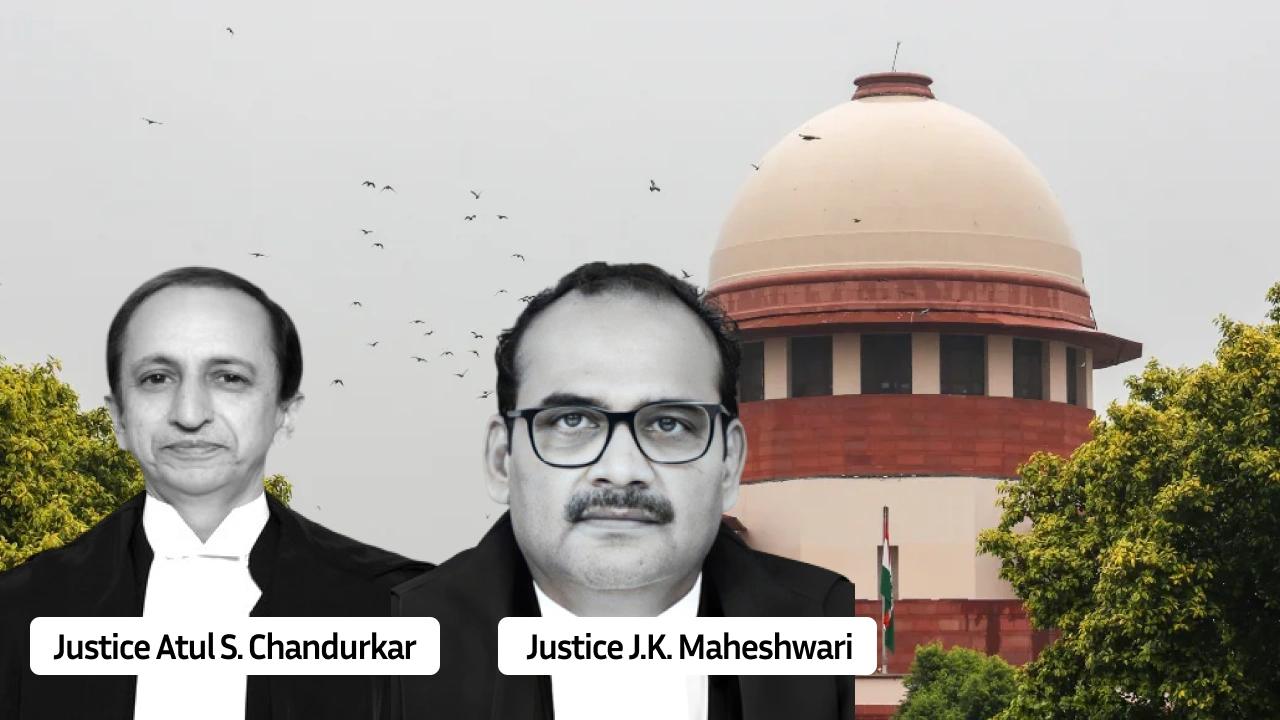
A Bench of Justice J.K. Maheshwari and Justice Atul S. Chandurkar upheld the Allahabad High Court’s decision quashing the appointment recommendation made in favour of Dr. Manoj Kumar Rawat.
The dispute arose from recruitment for the post of Principal in aided degree colleges in Uttar Pradesh under Advertisement No. 49 of 2019. A select list and a waitlist were published in October 2021. Dr. Manoj Kumar Rawat was placed at serial number 59 in the waitlist.
In August 2022, the Director recommended his appointment as Principal of Shri Bajrang PG College in Ballia. However, Rawat did not join the institution and later submitted a representation citing family circumstances, requesting appointment in another college, including Meerut College.
Read Also:- SC Says Multiple FIRs on Same Allegations Cause Prejudice, Orders Consolidation
The State authorities initially informed the government that there was no legal provision permitting a change in place of posting once a recommendation had already been made.
Soon after, the Uttar Pradesh Education Service Selection Commission Act, 2023 came into force, repealing the earlier law governing such appointments. Despite this, fresh communications were issued in December 2023 and January 2024 recommending Rawat’s appointment as Principal of Meerut College.
The then Officiating Principal of Meerut College challenged these orders before the Allahabad High Court, which set aside the recommendation. The High Court’s decision was later affirmed by a Division Bench, leading Rawat to approach the Supreme Court.
The Supreme Court closely examined Sections 12, 13 and 14 of the repealed Uttar Pradesh Higher Education Services Commission Act, 1980, as well as the provisions of the 2023 law.
The Bench observed that under the old law, once the Director recommended a candidate for a particular institution, the management was required to issue an appointment letter within the prescribed period. If the candidate failed to join, the management could seek a fresh name from the waiting list.
Referring to Rawat’s own representation, the Court noted that he had clearly admitted he did not join the Ballia college because of personal circumstances.
Read Also:- SC Rules Criminal Trial Cannot Continue Without Specific Allegations Against Accused Officer
The Bench noted that Rawat himself admitted in his representation that he had not joined the Ballia college because of family circumstances.
The Court rejected the argument that the vacancy at Meerut College could be treated as falling within the phrase “death, resignation or otherwise” under Section 13(4) of the old law.
Relying on its earlier ruling in Kamlesh Kumar Sharma v. Yogesh Kumar Gupta, the Bench said a broad interpretation of the term “otherwise” would defeat the object of the recruitment process and allow appointments to vacancies that were never advertised.
The Court held that after the 2023 Act came into force on August 21, 2023, authorities could not rely on the earlier panel prepared under the repealed law to alter the appellant’s posting or issue fresh recommendations.
“The concerned authorities could not have issued the letter dated 13.12.2023 on the basis of the list prepared under the Old Act,” the Bench said while declaring the subsequent orders legally unsustainable.
The Supreme Court also expressed concern over the conduct of Uttar Pradesh officials who supported the appellant’s claim despite the repeal of the old law.
The Bench remarked that government officers are expected to assist courts fairly and in accordance with law, rather than support a party contrary to the statutory framework.
“The duty of the State and its officials while filing their counter-affidavit and arguing the case before the Court is to provide real assistance,” the judgment noted.
The Court left it open to the State government to examine the conduct of the concerned officers and take action if necessary.
The Bench also declined to conclusively rule on the appellant’s objection regarding the locus standi of the officiating principal to challenge the appointment, observing that the issue could be examined in an appropriate case because the illegality in the present matter was apparent on the face of the record.
Dismissing the appeal, the Supreme Court held that the High Court’s conclusion was legally correct and consistent with both the repealed law and the 2023 legislation.
The Bench ruled that no interference was warranted and directed the parties to bear their own costs. Pending applications were also disposed of.
Case Title: Dr. Manoj Kumar Rawat v. State of UP & Ors.
Case Number: Civil Appeal arising out of SLP (C) No. 15989 of 2025
Judges: Justice J.K. Maheshwari and Justice Atul S. Chandurkar
Decision Date: May 19, 2026
Download Judgment

