

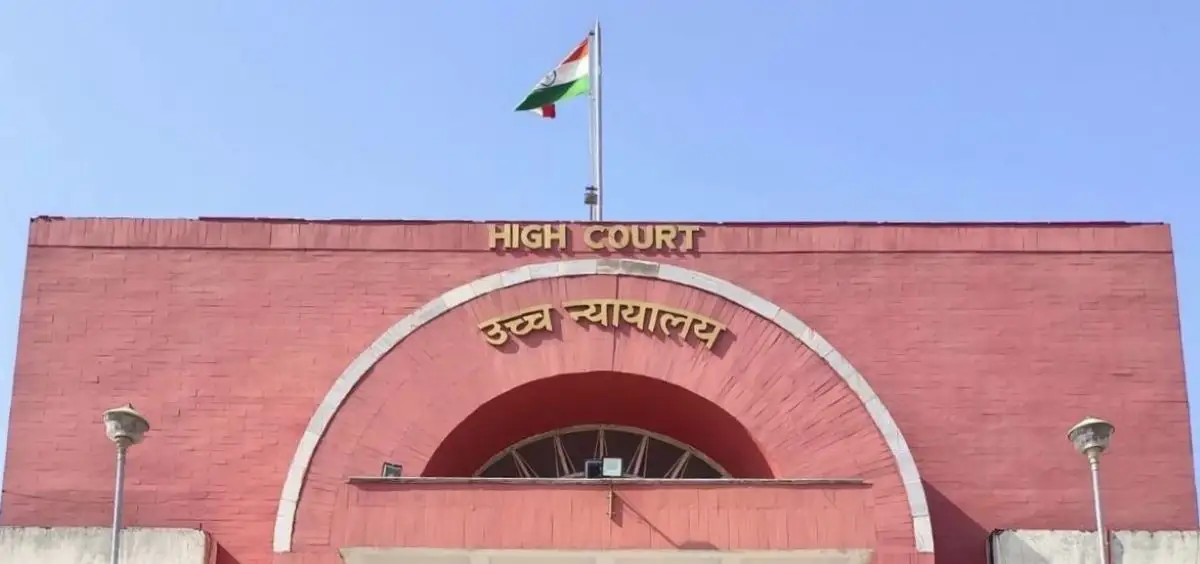
The Aurangabad Bench of the Bombay High Court has held that an agriculturist cannot be deprived of land merely because of incorrect entries made during implementation of a consolidation scheme.
Justice Siddheshwar S. Thombre observed that the right to property protected under Article 300-A of the Constitution cannot be defeated due to mistakes committed by revenue authorities.
The Court allowed a writ petition filed by Rama Gunda Malkapure, who claimed that although he had purchased 82R agricultural land through a registered sale deed in 1982, only 28R was reflected in revenue records after consolidation proceedings.
The High Court set aside a 2017 order passed by the State Minister which had reversed earlier revenue orders directing restoration of the original land area.
Background of the Case
According to the case records, the petitioner purchased agricultural land situated at Ambulga village in Latur district through a registered sale deed dated February 16, 1982.
He later approached the Civil Court through Regular Civil Suit No.300 of 1996 seeking declaration of ownership. The Civil Judge declared him owner of Survey No.1/A, Gat No.228 measuring 82R, and the decree attained finality after it was not challenged further.
However, after implementation of the consolidation scheme, the land area shown in his name was allegedly reduced from 82R to 28R in the revenue records.
Revenue authorities later conducted measurements and initiated corrective proceedings under the Maharashtra Prevention of Fragmentation and Consolidation of Holdings Act, 1947.
What Happened During the Hearing
The petitioner argued that once the Civil Court had conclusively declared his ownership rights, the State Minister could not have interfered with the correction process undertaken by land record authorities.
The respondents relied on a separate partition and possession suit concerning the same property. They also argued that the petitioner’s request for correction was delayed and that an earlier application had already been rejected.
The respondents further relied upon earlier Bombay High Court rulings to argue that consolidation schemes cannot ordinarily be altered after several years.
Court’s Key Observation
The Bombay High Court held that revenue authorities are duty-bound to explain how the petitioner’s landholding was reduced in official records after consolidation.
The Court observed:
“The petitioner cannot be blamed for incorrect entries maintained by the authorities.”
Justice Thombre further ruled that no limitation period is prescribed under the consolidation law or Maharashtra Land Revenue Code for correcting such erroneous entries.
The Court also emphasized that consolidation proceedings are intended to reorganize holdings for better cultivation and not to reduce or extinguish ownership rights of farmers.
Referring to Article 300-A of the Constitution, the Court said:
“No person shall be deprived of his property save by authority of law.”
The judgment additionally noted that there are “thousands of similar cases” concerning reduction of land areas during consolidation implementation across Maharashtra.
Court’s Decision
The High Court concluded that the Minister wrongly assumed that the petitioner’s sale deed had been set aside in earlier civil proceedings, whereas the petitioner’s ownership declaration remained valid.
Holding the ministerial findings to be ‘perverse and unsustainable,’ the Court quashed the June 6, 2017 order.
The writ petition was accordingly allowed.
Case Details Section:
Case Title: Rama s/o Gunda Malkapure v. State of Maharashtra & Ors.
Case Number: Writ Petition No. 13712 of 2017
Court: Bombay High Court
Judge: Justice Siddheshwar S. Thombre
Date: April 22, 2026
Download Order

