

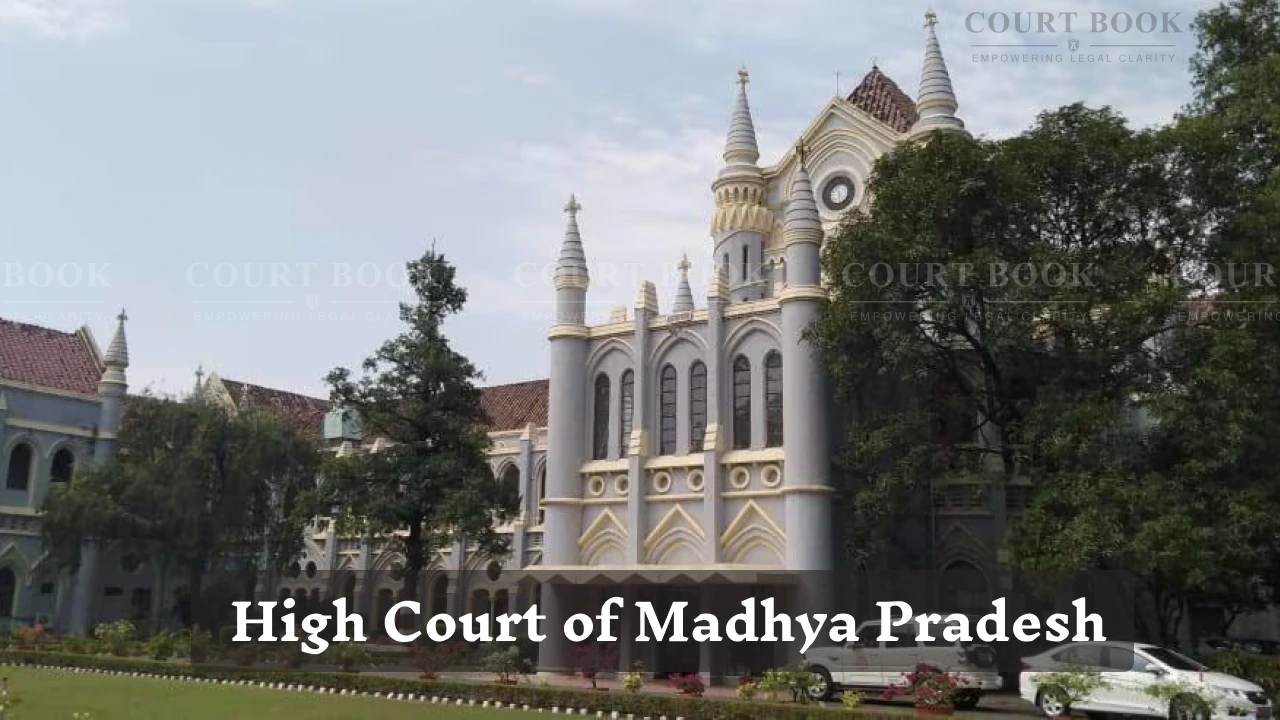
The Madhya Pradesh High Court has quashed an FIR registered against a government school teacher accused of hurting religious sentiments and promoting disharmony by posting an Urdu poem on his WhatsApp status.
Justice B. P. Sharma held that merely sharing a literary work without any intent to incite violence or public disorder cannot attract criminal prosecution under Section 353(2) of the Bharatiya Nyaya Sanhita (BNS).
The case concerned petitioner Faizan Ansari, against whom an FIR was registered at Chicholi Police Station in Betul district after complaints were made regarding a video containing a recitation of the Urdu nazm “Be-haya”.
Background of the Case
According to the petition, Ansari, a government teacher with no criminal antecedents, had uploaded a video on his WhatsApp status on July 22, 2025. The video reportedly contained only a recitation of the Urdu poem “Be-haya”, authored by poet Shoaib Kaini.
Later that day, police called him to the station, seized his mobile phone and registered an FIR under Section 353(2) BNS, alleging that the content was objectionable, misogynistic and capable of disturbing communal harmony.
Ansari approached the High Court seeking quashing of the FIR, contending that he had merely shared a literary work without adding any personal remarks or provocative commentary.
What Happened During the Hearing
Counsel for the petitioner argued that the FIR was legally unsustainable because the essential ingredient of mens rea, or criminal intent, was completely absent. Reliance was placed on the Supreme Court’s rulings in Imran Pratapgarhi v. State of Gujarat and Patricia Mukhim v. State of Meghalaya.
The petitioner argued that artistic and literary expressions are protected under Article 19(1)(a) of the Constitution unless there is a direct call for violence or public disorder.
The State opposed the plea, contending that the investigation was still at an initial stage and that the content had the potential to hurt sentiments and disturb social harmony.
Court’s Key Observation
The Madhya Pradesh High Court observed that the FIR contained only vague and subjective allegations without any material showing incitement to violence or enmity between communities.
The Court noted that the poem was already available in the public domain on Rekhta, a well-known Urdu literature platform, and had been appreciated at literary forums nationally and internationally.
Justice Sharma held that the poem was a “satirical and thought-provoking commentary” on women’s rights and societal hypocrisy rather than an attack on any religion or community.
The Court further observed that strong or unsettling language in literature cannot by itself be treated as criminal speech.
“The requirement of mens rea is not a mere technicality but a substantive safeguard against arbitrary prosecution,” the Court said while discussing offences relating to speech and public mischief.
Court’s Decision
Allowing the petition, the Madhya Pradesh High Court quashed the FIR and all consequential proceedings against the petitioner.
The Court also directed authorities not to take coercive action against Ansari, ordered protection of his life and liberty, and instructed police to return his seized mobile phone.
Case Details
Case Title: Faizan Ansari v State of Madhya Pradesh and Others
Case Number: MCRC No. 14833 of 2026
Court: Madhya Pradesh High Court
Judge: Justice B. P. Sharma
Date: April 30, 2026
Download Order

