

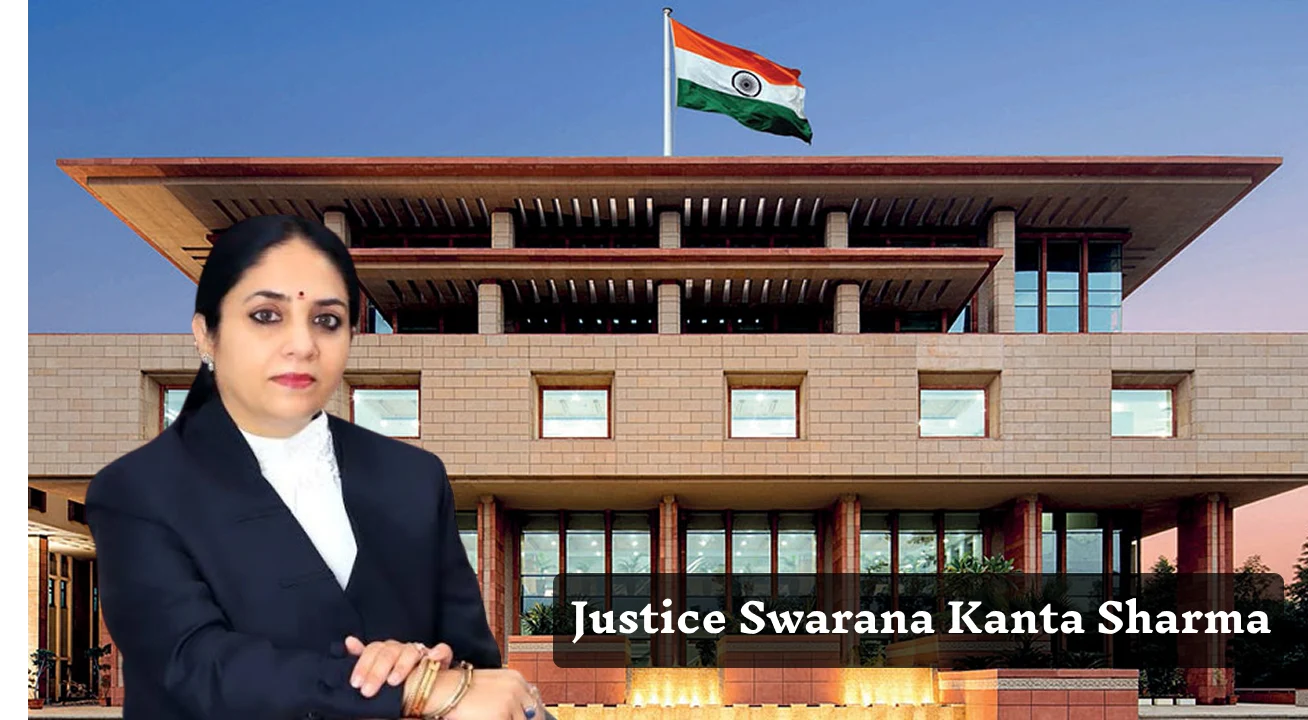
The Delhi High Court has ruled that the second wife of a man cannot seek impleadment in maintenance proceedings filed by the first wife and children under Section 125 of the Code of Criminal Procedure merely on the apprehension that an order may financially affect her.
Justice Swarana Kanta Sharma dismissed an application moved by the respondent-husband’s second wife seeking to be added as a party in a revision petition pending before the Court.
The Court observed that proceedings under Section 125 CrPC are limited to determining the rights and obligations between the claimant wife, children and the respondent husband, and that the second wife was neither a “necessary” nor a “proper” party in such litigation.
Background of the Case
The dispute arose from maintenance proceedings initiated by petitioner Poonam Singh Rawat against her husband Bharat Singh Rawat seeking maintenance for herself and their two children.
Read also:- J&K High Court Grants Bail to Alleged LeT Over Ground Worker, Says Disclosure Statement Alone Insufficient
The Family Court had awarded ₹10,000 per month each to the two children but denied maintenance to the wife under Section 125(4) CrPC after concluding that she had been residing separately from her husband without sufficient reason.
The parties had married in 2005 and had two children. Their matrimonial relationship deteriorated around 2018–2019, leading to multiple proceedings under the Hindu Marriage Act.
In January 2024, the Family Court granted divorce to the husband on grounds of cruelty and desertion. The wife challenged that decree before a Division Bench of the Delhi High Court, which stayed the operation of the divorce decree in August 2024.
Meanwhile, the husband remarried another woman in July 2024, who later sought impleadment in the maintenance revision proceedings.
Read also:- MP High Court Quashes FIR Against Teacher Over Urdu Poem Shared on WhatsApp Status
The first wife opposed the impleadment plea, arguing that the maintenance dispute was exclusively between her, the children, and the husband. She contended that no relief had been sought against the second wife and that her addition would unnecessarily widen the scope of proceedings.
On the other hand, the second wife argued that any maintenance order could adversely affect her financial interests as she was dependent on the respondent-husband. She also claimed that her marriage was legally valid since it was solemnized after the divorce decree.
The Delhi High Court reiterated the distinction between a “necessary party” and a “proper party”, relying upon the Supreme Court decision in Mumbai International Airport Pvt Ltd v. Regency Convention Centre and Hotels Pvt Ltd.
Read also:- Delhi High Court Refuses to Quash POCSO FIR Despite Marriage and Child Between Accused and Prosecutrix
The Court held:
“The applicant is neither a necessary party... nor can she be regarded as a proper party.”
Justice Sharma further observed that allowing such pleas would open the door for every dependent person to seek impleadment in maintenance proceedings, defeating the summary nature of proceedings under Section 125 CrPC.
The Court also clarified that even a divorced wife can claim maintenance under Section 125 CrPC, subject to statutory conditions, and that the husband’s financial obligations towards other dependents could still be considered while determining maintenance quantum.
The Delhi High Court ultimately dismissed the impleadment application filed by the second wife, holding that her participation was unnecessary for deciding the maintenance dispute between the first wife and the husband.
Case Details
Case Title: Poonam Singh Rawat v. Bharat Singh Rawat
Case Number: CRL.REV.P.(MAT.) 171/2024
Court: Delhi High Court
Judge: Dr. Justice Swarana Kanta Sharma
Date: May 5, 2026
Download Order

