

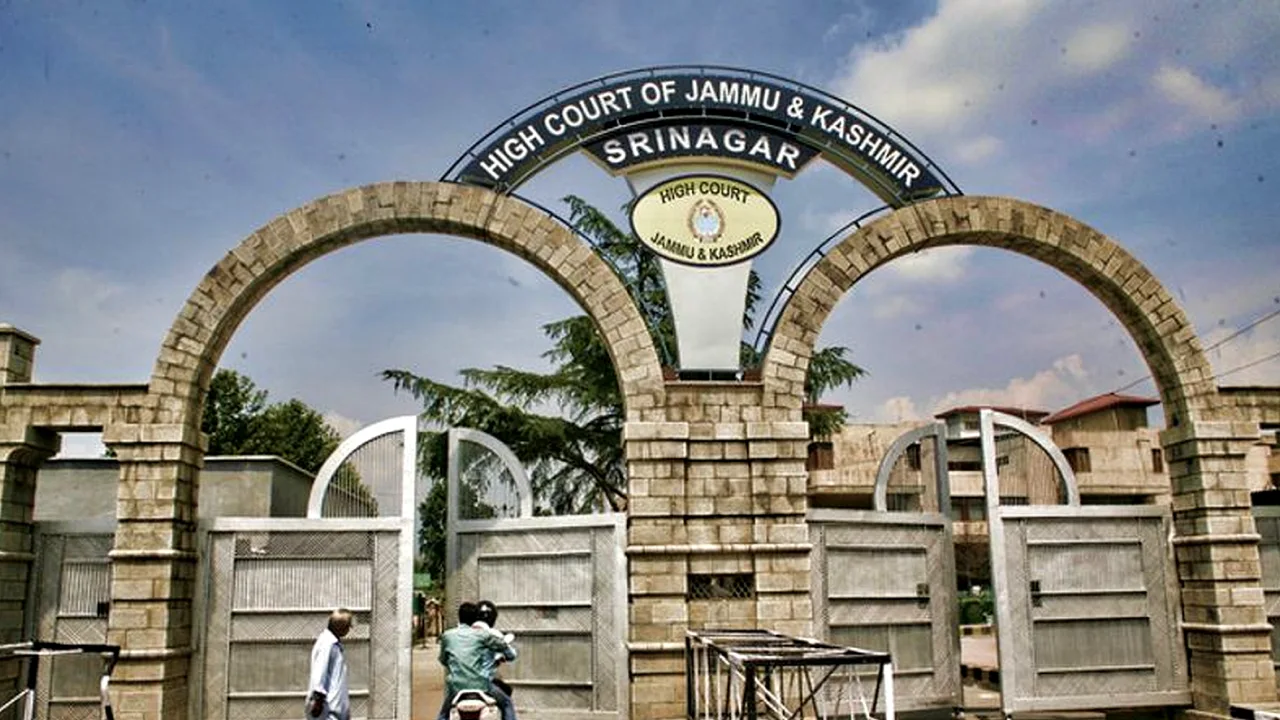
The High Court of Jammu & Kashmir and Ladakh has granted bail to an accused booked under the Unlawful Activities (Prevention) Act (UAPA), observing that the prosecution relied solely on a co-accused’s disclosure statement without producing any independent incriminating material against him.
A Division Bench comprising Chief Justice Arun Palli and Justice Rajnesh Oswal allowed the appeal filed by Burhan Ahmad Mattoo, who had challenged the rejection of his bail plea by the Special Judge (UAPA), Anantnag.
The Court noted that Mattoo had remained in custody since November 17, 2021, while the trial was progressing slowly with only 13 out of 30 prosecution witnesses examined so far.
Background of the Case
The case arose from FIR No. 102/2020 registered at Police Station Srigufwara, Anantnag, under provisions of the IPC, Arms Act and multiple sections of the UAPA.
According to the prosecution, security forces had launched a search operation in Village Wahadan in November 2021 after receiving information regarding the presence of militants. During the operation, an alleged Lashkar-e-Taiba militant, Hafiz Abdullah Malik, was apprehended and weapons were recovered from him.
The prosecution claimed that during interrogation, Malik disclosed that Burhan Ahmad Mattoo was working as an “Over Ground Worker” for the banned outfit. Based on this statement, Mattoo was arrested and later chargesheeted.
Counsel appearing for Mattoo argued that no recovery had been made from his possession and that the entire case against him rested on a disclosure statement allegedly made during police custody.
What Happened During the Hearing
The appellant’s lawyers submitted that witnesses examined during trial had not implicated Mattoo in offences under Sections 13 and 39 of the UAPA. They also argued that the accused had already spent nearly four-and-a-half years in custody.
The Union Territory administration opposed the bail plea, contending that Section 43-D(5) of the UAPA imposed strict restrictions on the grant of bail in terror-related offences.
However, during arguments, the State also conceded before the Bench that apart from the disclosure statement of co-accused Hafiz Abdullah Malik, there was no additional evidence against Mattoo.
Court’s Key Observation
The High Court observed that no incriminating material had been recovered from the appellant and that the prosecution had failed to place any independent evidence linking him to terrorist activities.
Referring to the Supreme Court’s judgment in National Investigation Agency v. Zahoor Ahmad Shah Watali, the Bench reiterated that courts must examine whether accusations appear prima facie true based on the overall material on record.
The Bench further relied on the Supreme Court ruling in Union of India v. K.A. Najeeb, which recognised prolonged incarceration and delayed trial as relevant factors while considering bail under stringent anti-terror laws.
The Court stated that despite the statutory bar under Section 43-D(5) of the UAPA, the appellant had “successfully crossed the hurdle” since the only material against him was the disclosure statement of a co-accused.
Court’s Decision
Allowing the appeal, the High Court set aside the February 20, 2025 order of the Special Judge (UAPA), Anantnag, which had denied bail to the appellant.
The Court directed Mattoo’s release on bail subject to conditions, including furnishing two sureties of ₹1 lakh each, appearing before the trial court on every hearing date, and refraining from contacting prosecution witnesses or leaving Jammu & Kashmir without prior permission of the trial court.
Case Details Section
Case Title: Burhan Ahmad Mattoo v. Union Territory of Jammu and Kashmir
Case Number: Crl A(D) No. 22/2025
Court: High Court of Jammu & Kashmir and Ladakh at Srinagar
Judge: Chief Justice Arun Palli and Justice Rajnesh Oswal
Date: May 7, 2026
Download Judgment

