

In a significant ruling on dowry law, the Supreme Court declined to direct registration of a fresh FIR against a wife and her family, holding that their statements cannot be used to prosecute them for “giving dowry.” The Court emphasized the protective shield provided under the Dowry Prohibition Act.
Background of the Case
The case, Rahul Gupta vs. Station House Officer and Others (SLP (Crl.) No. 13755 of 2025), arose from a matrimonial dispute that escalated into criminal proceedings.
The wife had earlier filed an FIR in 2023 alleging cruelty and dowry-related offences against her husband and his family. During the investigation, she and her relatives stated that dowry had been given at the time of marriage.
Read also:- Kerala High Court Refuses to Quash Cheque Bounce Case, Says Withdrawal Slip Can Qualify as Cheque
Relying on these statements, the husband later sought registration of a separate FIR against the wife and her family under Section 3 of the Dowry Prohibition Act, which penalizes both giving and taking of dowry.
However, his complaint was rejected at multiple stages - by the Magistrate, the Sessions Court, and the High Court - leading him to approach the Supreme Court.
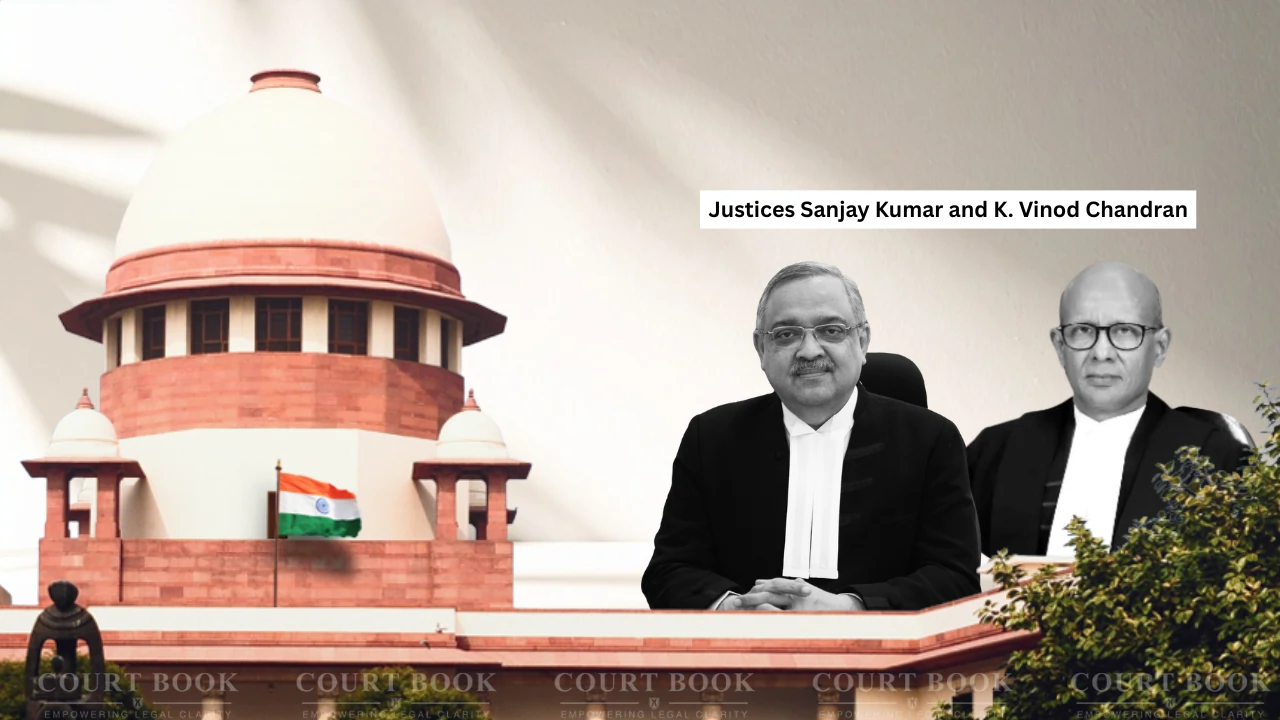
The bench, led by Justice Sanjay Kumar, closely examined whether statements made by the wife and her family during investigation could form the basis of criminal action against them.
The Court clarified that Section 7(3) of the Dowry Prohibition Act plays a crucial role in such cases. It protects the “person aggrieved” - typically the wife and her family - from being prosecuted based solely on their own statements.
Read also:- Supreme Court Upholds COFEPOSA Detention in Gold Smuggling Case, Rejects Pleas of Two Accused
“The statements made by the aggrieved persons cannot be used as a foundation to prosecute them for giving dowry,” the bench observed.
The Court also noted that the law recognizes the social reality where families may be compelled to give dowry, and therefore, they are treated as victims rather than offenders.
Importantly, the Court pointed out that the petitioner had not produced any independent evidence of dowry being given. His entire case relied only on the statements made by the wife and her relatives during the earlier investigation.
Addressing the argument for a second FIR, the Court acknowledged that a fresh FIR can be registered in certain situations, such as when there is a counter-complaint or new evidence.
Read also:- Tamannaah Bhatia Loses ₹1 Crore Damages Appeal in Madras HC Over Alleged Image Misuse by Power Soaps
However, it made clear that in the present case, the requirement was not met. Since the allegations were based only on statements already recorded, there was no independent material to justify a separate criminal case.
After reviewing the legal framework and facts, the Supreme Court found no error in the decisions of the lower courts.
“The grievance of the petitioner has no merit,” the bench concluded, adding that the statutory protection under Section 7(3) squarely applied to the wife and her family.
The Special Leave Petition was accordingly dismissed. Pending applications were also disposed of.
Case Details
Case Title: Rahul Gupta vs. Station House Officer and Others
Case Number: SLP (Crl.) No. 13755 of 2025
Judges: Justice Sanjay Kumar and Justice K. Vinod Chandran
Decision Date: April 16, 2026
Download Judgment

