

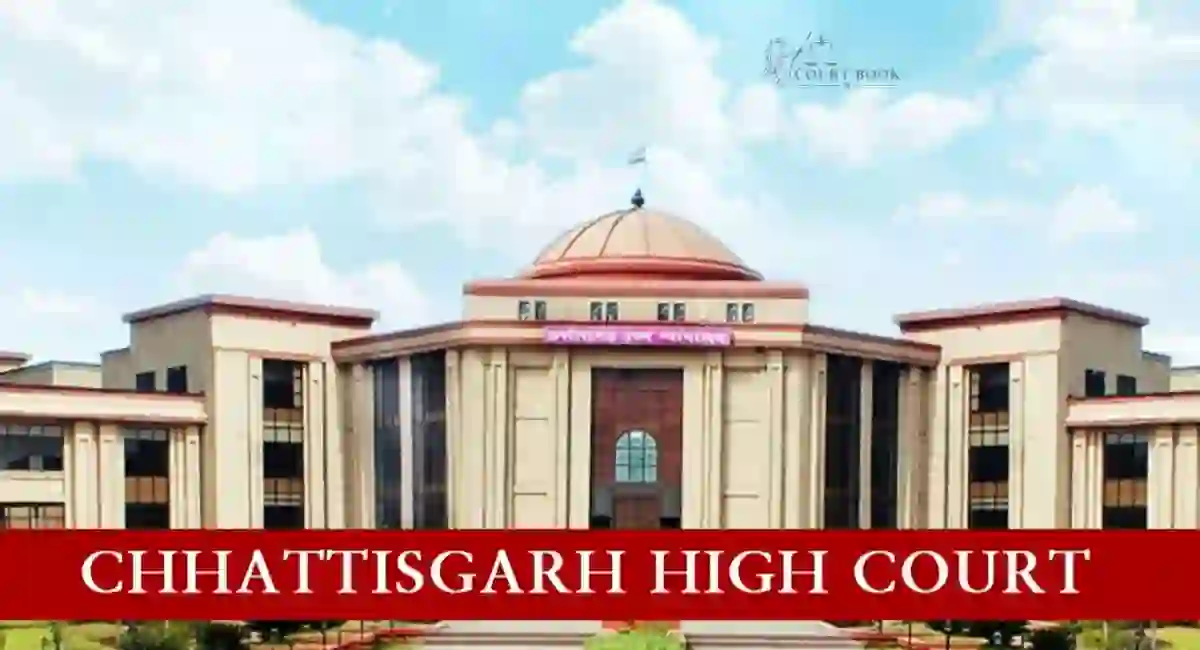
In a significant ruling on personal religious freedom, the High Court of Chhattisgarh has held that individuals can conduct prayer meetings in their homes without prior permission, as long as no law is violated. The court set aside multiple police notices issued to residents for organizing Christian prayer gatherings.
Background of the Case
The case, Badri Prasad Sahu & Anr. vs State of Chhattisgarh & Ors., was heard by Justice Naresh Kumar Chandravanshi on March 24, 2026.
The petitioners, residents of village Godhna in Janjgir-Champa district, approached the court under Article 226 of the Constitution. They challenged police notices issued under Section 94 of the Bharatiya Nagarik Suraksha Sanhita (BNSS), 2023, which restrained them from conducting prayer meetings in their own house.
Read also:- Rajasthan HC Clears JDA’s Move to Sack Assistant Advocates, Says No Right to Continue
According to their counsel, the petitioners had been organizing Christian prayer meetings since 2016 in a hall constructed on their private property. They argued that these gatherings were peaceful and did not cause any disturbance. However, local police repeatedly issued notices and allegedly interfered with these activities.
The petitioners contended that:
• They were lawful owners of the property where prayers were conducted.
• No illegal activity or public nuisance occurred during the gatherings.
• Earlier, the Gram Panchayat had issued a “No Objection Certificate” (NOC), which was later withdrawn under alleged pressure.
• Police action amounted to interference with their fundamental rights, particularly under Article 19.
They sought quashing of the notices and protection from further interference.
The State opposed the petition, arguing that:
• Criminal cases had previously been registered against the petitioners.
• The petitioners had not obtained prior permission from authorities to hold such gatherings.
• The police acted within their powers to maintain law and order.
The State sought time to file a detailed reply.
The court declined to grant additional time to the State and proceeded to decide the matter based on available records.
In a clear observation, the bench stated:
“There is no such law restraining any person to organize prayer or prayer meeting in their dwelling house.”
The court emphasized that prior permission is not required for conducting prayer meetings at home, provided no laws are violated.
Read also:- Calcutta High Court Examines ECI’s Power to Transfer Top Officials Ahead of Polls
It further clarified that authorities are free to act only if:
• There is noise pollution, or
• A law-and-order situation arises.
The bench added:
“Authorities may take action under relevant statutes only in case of nuisance or disturbance.”
The High Court directed the police authorities not to interfere with the petitioners’ civil rights or harass them under the guise of inquiry.
It quashed the impugned police notices dated October 18, 2025, November 22, 2025, and February 1, 2026. However, the court declined to examine the Gram Panchayat’s decision to withdraw the NOC.
Accordingly, the writ petition was allowed to the extent indicated.
Case Details:
Case Title: Badri Prasad Sahu & Anr. vs State of Chhattisgarh & Ors.
Case Number: WPC No. 1281 of 2026
Judge: Justice Naresh Kumar Chandravanshi
Decision Date: 24 March 2026
Download Order

