

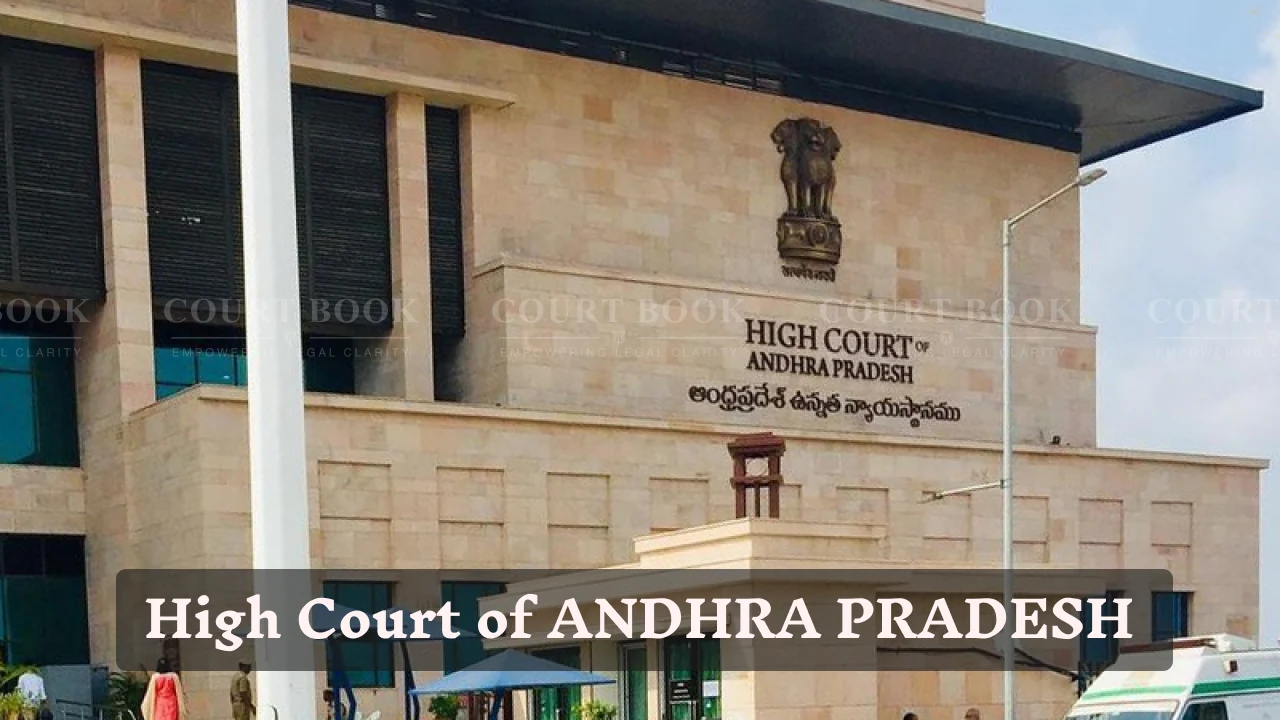
The High Court of Andhra Pradesh at Amaravati has stepped in to protect a property owner from immediate demolition of his shops, stressing that authorities must follow due legal procedure before taking such action.
The case revolved around a dispute between a private shop owner and municipal authorities over a proposed road widening project.
Background of the Case
The petitioner, K. Sreenivasulu, approached the Court after the Kadapa Municipal Corporation allegedly attempted to demolish his two shops without issuing any formal notice or starting acquisition proceedings.
He argued that the property had been in his family’s possession since 1967, supported by a registered sale deed, and that he had been regularly paying property taxes and electricity bills.
According to the plea, the proposed demolition was part of a road widening plan, but no compensation process had been initiated under the law governing land acquisition.
The municipal authorities defended their action by relying on Section 405 of the Andhra Pradesh Municipal Corporations Act, 1955.
They claimed that the petitioner’s structures were encroachments on public road land and could be removed without prior notice in the interest of public convenience.
Officials also stated that a road development plan had been published and that the petitioner was orally instructed to clear the alleged encroachment.
Justice Gannamaneni Ramakrishna Prasad examined the scope of Section 405 and relevant Supreme Court rulings on removal of encroachments.
The Court clarified that while the law allows removal without notice in urgent situations, this is only an exception-not the general rule.
“The power to remove without notice can be exercised only in exceptional and compelling circumstances,” the Court observed, emphasizing that authorities must normally follow principles of natural justice.
The bench further noted that where a person claims long-standing possession or ownership backed by documents, the State cannot bypass due process.
The Court highlighted that:
• Natural justice-meaning the right to be heard-is a basic requirement in most cases.
• Immediate action without notice is justified only in urgent or recent encroachment situations.
• In cases involving long possession, authorities must issue notice and conduct a proper hearing.
Importantly, the Court distinguished between clearing illegal encroachments and acquiring property for public purposes, stating that lawful acquisition requires following statutory procedures and compensation norms.
Allowing the writ petition, the High Court directed the municipal authorities to follow due process before taking any action against the petitioner’s shops.
“The Respondent Authorities [must] issue notice, provide reasonable opportunity of hearing, and pass a speaking order in accordance with law,” the bench directed.
The Court made it clear that it had not expressed any opinion on the merits of ownership or encroachment, and that authorities are free to proceed in accordance with law after completing the required process.
No costs were imposed, and all pending applications were closed.
Case Details:
Case Title: K. Sreenivasulu vs State of Andhra Pradesh & Anr.
Case Number: W.P. No. 3506 of 2026
Judge: Justice Gannamaneni Ramakrishna Prasad
Decision Date: 09 April 2026
Download order

