

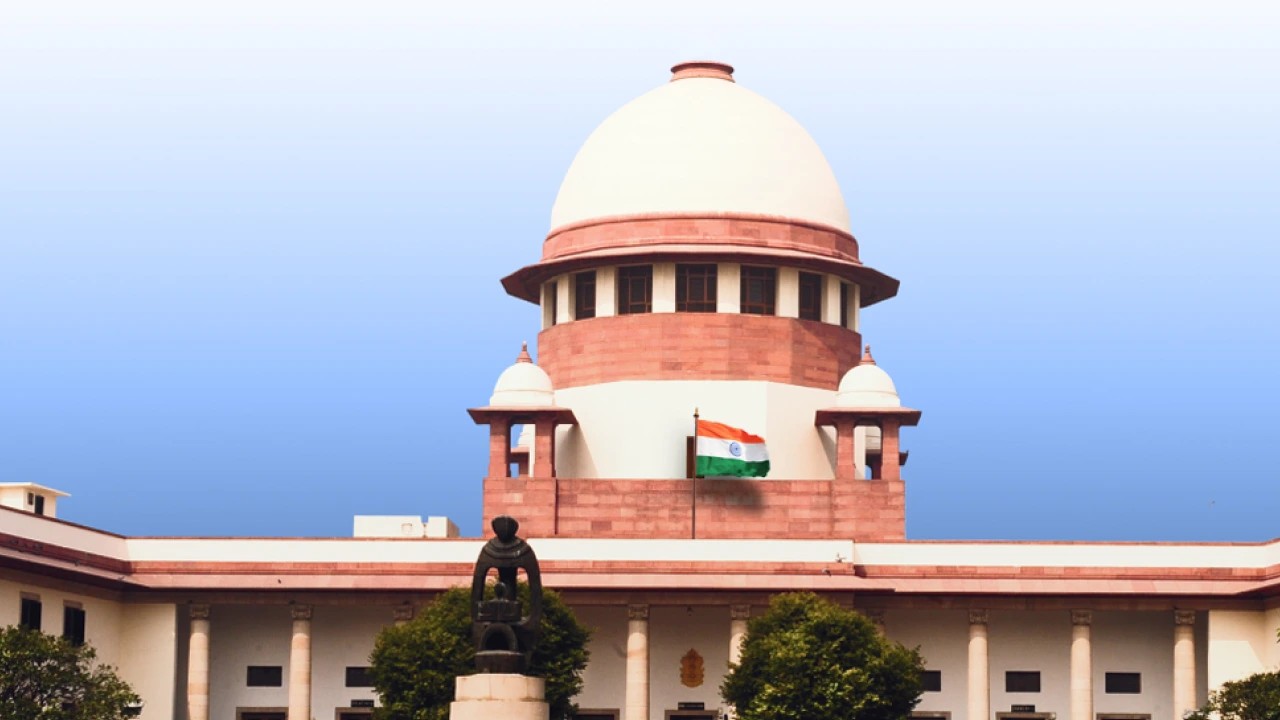
The Supreme Court of India has ruled that a plaint involving complex commercial transactions cannot be rejected at the threshold if it discloses a triable cause of action. The Court restored a suit filed by M/s Marg Limited, overturning a Madras High Court decision that had dismissed the case under Order VII Rule 11 of the Code of Civil Procedure.
The judgment was delivered by a bench comprising Justice Alok Aradhe and Justice Pamidighantam Sri Narasimha on April 21, 2026.
Background of the Case
The dispute arose from a commercial real estate transaction in Chennai. M/s Marg Limited had developed a large IT building and mortgaged it to secure loans from a bank.
Read Also:- Supreme Court Clarifies Remedy: Legal Heirs Must Challenge Arbitral Awards Under Section 34, Not Article 227
After defaulting on repayments, the company entered into settlement negotiations with both the bank and prospective buyers. A Memorandum of Agreement (MoA) was drafted outlining a composite transaction involving sale of the property and additional financial obligations linked to future leasing and refurbishment.
While sale deeds were eventually executed in favour of the respondents, the appellant alleged that a significant portion of the agreed consideration—around ₹53 crore—remained unpaid.
What Happened During the Hearing
The respondents sought rejection of the plaint under Order VII Rule 11 CPC, arguing that:
• The MoA was never signed by them and was not legally enforceable
• The sale transaction was complete upon execution of registered sale deeds
• The suit was undervalued and lacked proper court fees
The Madras High Court accepted these arguments and rejected the plaint, concluding that no cause of action survived after the sale deeds were executed.
Before the Supreme Court, the appellant argued that the transaction was a composite arrangement, partially implemented, and supported by negotiations and conduct, including WhatsApp communications and financial arrangements.
The Supreme Court held that the High Court had exceeded its jurisdiction by examining the merits of the case at a preliminary stage.
It emphasized that while considering an application under Order VII Rule 11 CPC, courts must assume the plaint’s allegations to be true and cannot conduct a “mini-trial.”
The Court noted that the plaint clearly set out:
• A negotiated commercial arrangement
• Partial implementation through sale deeds
• Alleged non-payment of substantial consideration
• Specific events giving rise to the cause of action
The bench observed that determining whether the MoA constituted a binding contract or whether obligations were breached requires evidence and cannot be decided at the threshold stage.
Court’s Decision
Setting aside the High Court’s order, the Supreme Court restored the suit and directed that it proceed to trial.
On the issue of court fees, the Court clarified that:
• Deficiency in court fees is a curable defect
• Plaint cannot be rejected without giving the plaintiff an opportunity to rectify valuation
The trial court has now been directed to allow the appellant time to correct valuation and pay requisite court fees.
Case Details:
Case Title: M/s Marg Limited v. Sushil Lalwani & Ors.
Case Number: Civil Appeal arising out of SLP (C) No. 25132 of 2025
Court: Supreme Court of India
Judge: Justice Alok Aradhe; Justice Pamidighantam Sri Narasimha
Date: April 21, 2026
Download Judgment

