

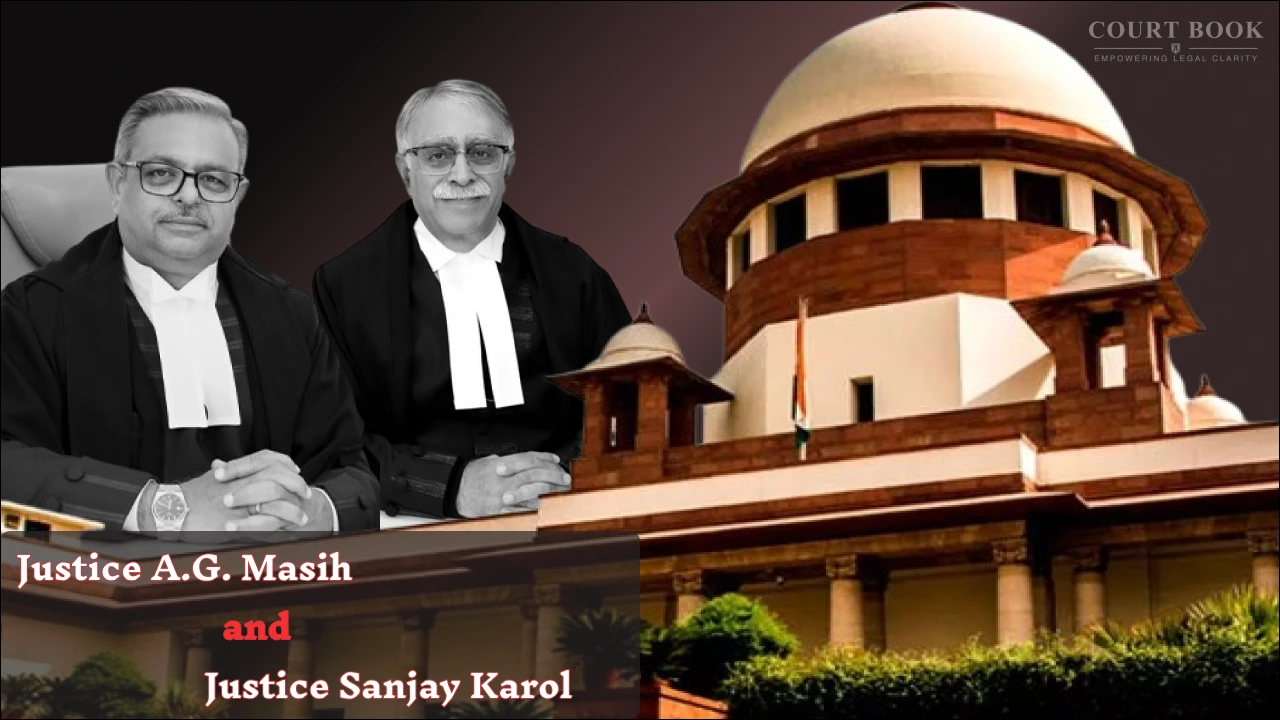
In a significant ruling, the Supreme Court of India stepped in to correct what it termed “prima facie erroneous” observations made by the Karnataka High Court in a long-running property dispute near Ulsoor Lake, Bengaluru. The Court clarified that certain remarks in the High Court’s order should not influence ongoing civil proceedings between the parties.
Background of the Case
The dispute revolves around competing ownership claims over parcels of land identified under different survey numbers near Ulsoor Lake. The appellants, represented by the Muniswamappa family lineage, claimed title tracing back to a purchase made in 1901.
Read also:- CBI Opposes Kejriwal’s Recusal Plea in Delhi Excise Case, Calls Bias Allegations ‘Baseless’
On the other side, rival claims emerged from the Chettiar group, asserting ownership through an earlier auction sale dating back to 1872. A third party, M/s Casablanca Estate, claimed rights over a separate property (Survey No. 104), arguing it was distinct from the disputed land.
Over the years, multiple suits, writ petitions, and revenue proceedings were initiated, largely due to confusion surrounding the identity and location of the properties involved.
The present appeals arose not from the final outcome of the High Court’s decision, but from certain observations made in its February 2024 order.
The appellants argued that these remarks incorrectly suggested that M/s Casablanca Estate had claimed ownership over the disputed property, and that an earlier 2015 High Court order had recognized such ownership.
Read also:- Allahabad High Court Rules Only Advocates Can Argue in Court, Rejects Power of Attorney Claim
They contended that these findings were factually inaccurate and could prejudice ongoing litigation.
A bench comprising Justice Augustine George Masih and Justice Sanjay Karol examined the record and agreed that the High Court had mischaracterised both the respondent’s stand and the effect of earlier proceedings.
“The observations… do not accurately reflect either the pleaded position… or the directions contained in the order dated 20.02.2015,” the bench noted.
The Court pointed out that M/s Casablanca Estate had consistently maintained that its property (Survey No. 104) was distinct from the disputed Survey Nos. 102 and 103.
It further clarified that the 2015 High Court order had not determined ownership, but had merely directed parties to approach a civil court for adjudication of title and identity of the property.
Read also:- Judgments Without ‘Points for Determination’ Not Legally Sustainable: Supreme Court
Key Legal Issue
At the heart of the case was whether judicial observations though not part of the final operative order could impact parallel or future proceedings.
The Supreme Court emphasized that courts must be cautious in recording factual positions, especially in complex property disputes where identity and title remain unresolved.
While the Court chose not to interfere with the High Court’s final decision rejecting the plaint in the earlier suit, it issued an important clarification.
Read also:- Right to Choose Partner: Delhi HC Grants Protection to Married Couple Facing Threats from Woman’s Father
It held that the disputed observations in the High Court judgment “shall not be construed as a finding” on the title, identity, or location of the property.
The bench also directed that these observations must not be relied upon by any party in ongoing or future proceedings.
“The disputes… are to be decided by the competent court based on the pleadings and evidence,” the Court stated, reinforcing that the matter remains open for proper adjudication.
The appeals were disposed of with these clarifications, and no costs were awarded. Pending applications were also closed.
Case Details
Case Title: Ravi Kala & Anr. vs M/s Casablanca Estate & Ors.
Case Number: Civil Appeal arising out of SLP (C) Nos. 19212–19213 of 2024
Judges: Justice Sanjay Karol & Justice Augustine George Masih
Decision Date: April 16, 2026
Download Judgment

