

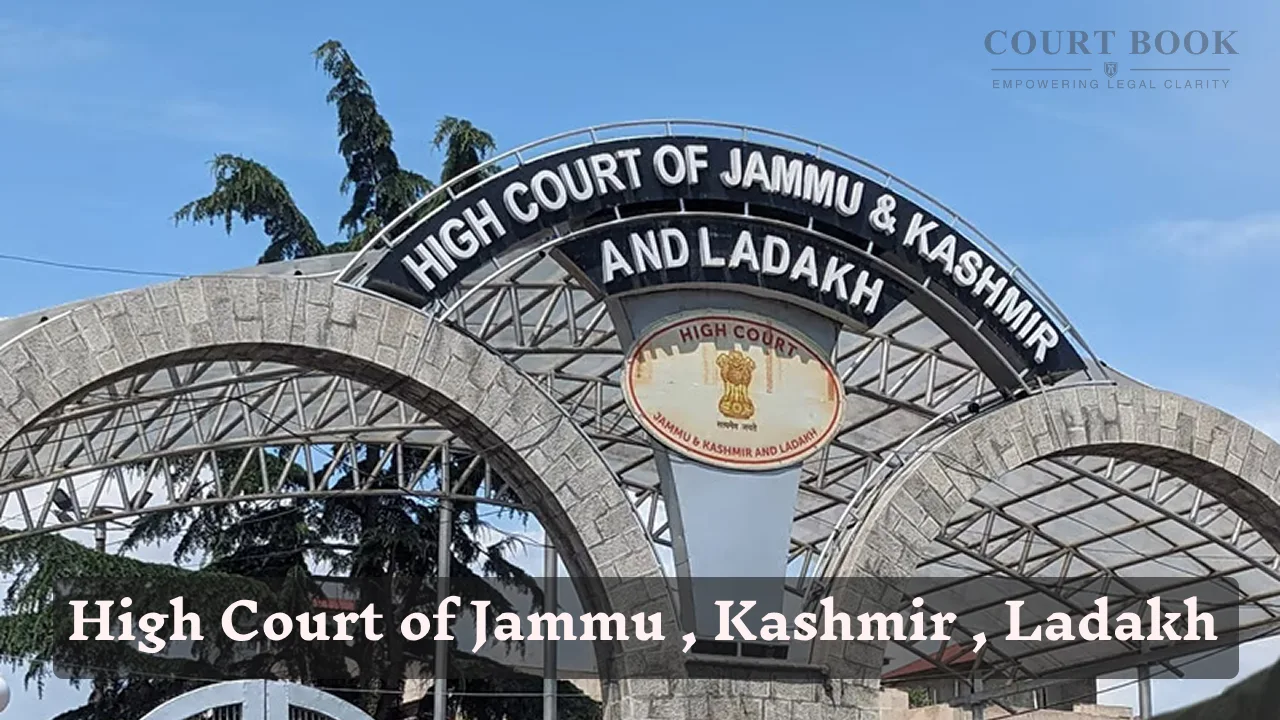
In a significant ruling on service law, the High Court of Jammu & Kashmir and Ladakh has dismissed an intra-court appeal filed by a Food Corporation of India (FCI) officer challenging his transfer to Uttar Pradesh. The Court reiterated that transfer is an essential part of government service and courts should interfere only in rare cases.
Background of the Case
The case, Gaganpreet Singh Wazir v. Food Corporation of India & Ors., arose from the transfer of the appellant, a Category-II officer working as Manager (Depot), from Jammu & Kashmir to Uttar Pradesh.
Read also:- Supreme Court Flags Unfair Air Force PC Process, Grants Pension Relief to Women Officers
The officer argued that his transfer order dated March 2025 ignored his preferred postings Punjab, Haryana, and Delhi and was instead issued with a motive to victimise him. He claimed that after he raised concerns about alleged irregularities in stock management, he was subjected to adverse postings, including being sent to a “hard station” in Kupwara.
He further alleged that his transfer to Uttar Pradesh was influenced by bias, as a senior officer against whom he had earlier complained was posted there.
The Division Bench, comprising Justice Sindhu Sharma and Justice Shahzad Azeem, carefully examined the scope of judicial review in transfer matters.
Read also:- Supreme Court Flags Systemic Bias in Army PC Selection, Sets Aside AFT Findings in Women Officers’ Case
The bench observed that transfer is a normal part of service and an employee cannot claim a vested right to remain at a particular place. It stated,
“It is entirely for the competent authority to decide when and where a public servant is to be transferred.”
The Court further emphasized that administrative guidelines on transfers do not create enforceable legal rights. Even if such guidelines are not strictly followed, it does not automatically invalidate a transfer order.
On allegations of mala fide intent, the Court found them to be unsubstantiated. It noted that merely alleging bias is not sufficient; there must be specific material and detailed pleadings to support such claims.
Read also:- Supreme Court Slams Navy’s PC Process, Orders Fresh Selection for Officers
The bench clarified,
“Mere use of expressions such as ‘malice’ is not sufficient… it is necessary to plead full particulars.”
The judges also highlighted that strong and convincing evidence is required to prove mala fide action, which was lacking in the present case.
Key Legal Principles Highlighted
• Transfer is an incident of service, not a punishment by default
• Courts should not interfere unless there is clear illegality or proven mala fide
• Employee preference is not binding on the employer
• Transfer policies are administrative guidelines, not enforceable rights
Read also:- Transfer U/S 24(5) CPC Can Cure Jurisdiction Defect In Suit: Allahabad High Court
After considering the arguments and records, the Court found no illegality or procedural flaw in the transfer order. It held that the transfer was made on administrative grounds and the appellant failed to prove any mala fide intent.
The bench concluded that there was no reason to interfere with the earlier judgment of the Single Judge, which had already dismissed the writ petition.
Accordingly, the appeal was dismissed, and the transfer order to Uttar Pradesh was upheld.
Case Details
Case Title: Gaganpreet Singh Wazir v. Food Corporation of India & Ors.
Case Number: LPA No. 221/2025 in WP(C) No. 743/2025
Judge: Justice Sindhu Sharma & Justice Shahzad Azeem
Decision Date: 23 March 2026
Counsels:
• For Petitioner: Mr. Amit Gupta, Sr. Advocate with Mr. Aswad Attar
• For Respondents: Mr. Jahangir Iqbal Ganai, Sr. Advocate with Mr. Sheikh Umar Farooq
Download Judgment

