

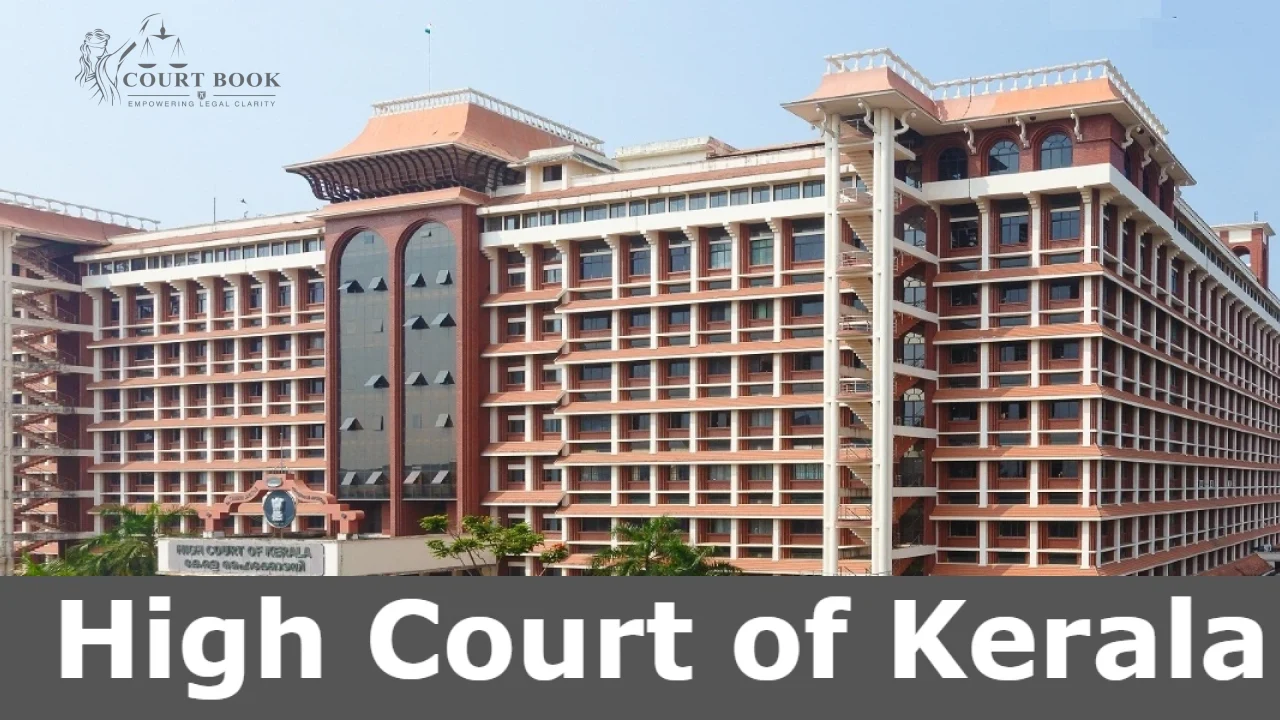
The Kerala High Court has set aside the dismissal of an engineer from the Malabar Cancer Centre, holding that the punishment imposed was excessive compared to the allegations. The court stepped in under its constitutional powers, emphasizing fairness in disciplinary action.
Background of the Case
The petitioner, Sudeep K.T., had been serving as Head of the Department (Engineering and Maintenance) since 2009. In 2019, the institution took over control of his department, citing delays in projects and maintenance work.
A show cause notice followed, and later a formal charge memo accused him of causing significant delays, particularly in a KIIFB project. The petitioner denied the allegations. Despite this, a departmental enquiry was conducted, and he was suspended and eventually dismissed from service in May 2023.
The dismissal order was also said to have considered a complaint filed under workplace harassment law, though that complaint was later set aside in separate proceedings.
The court closely examined the charges and the process followed by the court observed.
The judge also pointed out that the dismissal order relied partly on a harassment complaint that had already been quashed due to violation of natural justice.
On the key issue of punishment, the court stressed the principle of proportionality - meaning the penalty must match the seriousness of the misconduct.
“The punishment imposed… is highly ‘disproportionate’,” the court held.
Relying on Supreme Court precedent, the court explained that judicial review allows intervention when an administrative decision is unreasonable or excessive.
“The doctrine of proportionality… permits scrutiny of excessive penalties,”
the judgment noted, highlighting that courts can step in when there is imbalance between charges and punishment.
Read also:- Gauhati HC Says Pending Investigation Alone Can’t Block Promotion, Orders Review of Sub-Inspector’s Case
In this case, the court found that a delay of about 15 months in project execution, without clear proof of intentional misconduct, did not justify the “maximum punishment” of dismissal
The High Court set aside the dismissal order dated May 11, 2023, to the extent it removed the petitioner from service.
The court directed the competent authority to reconsider the punishment afresh, in accordance with law. It also held that the petitioner’s entitlement to subsistence allowance must be re-examined.
The writ petition was allowed on these terms.
Case Details:
Case Title: Sudeep K.T. v. Malabar Cancer Centre & Ors.
Case Number: WP(C) No. 30601 of 2023
Judge: Justice Harisankar V. Menon
Decision Date: 09 March 2026
Download Judgment

