

In a significant ruling, the Supreme Court set aside a Madhya Pradesh High Court order that had denied promotion to a long-serving cooperative employee on the ground of educational qualification. The top court held that the employee had been unfairly discriminated against when similarly placed colleagues were promoted despite having the same academic background.
Background of the Case
The appellant, Kamal Prasad Dubey, had been serving the Primary Agricultural Credit Cooperative Society at Nayagaon in Panna district since 1987. Appointed as Sahayak Samiti Sevak with a Higher Secondary qualification, he rose through experience and was later assigned responsibilities as Society Manager.
Read also:- Rajasthan High Court Stays Consumer Proceedings Against Actor Salman Khan Over Pan Masala Advertisement Row
When new service rules came into force in 2013, a graduation degree was introduced as a qualification for promotion to Society Manager. The Society’s Board and General Body, citing Dubey’s 28 years of service, recommended relaxation in educational qualification. The Registrar, however, rejected the recommendation.
Dubey challenged the rejection. A Single Judge of the Madhya Pradesh High Court ruled in his favour, directing relaxation of the qualification. However, the Division Bench reversed that decision, holding that the Registrar acted within his authority. The matter then reached the Supreme Court.
The Supreme Court observed:
“Discrimination is the other name of injustice.”
The Court noted that two other employees also holding only Higher Secondary qualifications had been granted similar relaxation and promoted by the same authority. The Bench said the Registrar had accepted relaxation for those employees but declined the same for Dubey without any valid justification.
The judges found this approach arbitrary and violative of the constitutional guarantee of equality. They pointed out that the rules in force permitted relaxation based on experience, competence and seniority, and the Society’s Board had lawfully exercised that power.
Read also:- Supreme Court Upholds Rejection of EWS Claims for Health Worker Posts Over Invalid Income Certificates
The Court remarked that denying the appellant the same treatment extended to similarly placed colleagues amounted to hostile discrimination, attracting Articles 14 and 16 of the Constitution.
The Bench highlighted that the appellant had an unblemished service record and decades of experience. The rejection of his promotion, despite recommendations from both the Board of Directors and the General Body of the Society, was found to be arbitrary.
Read also:- Staring at Co-Worker Breast Can Be Misconduct, But Not a Crime U/S 354-C of IPC: Bombay High Court
The judges also pointed out contradictions in the High Court Division Bench’s reasoning on one hand stating that the Registrar had discretion, and on the other noting that the Board was the competent authority to grant relaxation. This inconsistency, the Supreme Court said, undermined the validity of the decision.
The Supreme Court allowed the appeals and set aside the orders of the Division Bench dated 11 November 2019 and 17 December 2019. The effect is that the appellant’s entitlement to relaxation and promotion stands restored. All pending interlocutory applications were declared infructuous.
Case Details
Case Title: Kamal Prasad Dubey v. State of Madhya Pradesh & Ors.
Case Number: Civil Appeals arising from SLP (C) Nos. 13578–13579 of 2020
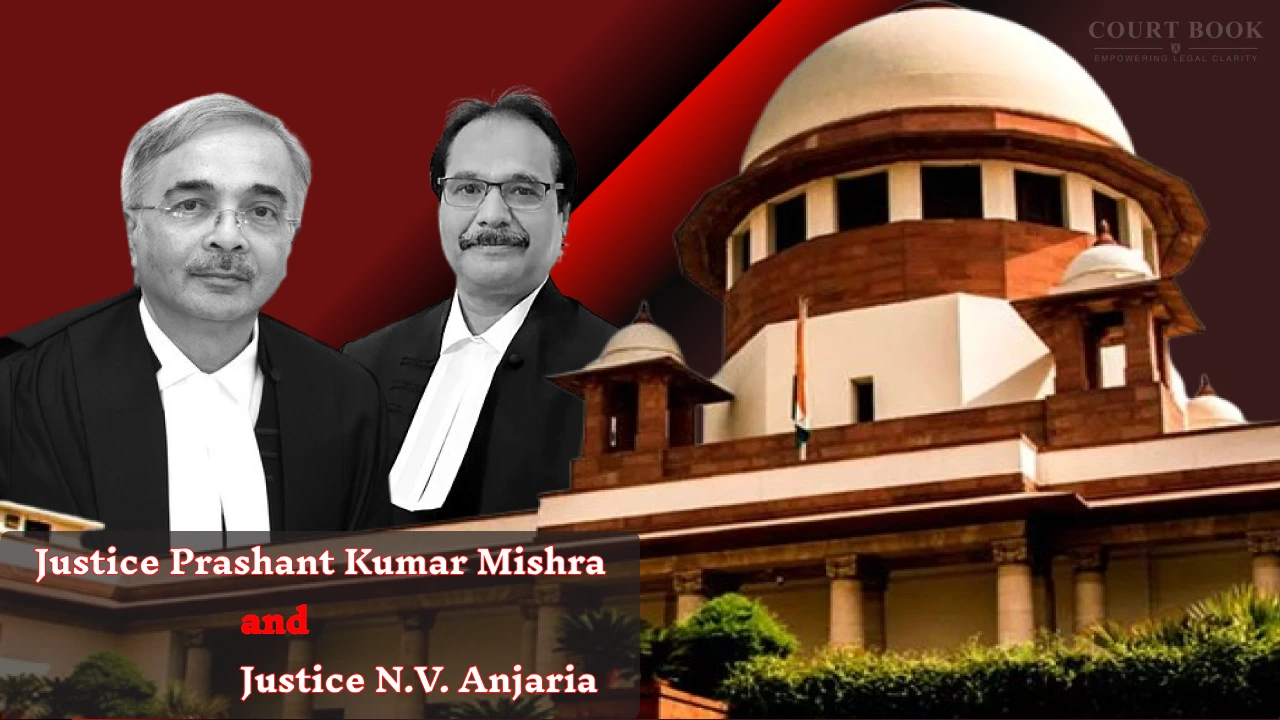
Judges: Justice Prashant Kumar Mishra & Justice N.V. Anjaria
Decision Date: 10 April 2026
Download Judgment

