

The Supreme Court has upheld the conviction of Gopi Chand alias Pappu in a decades-old double murder and truck theft case from Delhi, ruling that the testimony of an approver can form the basis of conviction when it is reliable and supported by surrounding evidence.
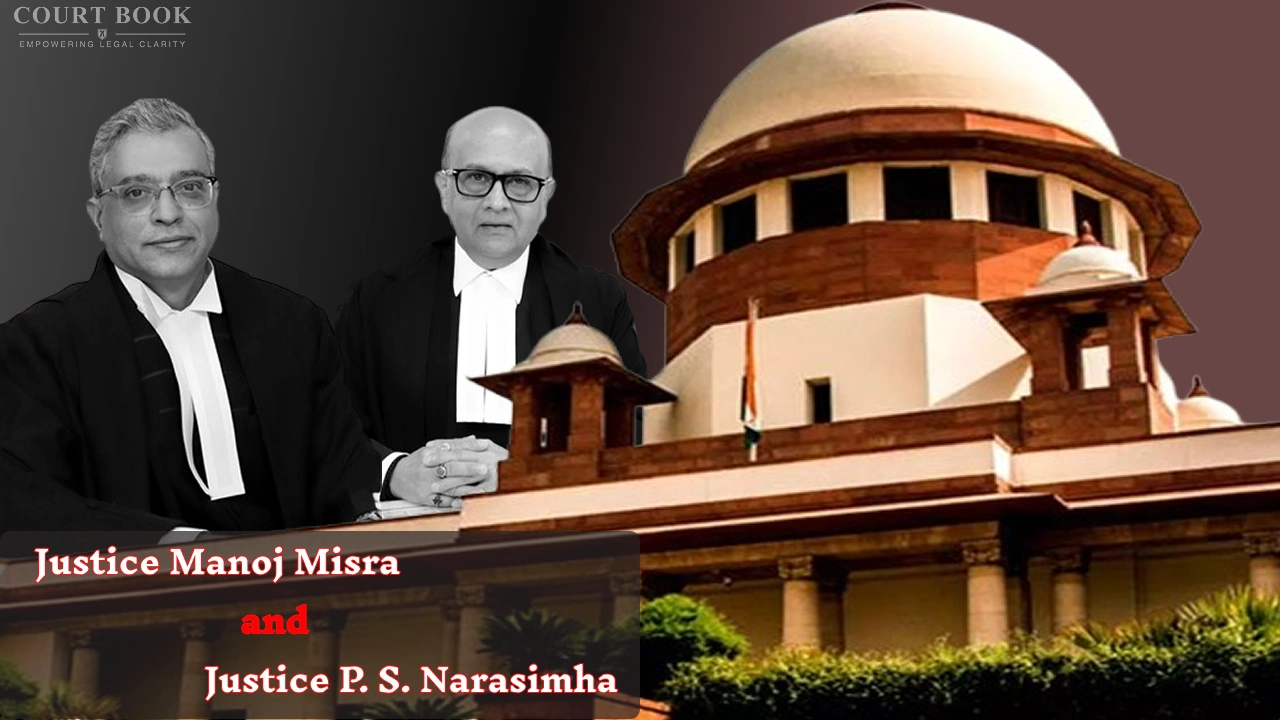
A division bench of Justice Manoj Misra and Justice P. S. Narasimha dismissed the appeals filed by Gopi Chand and affirmed the findings of the trial court and the Delhi High Court.
Background of the Case
The case traces back to July 1984, when two bodies were recovered in Delhi under separate police station jurisdictions. The deceased, Arun Kumar and Jasbir, were working as the driver and cleaner of a truck.
According to the prosecution, a group of accused persons hatched a plan to steal the truck. The driver and cleaner were allegedly killed during the execution of that plan, and the vehicle was taken away.
During the investigation, one of the accused, Ashok Kumar, turned approver and later testified as a prosecution witness. His statement became the central piece of evidence in the trial.
The trial court convicted Gopi Chand and other accused persons for offences including murder, dacoity and conspiracy. The Delhi High Court later upheld the convictions.
Court’s Observations
Before the Supreme Court, the appellant argued that the conviction was unsafe because it rested primarily on the testimony of an approver. It was also contended that the approver's statement was self-serving and lacked sufficient corroboration.
The Bench rejected these arguments.
Explaining the legal position, the Court observed that while courts generally seek corroboration of an approver's testimony as a matter of prudence, there is no absolute rule of law requiring corroboration in every case.
The Court noted that the approver's version was not entirely exculpatory because he admitted his own participation in the events leading to the crime.
“The testimony of PW-1 was reliable and creditworthy and could form the basis of conviction,” the Bench observed.
The Court further found that several circumstances independently supported the approver's account, including the recovery and identification of the stolen truck, identification of the victims, recovery of physical evidence, and forensic findings.
Conspiracy and Murder Charges
Gopi Chand also argued that he could not be convicted for conspiracy to commit murder because no specific charge had been framed against him and there was insufficient evidence of his involvement.
The Supreme Court disagreed.
The Bench held that the record showed he was aware of the allegations against him and suffered no prejudice during the trial. The Court further concluded that the murders were a foreseeable consequence of the criminal plan to seize the truck.
“The argument that the appellant was not aware that the driver and cleaner would be killed in the process is not acceptable, because their murder was a foreseeable event,” the Court said.
According to the judgment, the manner in which the victims were separated and killed demonstrated a pre-planned conspiracy in which the appellant was an active participant.
Decision
Dismissing both appeals, the Supreme Court upheld Gopi Chand's conviction for all offences recorded by the trial court and affirmed by the Delhi High Court. The Court concluded that the prosecution had successfully established both the conspiracy and the appellant's involvement in the crimes.
Case Details
Case Title: Gopi Chand @ Pappu v. State (NCT of Delhi)
Case Number: Criminal Appeal Nos. 847 & 848 of 2014
Judge: Justice Manoj Misra and Justice P. S. Narasimha
Decision Date: 29 May 2026


