

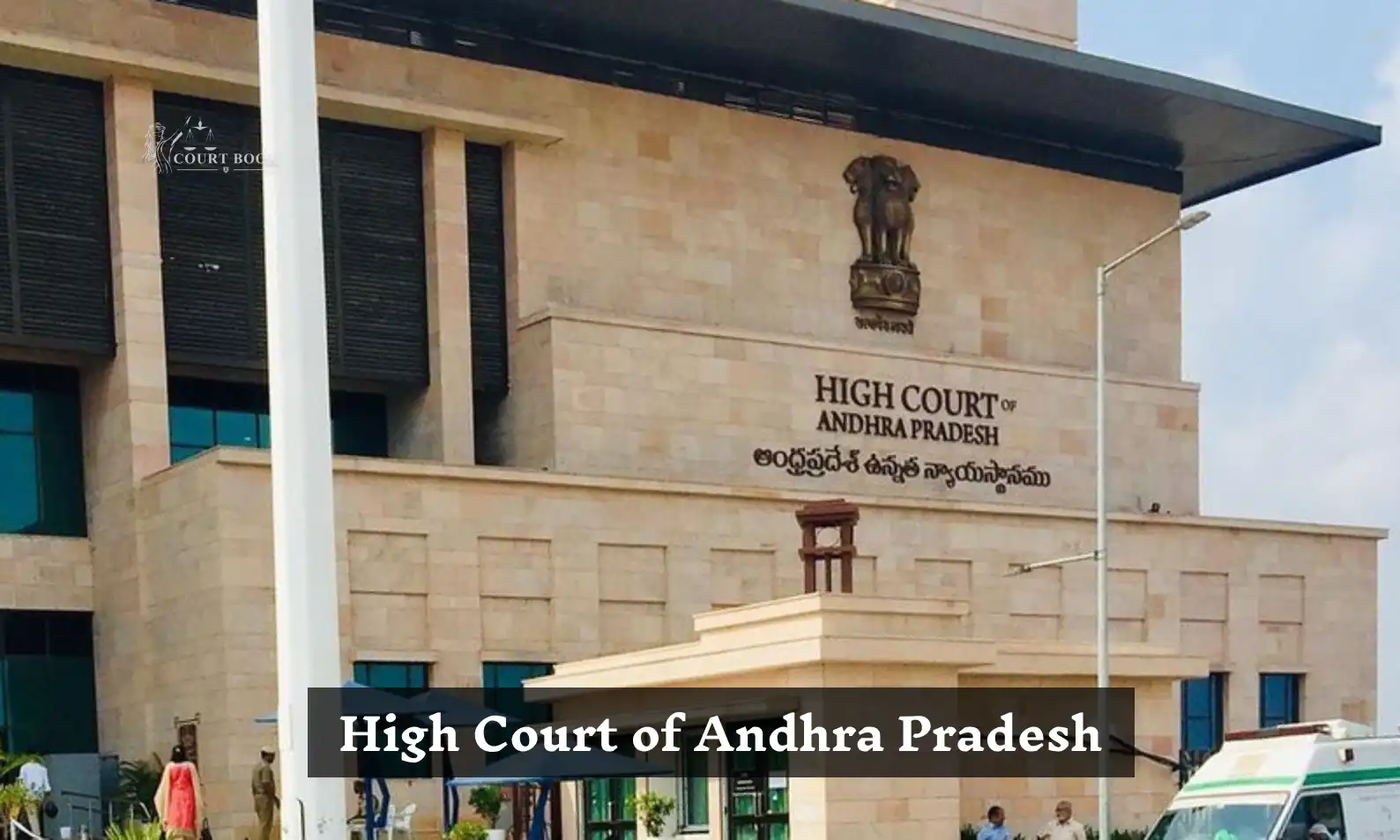
The Andhra Pradesh High Court has dismissed two criminal revision petitions filed by a woman seeking the conviction of her husband's relatives and the parents of his second wife in a long-running bigamy case. The court held that merely attending a marriage ceremony or failing to prevent it does not amount to abetment of the offence of bigamy.
Justice Subhendu Samanta delivered the common judgment on May 7, 2026, in Criminal Revision Case Nos. 386 and 387 of 2007.
Background of the Case
The petitioner was the de facto complainant in a criminal case registered in 1996 against several accused persons under Sections 498-A and 494 of the Indian Penal Code. According to the prosecution, her husband contracted a second marriage while their first marriage was still subsisting and allegedly subjected her to cruelty.
The trial court had convicted the husband for offences under Sections 498-A and 494 IPC and also convicted certain relatives and family members under Section 494 read with Section 34 IPC. However, the appellate court later acquitted several relatives, including the husband's brothers and the mother of the second wife.
The complainant challenged those acquittals before the High Court.
Arguments Before the Court
The petitioner argued that the relatives were fully aware of the second marriage and had actively encouraged it. It was contended that family members ignored requests to stop the marriage and were present during the ceremony. The petitioner also relied on witness testimony and a wedding invitation card produced during the trial.
The State, however, supported the appellate court's findings, arguing that the available evidence only established the relatives' presence at the ceremony and did not prove any active role in facilitating or encouraging the marriage.
Court's Observations
Justice Samanta noted that the conviction of the husband and the second wife for offences relating to bigamy had already attained finality. The only issue before the court was whether the relatives could be held criminally liable for allegedly abetting the second marriage.
The court referred to recent Supreme Court precedent and observed that to establish liability under Section 494 read with Section 34 IPC, the prosecution must show more than mere presence at the ceremony.
The bench observed that,
"mere consenting and appearing at marriage ceremony is not itself proved that they instigated bigamous marriage."
The court further stated that even if family elders failed to stop the marriage despite requests from the complainant, such inaction alone could not establish common intention or criminal participation.
According to the judgment, the prosecution failed to prove that the relatives exercised such influence or control over the couple that the marriage would not have taken place without their encouragement.
Decision
Finding no error in the appellate court's reasoning, the High Court concluded that the evidence did not establish the necessary intention or abetment on the part of the accused relatives.
Dismissing both revision petitions, the court held that the acquittal of the husband's brothers and the mother of the second wife was justified and required no interference.
All pending miscellaneous applications were also disposed of.
Case Details:
Case Title: Chintherla Padmavathi v. State of Andhra Pradesh & Others
Case Number: Criminal Revision Case Nos. 386 and 387 of 2007
Judge: Justice Subhendu Samanta
Decision Date: May 7, 2026


