

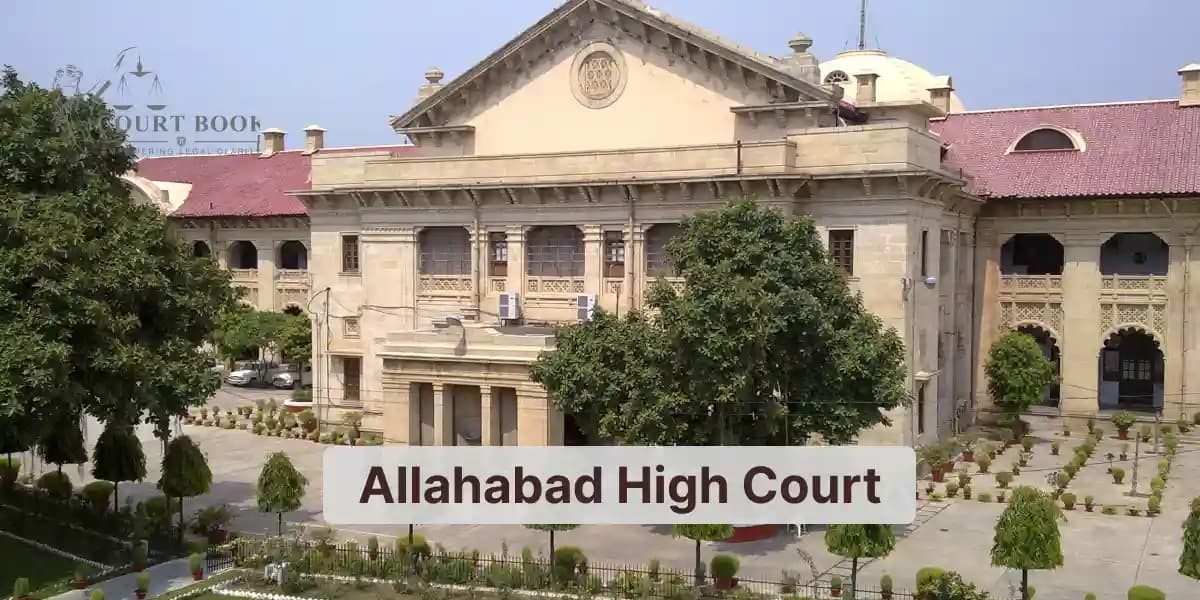
The Allahabad High Court has set aside the conviction of a husband and his family members in a decades-old dowry death case, holding that the prosecution failed to prove that the woman’s death was “otherwise than under normal circumstances” or that she faced cruelty linked to dowry demands. The ruling came from Justice Manish Mathur on March 31, 2026.
Background of the Case
The case arose from a 1999 incident in which the daughter of the informant died at her matrimonial home. Her family alleged that she was killed by poison over dowry demands. A trial court had earlier convicted the husband and two relatives under Sections 304-B (dowry death) and 498-A IPC, along with the Dowry Prohibition Act, sentencing them to seven years’ rigorous imprisonment.
The prosecution argued that the deceased had visited her parental home three days before her death and complained of dowry-related harassment. Based on this, the trial court held the accused guilty.
Court’s Observations
The High Court examined medical evidence closely. The post-mortem showed no injuries, and the viscera report revealed no trace of poison. The examining doctor stated that the cause of death could not be determined.


Justice Manish Mathur noted that for an offence under Section 304-B IPC, the prosecution must first establish that the death was caused by burns, bodily injury, or otherwise than under normal circumstances. The Court observed:
“Where the cause of death itself cannot be ascertained and there is no evidence of bodily injury or poisoning, it cannot be presumed that death was unnatural.”
The Court added that a mere death within seven years of marriage does not automatically trigger the presumption of dowry death.
On Alleged Cruelty and Dowry Demand
The Court scrutinised the testimony of the father and other family members. It found that their statements referred to a general demand for valuables but lacked details of specific acts of cruelty or harassment directly linked to the death.
The judgment stated that vague allegations of dowry demand, without proof of harassment connected to the death, are insufficient to invoke the presumption under Section 113-B of the Evidence Act. The Court also noted that the deceased had returned to her marital home after her last visit and had recently given birth, with no clear evidence of immediate discord.
The Court concluded that the essential ingredients of Sections 304-B and 498-A IPC were not proved and that the trial court erred in convicting the accused based on assumptions rather than evidence.
Accordingly, the High Court allowed the appeal, set aside the conviction and sentence, and acquitted all appellants. Their bail bonds were discharged, subject to compliance with statutory formalities.
Case Details
Case Title: Mewa Lal and Others vs State of U.P.
Case Number: Criminal Appeal No. 2148 of 2004
Judge: Justice Manish Mathur
Decision Date: 31 March 2026
Download Order


