

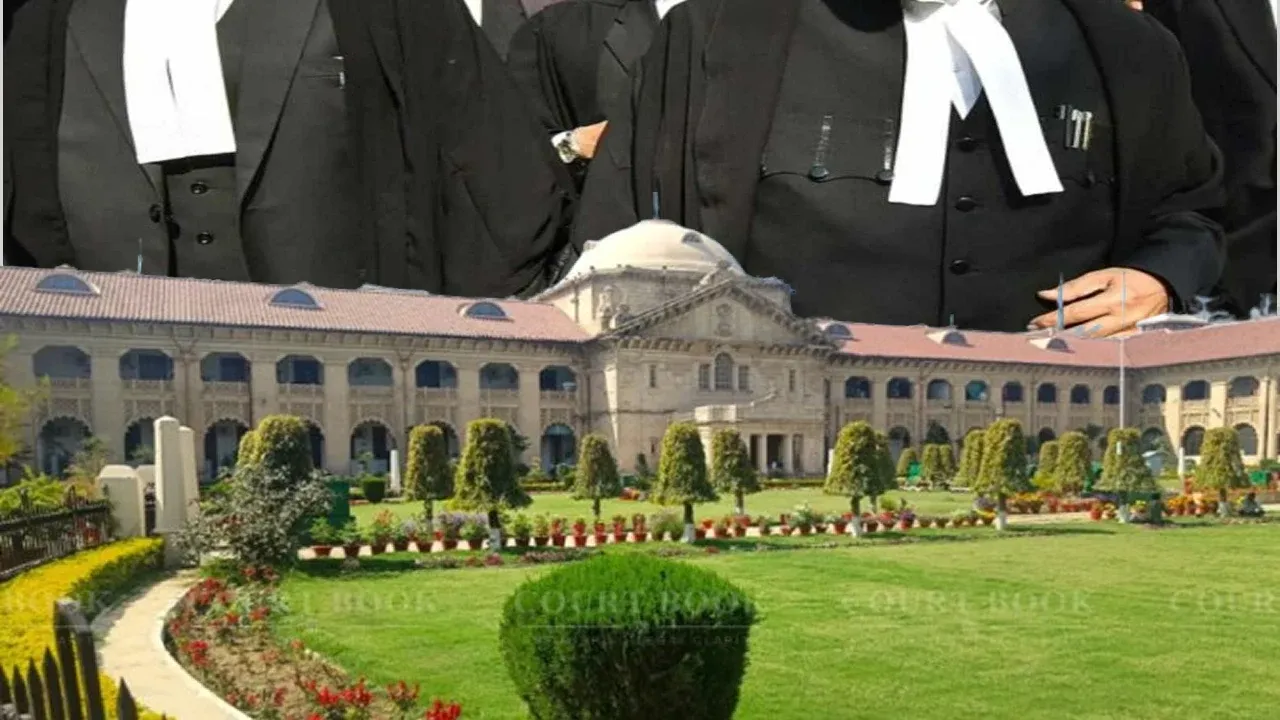
In a significant ruling protecting the independence of the legal profession, the Allahabad High Court has quashed criminal proceedings initiated against an advocate who represented a client in a GST dispute. The Court observed that a lawyer cannot be treated as a criminal conspirator merely for adopting a legal strategy while acting for a client in a professional capacity.
The Bench of Justice J.J. Munir and Justice Tarun Saxena said criminal prosecution of advocates for professional acts would strike at the very foundation of the legal system.
Background of the Case
Petitioner Samarpan Jain, an advocate practicing in indirect taxes and corporate laws, had represented a GST assessee before the appellate authority under the Goods and Services Tax Act, 2017. According to the petition, the client had challenged tax assessment orders passed by the GST Department for multiple financial years.
The dispute arose over the method used for making the mandatory 10% pre-deposit required for filing an appeal. The petitioner argued that the deposit was made through the Electronic Credit Ledger by utilizing Input Tax Credit, relying on a Gujarat High Court judgment that had later been affirmed by the Supreme Court.
However, the GST authorities rejected the appeals as not maintainable and later lodged an FIR alleging tax evasion and conspiracy involving both the assessee and the advocate.
Court’s Observation
During the hearing, Senior Advocate Sushil Shukla argued that the petitioner merely acted in his professional capacity while filing the appeals and advising his client on the basis of prevailing judicial precedents.
The Court questioned the GST officer on why the advocate had been named in the FIR for performing a professional act. The order records that the officer “had no answer” when confronted by the Bench.
Making strong observations on the role of lawyers in the justice system, the Bench stated:
“If, for doing a professional act, like preferring an appeal, an Advocate is to be held in conspiracy with his client, it would be the end of the very existence of the Bar.”
The judges further observed that advocates must be allowed to work fearlessly and discharge professional duties without fear of criminal prosecution. The Court noted that even if the legal advice ultimately turns out to be wrong, it does not automatically amount to criminal conduct.
Court’s Decision
Allowing the writ petition, the High Court held that the FIR, charge-sheet, and cognizance order against the advocate violated “all known principles of criminal liability.”
The Court quashed the FIR dated October 4, 2025, the charge-sheet, and the cognizance order passed by the Additional Chief Judicial Magistrate, Rampur, insofar as they related to the petitioner advocate.
The Bench also directed the Chief Judicial Magistrate, Rampur, to ensure that an entry regarding the quashing of proceedings against the petitioner is made in the police records.
Case Details
Case Title: Samarpan Jain vs State of U.P. and 2 Others
Case Number: Criminal Misc. Writ Petition No. 23443 of 2025
Judges: Justice J.J. Munir and Justice Tarun Saxena
Decision Date: May 21, 2026


