

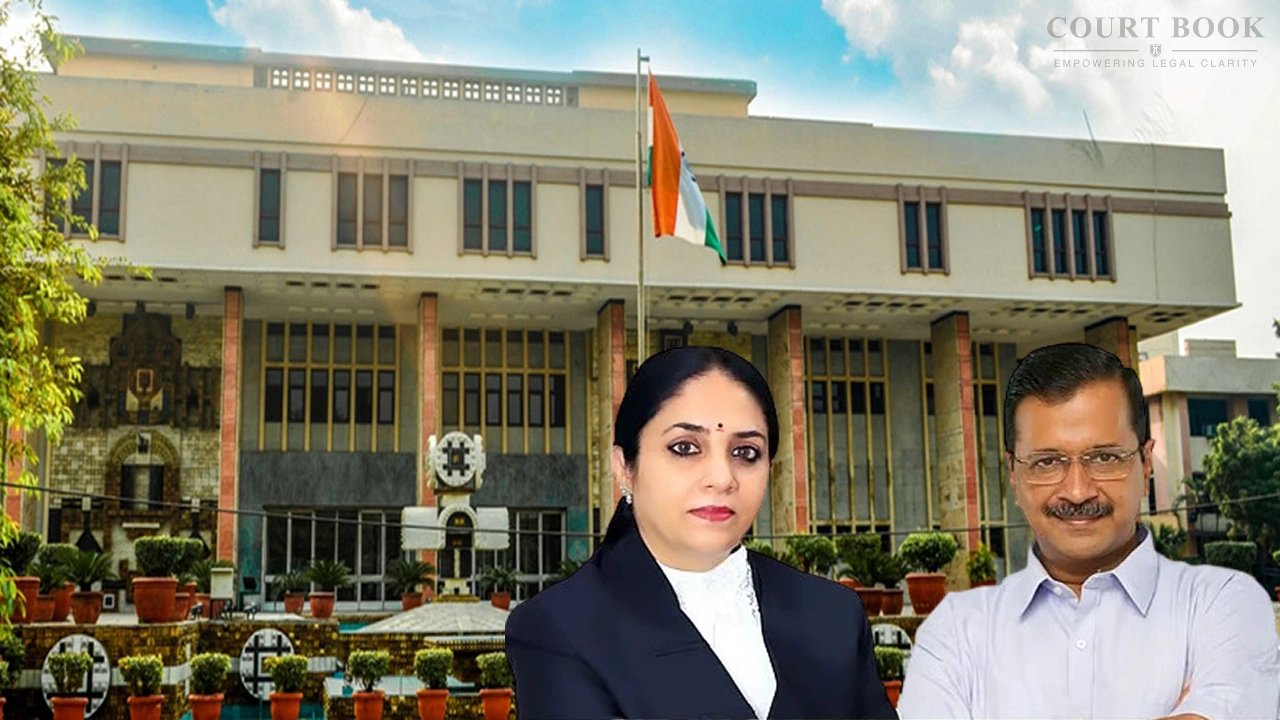
The Delhi High Court on Thursday 23 April directed social media platforms to remove videos allegedly showing unauthorized recordings of court proceedings linked to Arvind Kejriwal and others. The order came while hearing a public interest litigation (PIL) raising concerns over the circulation of such content online.
Background of the Case
The PIL was filed by advocate Vaibhav Singh, who alleged that court proceedings from April 13 when Kejriwal sought recusal of Justice Swarana Kanta Sharma were recorded without permission and later circulated on social media.
The plea sought removal of the videos, initiation of contempt proceedings against political leaders and journalist Ravish Kumar, and preventive steps to stop similar incidents in the future. It also raised concerns about a possible attempt to “scandalise” judicial proceedings.
The petitioner argued that rules governing video conferencing in courts clearly prohibit recording or publishing proceedings without express permission.
A division bench of Justice V. Kameswar Rao and Justice Manmeet Pritam Singh Arora noted submissions from intermediaries, including Meta Platforms and Google LLC.
Meta informed the court that it had already taken down certain URLs flagged by the High Court’s Registrar General. Google, however, stated that some YouTube links had not been removed as they allegedly did not contain court recordings a claim disputed by the petitioner.
The bench stressed the broader institutional concern, remarking that unauthorized circulation of court proceedings could harm the dignity of the judiciary.
“The larger issue is the protection of the institution. If such content is not controlled, it may lead to serious consequences,” the bench orally observed.
The court also referred to obligations under the Information Technology Rules, 2021, noting that intermediaries must make reasonable efforts to prevent the hosting or sharing of unlawful content.
The court issued specific directions:
• Google was directed to take down content appearing on specified pages of the case record and file an affidavit explaining its position.
• Notice was issued to X Corp (formerly Twitter), asking it to remove similar content if found on its platform.
• The petitioner was granted liberty to notify intermediaries about any such content, which must then be taken down.
The bench also questioned whether platforms could identify the original uploader of such videos. Meta responded that it could provide basic subscriber information and IP logs but did not have a mechanism to trace the first uploader definitively.
During the hearing, senior counsel appearing for Meta referred to the Supreme Court’s ruling in Shreya Singhal v Union of India, emphasizing that intermediaries cannot act as arbiters of legality unless directed by a court or competent authority.
The court also discussed the technical limitations faced by platforms in proactively identifying such content, especially when clips are edited or re-uploaded.
The High Court directed removal of identified content and issued notices to all respondents, including Kejriwal and others. It also sought responses from intermediaries and the Union Ministry of Electronics and Information Technology.
The matter has been listed for further hearing on July 6.
Case Title: Vaibhav Singh v. Delhi High Court & Ors.


