

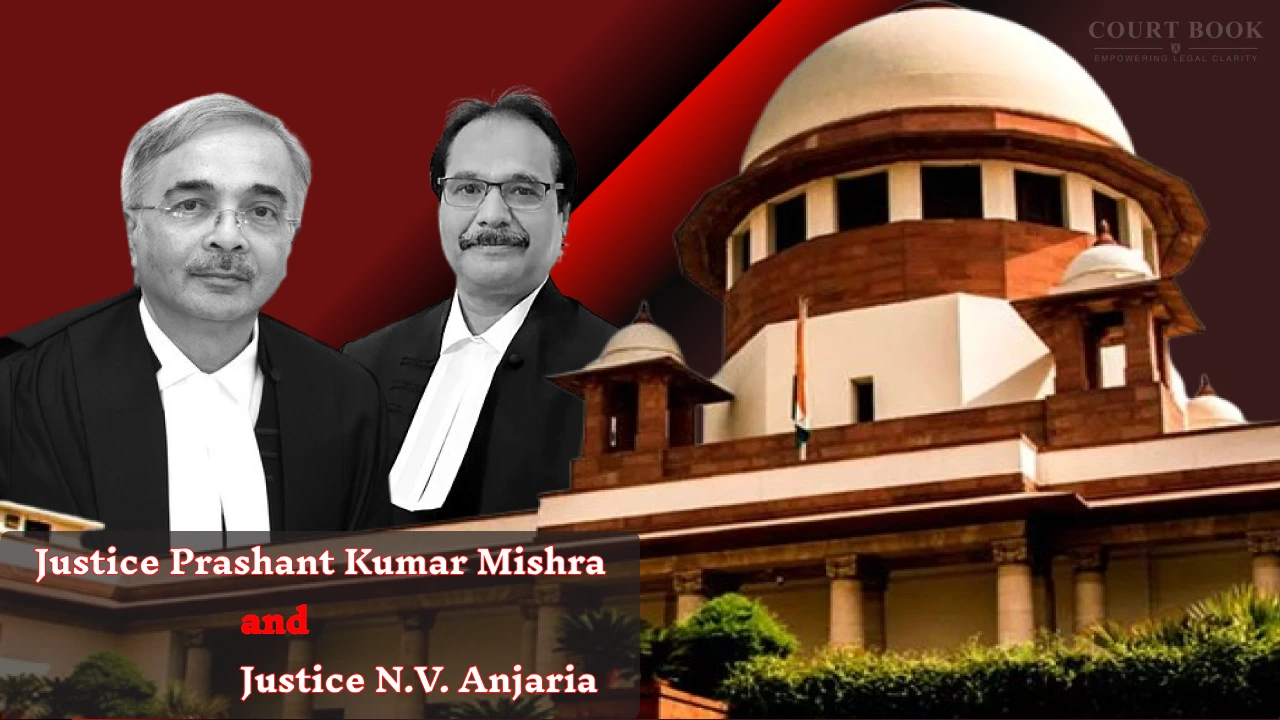
In a significant ruling on sentencing under the NDPS law, the Supreme Court of India clarified that while multiple convictions arising from the same incident can attract separate punishments, fines cannot be imposed twice when sentences run concurrently. The Court ordered the release of an accused who had already spent over 11 years in prison.
Background of the Case
The case, Hem Raj vs State of Himachal Pradesh, arose from a 2014 incident where police recovered over 4 kg of charas from a car during a late-night checkpoint in Chamba district.
The appellant, Hem Raj, was found sitting in the front seat of the vehicle. The contraband was discovered beneath his seat. Both he and the driver were convicted under provisions of the NDPS Act for possession, use of vehicle, and criminal conspiracy.
Read also:- Right to Vote Cannot Be Denied on Technical Grounds: Gujarat High Court Orders Inclusion in Electoral Roll
A Special Court had initially sentenced them to 12 years of rigorous imprisonment along with fines. The High Court later reduced the jail term to 10 years but retained the fines.
Arguments Before the Court
Appearing for the appellant, counsel argued that:
• The convictions under multiple sections arose from a single transaction
• Imposing separate punishments and fines amounted to double punishment
• Since sentences were ordered to run concurrently, fines should also not be duplicated
The State, however, maintained that:
• Each offence under the NDPS Act is independent and punishable
• The law allows imposition of the same punishment for related offences like conspiracy and facilitation
Court’s Observations
The bench, led by Justice N.V. Anjaria, examined the structure of the NDPS Act and noted that:
“Allowing premises or a vehicle for an offence, and criminal conspiracy, are independent offences and not merely extensions of the main offence.”
The Court rejected the argument that separate punishments were impermissible, explaining that:
“Once the commission of distinct offences is established, each may attract separate punishment, even if arising from the same transaction.”
However, the Court added an important clarification:
“Where offences are interlinked and arise from a single set of facts, sentences should run concurrently to avoid double jeopardy.”
On the Issue of Fine
The Court drew a distinction between imprisonment and fine. While both are forms of punishment, it held that:
“When sentences are directed to run concurrently, the accused cannot be made to pay fine twice.”
It further explained that default imprisonment for non-payment of fine is not a sentence but a penalty, reinforcing that the fine itself forms part of the punishment.
Taking note that the appellant had already undergone over 11 years of imprisonment, including default imprisonment, the Court held that he was not required to pay the fine twice.
Accordingly, the Supreme Court directed that the appellant be released from custody, bringing the long-running case to a close.
Case Details
Case Title: Hem Raj vs The State of Himachal Pradesh
Case Number: Criminal Appeal (arising out of SLP (Crl.) No. 19691 of 2025)
Court: Supreme Court of India
Judge: Justice N. V. Anjaria & Prashant Kumar Mishra
Decision Date: 2026
Download Judgment

