

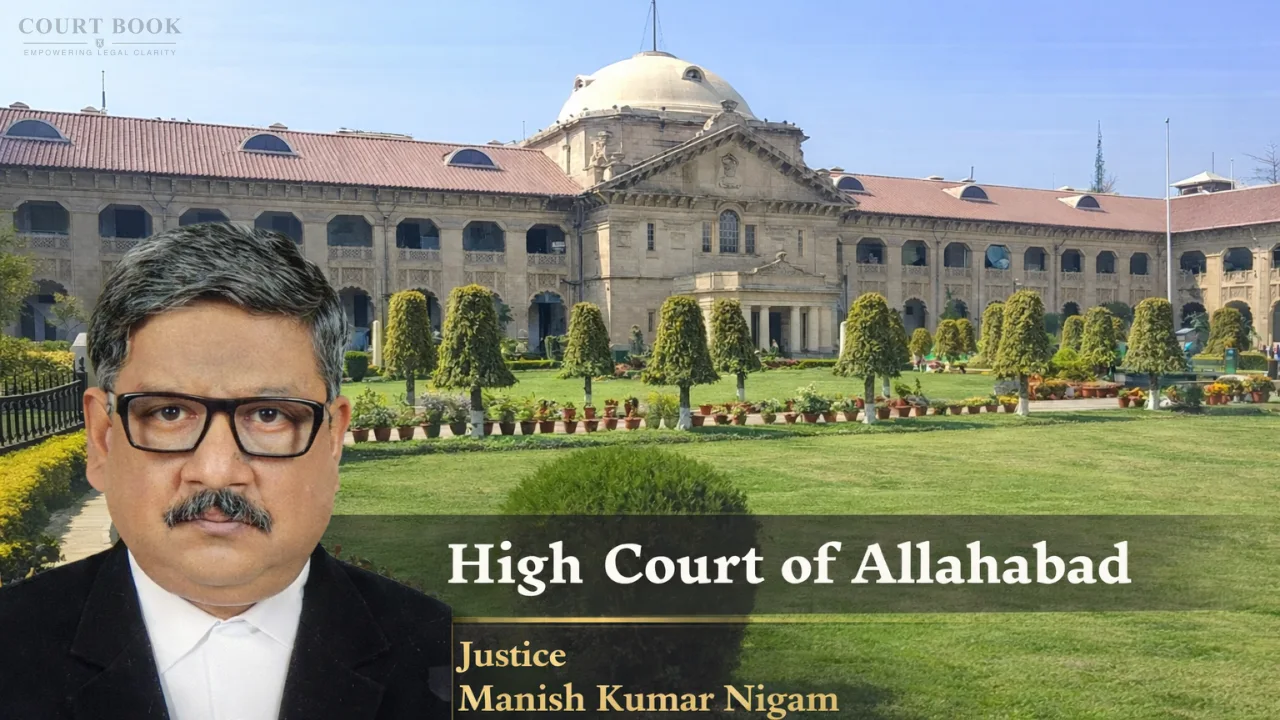
The Allahabad High Court has held that courts should not mechanically impose a condition requiring a security or indemnity bond while granting a succession certificate, especially when the applicant is a natural heir and there are no competing claims.
Justice Manish Kumar Nigam, while deciding a petition under Article 227 of the Constitution, modified a trial court order that required the petitioner to furnish a security bond equal to the value of the estate before issuing a succession certificate. The High Court ruled that such a condition was unnecessary in the facts of the case and directed the trial court to issue the succession certificate within eight weeks.
Background of the Case
The case arose after Smt. Shakuntala Devi, a resident of Kanpur Nagar, passed away on 30 October 2008 without leaving a will. She was survived by her two daughters — Alka Singhania and Shilpi Agarwal — who were her only legal heirs.
Read Also:- Delhi High Court Declines Arvind Kejriwal’s Request to Transfer CBI Excise Policy Case
The deceased held shares in Reliance Industries Limited, and after her death, the petitioner Alka Singhania sought a succession certificate under Section 372 of the Indian Succession Act to claim the securities.
Accordingly, she filed Miscellaneous Case No. 255/70/2022 before the Civil Judge (Senior Division), Kanpur Nagar. After notice and newspaper publication, no objections were raised by any third party. Importantly, the respondent and sister of the petitioner, Shilpi Agarwal, filed an affidavit expressing her consent to grant the succession certificate in favour of the petitioner.
Despite this, the trial court allowed the application on 18 January 2025 but directed the petitioner to furnish both a personal bond and a security bond equal to the value of the assets covered by the succession certificate.
Aggrieved by the requirement of furnishing a security bond, the petitioner approached the Allahabad High Court.
Arguments Presented in Court
Counsel for the petitioner argued that the condition imposed by the trial court was arbitrary and unnecessary. It was submitted that the petitioner had already complied with the direction to furnish a personal bond.
The petitioner further contended that since the respondent — the only other legal heir — had no objection to the issuance of the succession certificate, there was no justification for insisting on a security bond.
Reliance was placed on a decision of the Delhi High Court in Arvind Nanda v. State (2020), which held that the requirement of an indemnity or security bond while granting a succession certificate is discretionary and should not be imposed mechanically.
On the other hand, the respondent also filed a short counter affidavit supporting the petitioner and confirming that she had no objection to the certificate being granted to her sister.
Court’s Key Observations
Justice Manish Kumar Nigam examined Section 375 of the Indian Succession Act, which allows courts to require security or indemnity bonds to safeguard the interests of persons who may be entitled to the estate.
Read Also:- Delhi High Court Grants Anticipatory Bail to Ravjeet Singh in CBI Bribery Case
However, the Court clarified that such a requirement is discretionary and must be exercised based on the facts of each case.
The High Court observed that the purpose of a security bond is to protect potential claimants or creditors. Therefore, where there are no competing claims or disputes among legal heirs, insisting on such a condition may be unnecessary.
The Court noted that:
“A mechanical approach of imposing a condition for furnishing the surety/security and insisting on the indemnity bond is not required in every case.”
The Court also emphasized that when the beneficiary is a natural heir and there are no objections from other claimants, the requirement of a security bond may not serve any meaningful purpose.
Final Decision of the Court
Considering that the respondent — the only other heir — had expressly consented to the grant of the succession certificate, the High Court held that the condition imposed by the trial court was unjustified.
The Court therefore modified the trial court’s order to the extent that the petitioner was exempted from furnishing the security bond.
It directed the Civil Judge (Senior Division), Kanpur Nagar, to issue the succession certificate expeditiously within eight weeks.
The petition was accordingly allowed.
Case Details
Case Title: Alka Singhania v. Shilpi Agarwal
Court: High Court of Judicature at AllahabadJudge: Justice Manish Kumar NigamDecision Date: 13 March 2026Case Number: Matters Under Article 227 No. 8772 of 2025

