

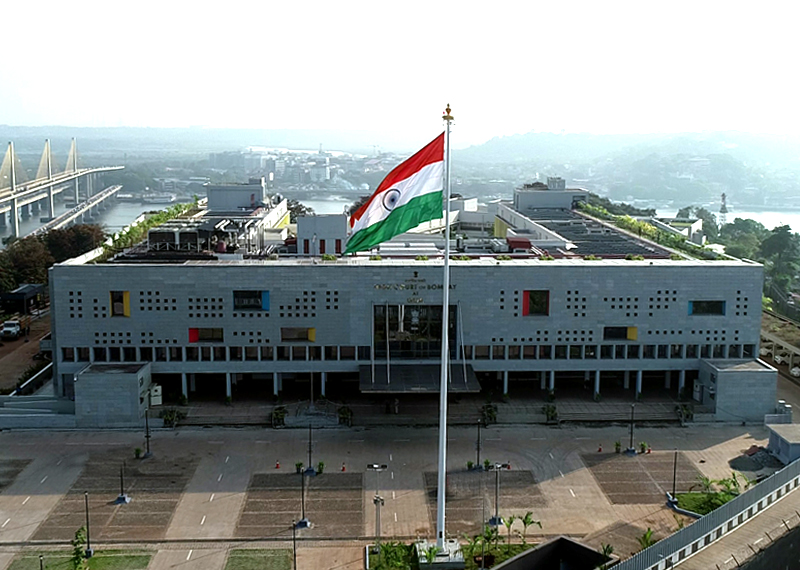
The Bombay High Court at Goa has refused to quash a criminal case involving alleged assault and threats against a minor boy, observing that the accusations go beyond a simple quarrel and may amount to child abuse under law.
Justice Ashish S. Chavan dismissed a petition filed by four accused persons seeking to set aside an FIR and chargesheet registered against them.
Background of the Case
The case arose from an FIR registered in November 2023 at Colva Police Station in Goa. The complaint was filed by the father of a minor boy, who alleged that his son was physically assaulted and threatened by the accused.
According to the complaint, the incident took place when the boy had gone to play football on a beach. The accused allegedly grabbed his T-shirt, punched him near the neck, and issued threats of further harm. The victim also claimed that similar incidents had occurred earlier, pointing to an ongoing dispute between the families over local water sports activities.
Police investigation included recording statements, collecting medical evidence, and filing a chargesheet for offences under the Indian Penal Code and the Goa Children’s Act.
The petitioners argued that even if the allegations were accepted at face value, they did not meet the legal threshold for “child abuse” under Section 8 of the Goa Children’s Act.
Their counsel contended that the incident was isolated and did not involve cruelty, exploitation, or sustained ill-treatment. Relying on earlier judgments, it was argued that minor altercations should not be treated as serious criminal offences under child protection laws.
On the other hand, the State opposed the plea, arguing that the allegations clearly indicated both physical and psychological abuse. The prosecution emphasized that the victim had described repeated threats and prior incidents, suggesting a pattern rather than a one-off event.
The State further pointed to medical evidence showing injury consistent with the victim’s version and argued that the threats were serious enough to create fear and trauma.
After examining the FIR, witness statements, and medical records, the Court found that the allegations could not be dismissed as trivial.
“The allegations made by the victim are clear and unambiguous,” the bench observed,
noting that they included physical assault, verbal threats, and psychological intimidation.
The Court highlighted that the incident was not a spontaneous quarrel but appeared to be deliberate. It also noted that the victim had referred to a prior assault, indicating that the episode was not isolated.
Importantly, the Court explained that under the Goa Children’s Act, child abuse includes not just physical harm but also psychological abuse and threats that affect a child’s sense of safety.
Referring to the legal definition, the bench observed that even a single act can amount to child abuse if it involves maltreatment or intimidation.
“The threats… seem to be calculated to strike fear in the mind of the victim,” the Court said, adding that such conduct prima facie falls within the scope of the law.
The Court also addressed earlier rulings cited by the petitioners, including decisions where FIRs were quashed in minor or accidental incidents.
It clarified that those cases involved either isolated acts, accidental harm, or incidents arising out of sudden quarrels. In contrast, the present case involved allegations of repeated conduct, threats, and intentional intimidation, making it materially different.
Rejecting the plea for quashing, the Court held that the FIR and chargesheet disclose a prima facie case under the relevant provisions of law.
“The FIR and the chargesheet… clearly make out an offence… and hence this Court is not inclined to inte
Accordingly, the Criminal Writ Petition No. 20 of 2026 was dismissed, and the proceedings before the trial court will continue.
The Court clarified that its observations are limited to deciding the quashing plea and should not influence the trial on merits.
Case Details
Case Title: Helcino A. Fernandes & Ors. vs State & Ors.
Case Number: Criminal Writ Petition No. 20 of 2026
Judge: Justice Ashish S. Chavan
Decision Date: 29 April 2026
Download Judgment

