

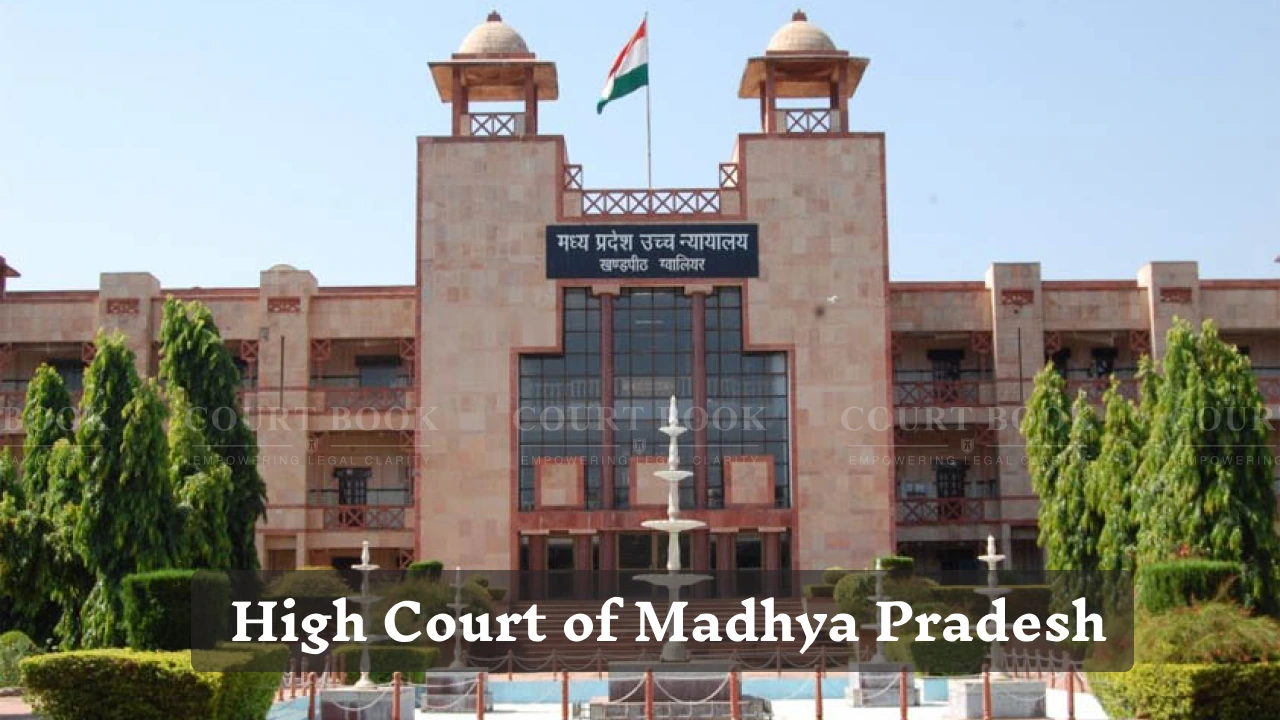
In a closely watched service law dispute, the Madhya Pradesh High Court at Gwalior has dismissed a petition challenging the appointment of an Assistant Professor (Law) under the OBC (women) category. The court clarified that while determining “creamy layer” status, only the income of a candidate’s parents is relevant not that of the husband.
Background of the Case
The case, Smt. Sunita Yadav vs State of Madhya Pradesh & Others (W.P. No. 8426/2021), was heard by Justice Ashish Shroti and decided on April 2, 2026.
The dispute arose from a recruitment process conducted by the Madhya Pradesh Public Service Commission (MPPSC) for Assistant Professors in 2017. Out of 158 law posts, 6 were reserved for OBC (women).
The petitioner, Sunita Yadav, narrowly missed selection, scoring 288 marks, just below the cutoff of 290. Respondent No. 3, who secured exactly 290 marks, was appointed in March 2021. The petitioner was placed on the waiting list and was later appointed in June 2023.
Her grievance before the court was limited to seniority she argued that the selected candidate wrongly availed OBC benefits and that she herself should have been appointed earlier.
The petitioner contended that the selected candidate belonged to the “creamy layer” and was therefore ineligible for OBC reservation.
It was argued that:
• The respondent’s husband was a Civil Judge and earning a substantial salary.
• The respondent herself had an income as a guest faculty.
• The combined family income exceeded the prescribed creamy layer limit.
Based on this, the petitioner sought retrospective appointment from 2021 and corresponding seniority.
Read also:- Karnataka HC Refuses to Quash SC/ST Case Against Factory Owners, Says Delay Alone Not Enough
Counsel for the State and the selected candidate opposed the plea, stating that:
• As per government circulars, only the income of parents is considered for creamy layer determination.
• The income of a husband is relevant only if he holds a Class-I post.
• A Civil Judge (Class-I designation in name) is treated as a Class-II officer for this purpose.
They further submitted that the respondent’s father was a Class-III employee and her mother a homemaker, placing her outside the creamy layer category.
The High Court undertook a detailed analysis of Supreme Court rulings and government guidelines on creamy layer criteria.
The bench observed,
“The status of creamy layer is not to be determined solely based upon financial status but primarily on social status of the candidate.”
Read also:- Patna High Court Dissolves Marriage Using ‘Doctrine of Frustration’, Overturns Family Court’s Void Ruling
It further clarified that:
• Only parents’ income is relevant.
• A candidate’s own income is not to be considered.
• A husband’s income is relevant only if he is a Class-I officer.
Rejecting the petitioner’s argument, the court noted,
“The income of husband… is not relevant unless the husband is a Class-I Officer.”
The court also relied on precedents like Indra Sawhney and subsequent rulings to underline that the creamy layer principle is meant to exclude socially advanced sections, not merely financially better-off individuals.
After examining the records, the court concluded that the selected candidate did not fall within the creamy layer category and was rightly granted OBC reservation benefits.
Dismissing the petition, the bench held that the challenge to the appointment had no merit and refused to grant the petitioner retrospective seniority.
Case Details
Case Title: Smt. Sunita Yadav vs State of Madhya Pradesh & Others
Case Number: Writ Petition No. 8426 of 2021
Judge: Justice Ashish Shroti
Decision Date: 2 April 2026


