

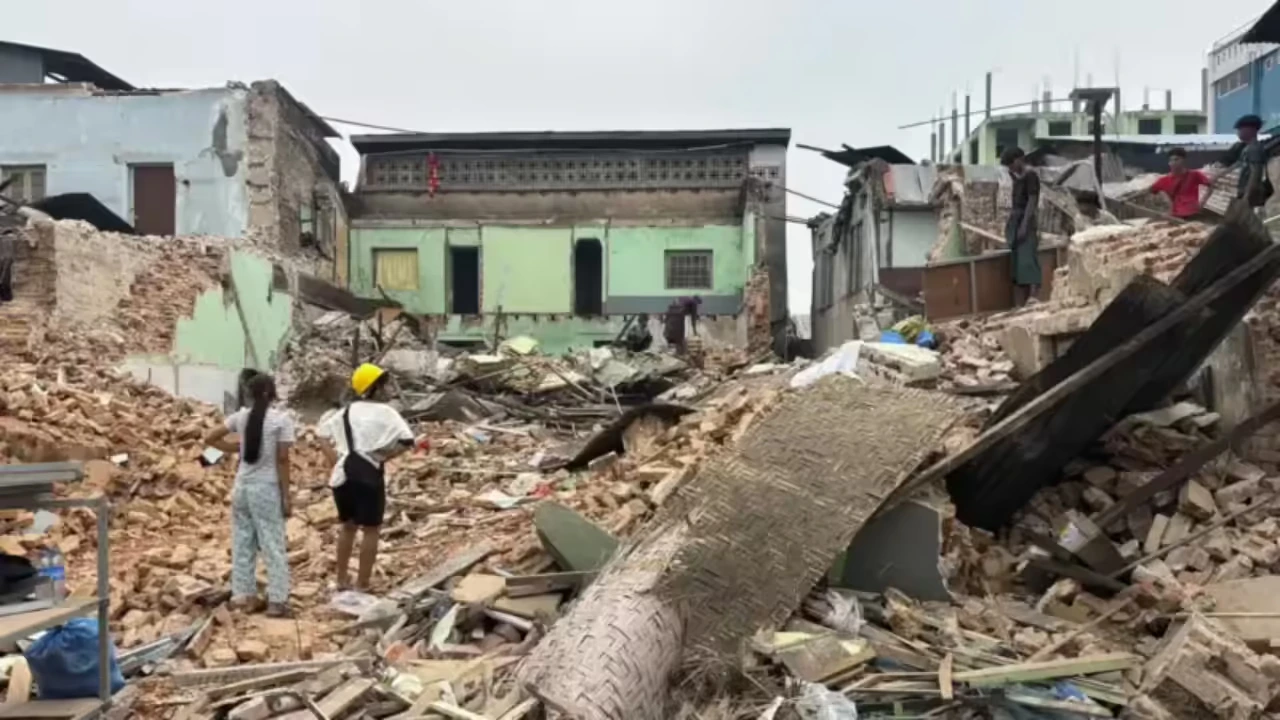
The Gujarat High Court has discharged a man accused in a criminal case linked to the collapse and damage of a residential complex during the devastating 2001 Gujarat earthquake, holding that there was no material to show he was involved in construction activities or had the criminal intent required under law.
Justice Hasmukh D. Suthar passed the order while allowing a criminal revision application filed by Bharatbhai Ghanshyambhai Shah.
Background of the Case
The case arose from damage caused to the “Sangemarmar Complex” at Ambawadi in Ahmedabad during the massive earthquake that struck Gujarat on January 26, 2001. The building, constructed between 1989 and 1991, had two wings containing nine flats. One wing suffered severe damage while the other remained unaffected.
According to the prosecution, the incident led to the death of 11 persons. The Sessions Court had earlier rejected Shah’s discharge plea in 2011, after which he approached the High Court.
Shah argued that he was only a financier and had no role in construction of the building. His counsel told the court that all permissions, ownership records, and development activities were linked to another person, Jagdishchandra Gordhandas Sodhan, who had consistently claimed ownership of the property before authorities.
The High Court noted that the material on record prima facie showed Shah was merely a financier and not the builder, owner, developer, or contractor of the project.
The bench observed that for an offence under Section 304 of the Indian Penal Code, the prosecution must establish “mens rea”, meaning intention or knowledge that the act was likely to cause death.
Justice Suthar said the building had collapsed after a “considerable lapse of time” following construction and during a catastrophic earthquake, making it difficult to attribute criminal intent to the applicant.
“The essential ingredient of mens rea is thus conspicuously absent,” the court observed while examining the allegations against the accused.
The court also referred to a Supreme Court ruling stating that cases involving negligence resulting in death are ordinarily dealt with under Section 304A IPC, unless there is specific evidence showing intention or knowledge necessary for the graver offence under Section 304 IPC.
Allowing the revision plea, the High Court set aside the Sessions Court’s 2011 order and discharged the applicant from all offences alleged against him.
The court further remarked that the discharge mechanism acts as an important judicial safeguard to prevent individuals from facing a full criminal trial when prosecution material does not disclose even a prima facie case.
Case Details
Case Title: Bharatbhai Ghanshyambhai Shah vs State of Gujarat
Case Number: R/Criminal Revision Application No. 264 of 2013
Judge: Justice Hasmukh D. Suthar
Decision Date: May 6, 2026
Download Judgment

