

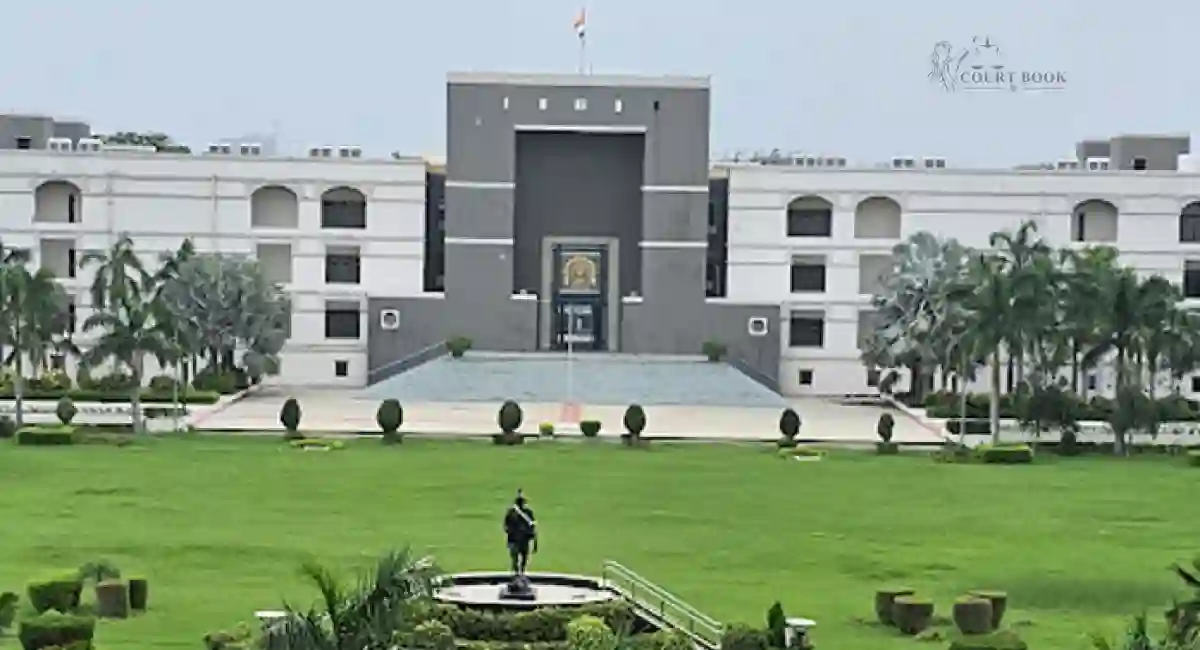
The High Court of Gujarat has condoned a 146-day delay in filing a criminal appeal by accused Ankush Kapoor in an NIA case, observing that questions linked to default bail and personal liberty should not be rejected merely on technical limitations.
A division bench comprising Justice Ilesh J. Vora and Justice R.T. Vachhani passed the order while hearing an application seeking condonation of delay in an appeal against the extension of investigation time from 90 days to 180 days under anti-terror and narcotics laws.
Background of the Case
According to the court record, the National Investigation Agency (NIA) had sought extension of judicial custody and investigation period in connection with NIA Case No. RC-26/2020/NIA/DLI. The Special NIA Court in Ahmedabad allowed the extension on July 9, 2025 under Section 43D(2)(b) of the Unlawful Activities (Prevention) Act and Section 36A(4) of the NDPS Act.
Kapoor later challenged that order before the Gujarat High Court, but the appeal was filed with a delay of 146 days.
Senior Advocate I.H. Saiyed, appearing for the applicant, argued that the delay was neither deliberate nor intentional. It was contended that the accused had not been properly supplied with the application seeking extension of custody and was also not produced before the court, physically or virtually, to oppose the request.
The defence further claimed that relevant documents and the impugned order were supplied much later, affecting the applicant’s ability to pursue legal remedies including default bail.
NIA Opposed the Plea
The NIA opposed the application and argued that notice had been served upon the accused through Sabarmati Central Jail, but he allegedly refused to accept it. The agency maintained that no satisfactory explanation had been offered for the delay.
Counsel for the NIA also relied on decisions from various High Courts and the Supreme Court dealing with limitation issues under the NIA Act.
Court’s Observations
The bench noted that there are conflicting views among different High Courts regarding limitation and appeals under Section 21(5) of the NIA Act. The court referred to pending proceedings before the Supreme Court on similar legal questions.
The judges observed that the right to default bail is closely connected with Article 21 of the Constitution, which protects personal liberty.
“The right to default bail is not merely a statutory right but forms part of the procedure established by law under Article 21,” the bench observed.
The High Court further stated that rigid application of limitation rules should not leave an accused “remediless” in matters affecting liberty.
“The right to life and personal liberty in ordinary circumstances cannot be irrationally barred even for a sufferer who seems indolent,” the court said while explaining why technical grounds alone should not defeat such claims.
Court’s Decision
Allowing the application, the Gujarat High Court held that sufficient cause had been shown for the delay and condoned the 146-day period.
The bench directed the registry to register the criminal appeal and assign it a regular number for further proceedings. However, the court clarified that its observations were limited only to the issue of delay condonation and would not affect the merits of the main appeal.
Case Details
Case Title: Ankush Kapoor v. National Investigation Agency & Anr.
Case Number: R/Criminal Misc. Application No. 1104 of 2026 in F/Criminal Appeal No. 80 of 2026
Judges: Justice Ilesh J. Vora and Justice R.T. Vachhani
Decision Date: May 4, 2026
Download Order

