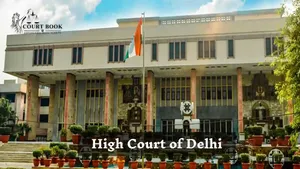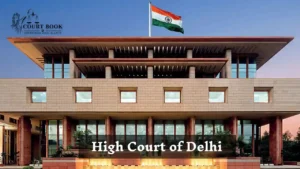
In a significant ruling on government contracts, the Delhi High Court has upheld the National Highways Authority of India’s (NHAI) decision to terminate a toll collection contract before its expiry. The Court declined to interfere, emphasizing limited judicial review in commercial matters involving public authorities.
Background of the Case
The case arose from a writ petition filed by Md. Karimunnisa challenging the termination of a contract awarded for toll collection at the Pawangaon Fee Plaza in Maharashtra. The contract, executed in May 2025, was valid until June 2026.
However, in April 2026, NHAI issued a show cause notice and subsequently terminated the agreement, citing contractual clauses that allowed such action. A fresh tender was also floated the same day for interim toll collection.
The petitioner argued that the termination was arbitrary, claiming no breach or default on their part and alleging that the “windfall gain” clause had been wrongly invoked.
After hearing both sides, the bench of Justice Anil Kshetrapal and Justice Amit Mahajan examined the scope of judicial review in contractual disputes.
“The Court does not sit as an appellate authority over commercial decisions,” the bench observed, reiterating that interference is limited to cases of arbitrariness, mala fide intent, or violation of law.
The Court noted that toll collections at the plaza had risen sharply, significantly exceeding the contractual benchmark. A table placed on record (page 5 of the judgment) showed collections crossing the threshold as early as June 2025 and continuing to increase steadily.
According to NHAI, this resulted in a substantial daily loss to the public exchequer.
The bench held that once a contract contains termination clauses, a contractor cannot claim an absolute right to continue till the end of the tenure.
“A commercial arrangement remains subject to termination in accordance with agreed conditions,” the Court said.
The petitioner also argued that the decision was pre-determined, pointing to the simultaneous issuance of a fresh tender.
Rejecting this claim, the Court found that due process was followed. Notice was issued, a reply was considered, and a personal hearing was granted.
“The requirement of natural justice stands satisfied if the authority applies its mind,” the bench noted.
It further clarified that initiating a fresh tender to ensure continuity in toll operations was a matter of administrative prudence, not evidence of bias.
The Court emphasized that contractors entering public tenders must accept both benefits and risks of contractual terms. Financial hardship or commercial loss, it said, cannot justify interference under writ jurisdiction.
The bench also highlighted that disputes of this nature are better addressed through claims for damages rather than constitutional remedies.
Concluding that no arbitrariness or illegality was established, the Court dismissed the writ petition.
“In view of the foregoing discussion, this Court is satisfied that the present Writ Petition is devoid of merit,” the bench held while upholding the termination of the contract.
Case Details
Case Title: Md. Karimunnisa vs National Highways Authority of India & Anr.
Case Number: W.P.(C) 4817/2026
Judge: Justice Anil Kshetrapal & Justice Amit Mahajan
Decision Date: 20 April 2026
Download Judgment




-300x169.webp)

 Act (UAPA)-300x169.webp)