

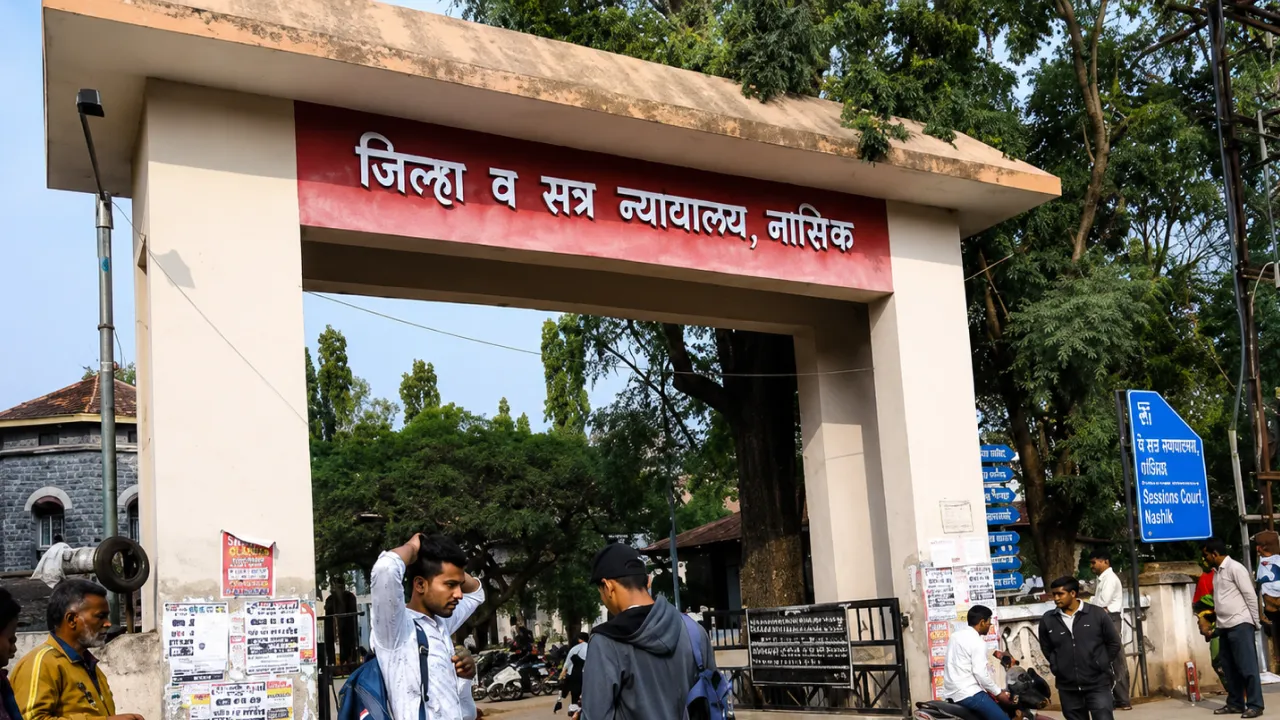
The Sessions Court at Nashik rejected the bail plea of a Tata Consultancy Services (TCS) employee accused of abetting workplace sexual harassment by allegedly failing to act on repeated oral complaints made by a woman employee against her colleagues.
Additional Sessions Judge V.V. Kathare observed that a member of the Internal Committee under the POSH Act cannot remain indifferent after receiving complaints of sexual harassment and must assist the victim in pursuing the grievance mechanism.
The FIR was registered at Mumbai Naka Police Station, Nashik, under multiple provisions of the Bharatiya Nyaya Sanhita (BNS), 2023. The complainant alleged that she was subjected to repeated sexual harassment by team leaders at the TCS Nashik office over a prolonged period.
According to the prosecution, the victim complained orally about the conduct of co-accused persons, including inappropriate remarks, intrusive personal questions, and objectionable behaviour. She alleged that despite informing senior officials, no effective action was taken.
The applicant, Ashwini Ashok Chainani, was accused of failing to intervene despite being a member of the POSH/Internal Committee. The prosecution claimed that instead of addressing the complaints, she allegedly told the victim to “let it go” and questioned why she want to be in highlight.
The defence argued that Chainani was posted at the Pune branch of TCS and was not directly supervising the Nashik office. It was further submitted that no written complaint had been filed before her and that she had been falsely implicated merely because she held a senior position.
The defence also argued that other officials who were allegedly aware of the complaints were not prosecuted. Counsel relied on a Bombay High Court judgment to submit that mere failure to act would not amount to abetment.
The prosecution opposed the bail plea, arguing that the applicant’s conduct enabled the harassment to continue unchecked and that her release could influence witnesses and hamper the investigation.
The court held that the applicant’s role was distinct because she was part of the POSH/Internal Committee and therefore carried a statutory responsibility to act on complaints of workplace sexual harassment.
The judge observed:
“She turned a blind eye and a deaf ear to what was happening in front of her.”
The court further noted that under Section 9 of the Sexual Harassment of Women at Workplace (Prevention, Prohibition and Redressal) Act, 2013, Internal Committee members are required to assist women in reducing complaints into writing where necessary.
Rejecting the argument regarding delay in lodging the FIR, the court said victims of workplace harassment often hesitate to complain against superiors due to fear of career consequences and social pressure.
The Sessions Court held that there was prima facie material indicating abetment by the applicant and noted that the investigation was still at a nascent stage. It also expressed concern about the possibility of witness intimidation if bail were granted.
Accordingly, the court rejected the bail application.
Case Title: Ashwini Ashok Chainani v. The State of Maharashtra
Download Order

