

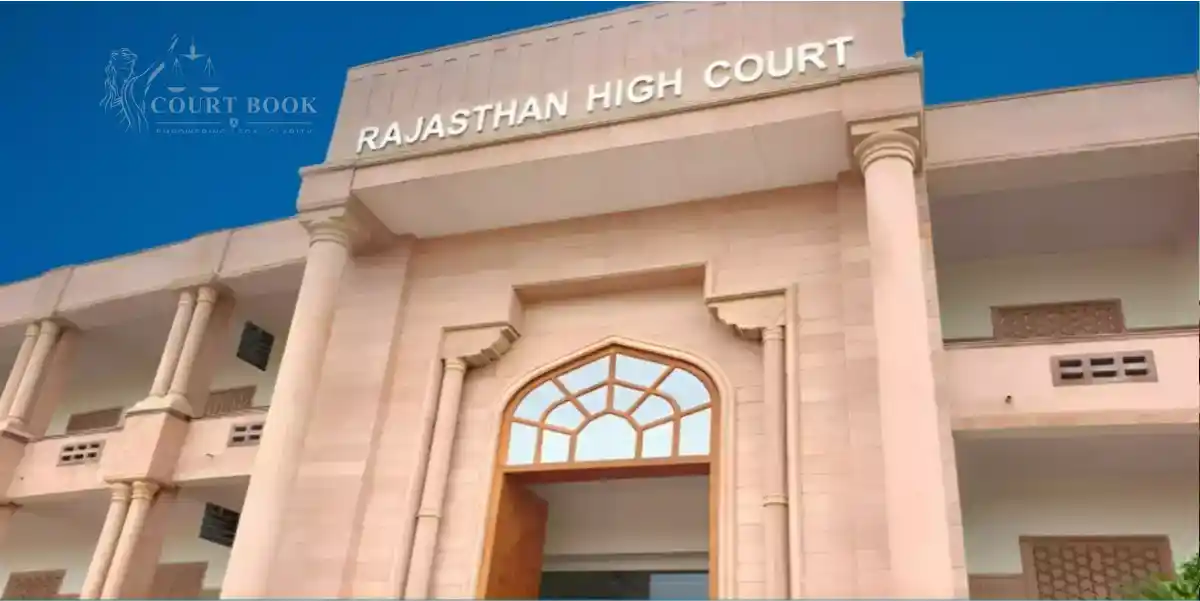
In a significant ruling, the Rajasthan High Court at Jaipur has clarified limits on appellate powers in disciplinary matters. The Court held that an employee’s appeal cannot be turned against him to impose a harsher punishment without following proper legal procedure.
Background of the Case
The case involved a Junior Engineer, Sunil Kumar Yadav, who challenged disciplinary action taken by Jaipur Vidyut Vitran Nigam Limited (JVVNL). He had been penalised for allegedly failing to deposit burnt transformers and related materials within the stipulated time, which reportedly caused financial loss to the department.
Initially, the disciplinary authority imposed a minor penalty stoppage of one annual grade increment without cumulative effect. Dissatisfied, the employee filed an appeal. However, instead of granting relief, the appellate authority enhanced the punishment to stoppage of two increments.
This led the employee to approach the High Court.
Justice Munnuri Laxman examined both the disciplinary findings and the procedure adopted during the appeal.
On the factual dispute, the Court noted gaps in the employee’s own records. The stock register maintained by him did not clearly show the dates on which the transformers were deposited.
“The stock register… does not reflect the date on which they were deposited,” the Court observed, adding that the employee failed to cross-check records with the Assistant Engineer’s office to support his claim.
Because of this, the Court found no reason to interfere with the findings of misconduct or the original penalty.
However, the Court took a different view on the enhancement of punishment during the appeal.
It pointed out that while regulations allow an appellate authority to increase punishment, this power must be exercised through a specific procedure by initiating separate suo motu (on its own motion) proceedings and issuing notice to the employee.
“The appellate authority cannot enhance the punishment in the appeal filed by the delinquent against his own interest,” the bench noted.
The Court further stressed that no such procedure was followed in this case. There was no record showing that the authority initiated suo motu proceedings or issued prior notice proposing enhancement.
The High Court partly allowed the petition. It set aside the appellate authority’s order that had increased the punishment from one increment to two increments.
At the same time, the Court upheld the original disciplinary findings and the initial penalty imposed by the disciplinary authority.
“The order of enhancement… is unsustainable,” the Court concluded, while confirming the remaining findings.
Case Details:
Case Title: Sunil Kumar Yadav vs Jaipur Vidyut Vitran Nigam Ltd & Ors.
Case Number: S.B. Civil Writ Petition No. 1825/2017
Judge: Justice Munnuri Laxman
Decision Date: 20 April 2026
Download Order

