

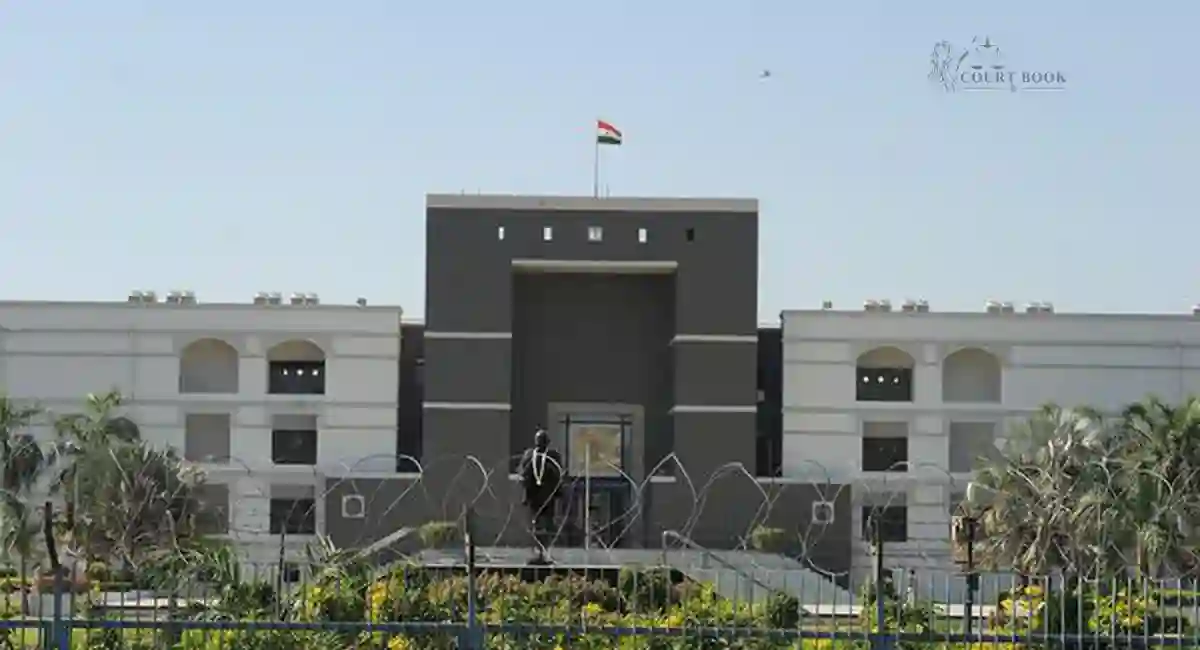
The Gujarat High Court has dismissed a petition filed by a serving Additional District Judge who sought cancellation of disciplinary proceedings initiated against him. The court held that a departmental inquiry against a judicial officer can be started even without a written complaint supported by an affidavit if the disciplinary authority forms an opinion that an inquiry is necessary.
A Division Bench of Justice N.S. Sanjay Gowda and Justice J.L. Odedra delivered the judgment on May 8, 2026, in Special Civil Application No. 5112 of 2026.
Background of the Case
The petitioner, a serving Additional District Judge, challenged the departmental inquiry initiated against him and also sought reinstatement and revocation of his suspension.
According to the judgment, six charges were framed against the officer. The allegations included maintaining an inappropriate relationship with an outsourced clerk, extending financial help to her, using court staff for her business activities, interfering with CCTV functioning, irregular court sittings, and threatening court employees.
The officer argued before the High Court that the inquiry itself was illegal because there was no written complaint supported by a sworn affidavit and verifiable material.
Senior Advocate Percy Kavina, appearing for the petitioner, relied on earlier guidelines issued by the Ministry of Law and Justice and a previous Gujarat High Court ruling involving the same officer.
Court’s Observations
Rejecting the argument, the bench said the Gujarat Civil Services (Discipline and Appeal) Rules, 1971 only require the disciplinary authority to form an opinion that there are sufficient grounds to inquire into alleged misconduct.
The court observed that the rules do not make a written complaint or affidavit a mandatory condition before initiating disciplinary proceedings.
“The statutory rule does not contemplate the requirement of there being any complaint, oral or written, for initiation of inquiry,” the bench stated.
The judges further clarified that the 2014 guidelines regarding complaints against judicial officers were mainly intended to prevent frivolous allegations by disgruntled litigants and could not restrict the High Court’s disciplinary powers.
The bench said the High Court, being the disciplinary authority for judicial officers, can act on information received from various sources if it believes an inquiry is warranted.
“It would be entirely at the discretion of the Disciplinary Authority to initiate an inquiry and form its opinion on the basis of the information that it may have received from various sources,” the court observed.
The court also refused to interfere with the charge-sheet at the present stage, stating that objections regarding vague charges could be raised before the inquiry officer during the proceedings.
Remarks on Written Submissions Filed by the Petitioner
During the hearing, the bench also took note of written submissions personally filed by the petitioner after the judgment had been reserved. The court said some statements made in those submissions appeared to question the independence of judges of the High Court.
The judges observed that the allegations made by the petitioner against a senior High Court judge amounted to an attempt to scandalize the judiciary and could constitute criminal contempt.
Court’s Decision
The Gujarat High Court ultimately dismissed the petition and allowed the departmental inquiry to continue. The bench also directed that the matter relating to the petitioner’s written submissions be placed before the Division Bench dealing with contempt matters for consideration of further action.
Case Details
Case Title: X v. High Court of Gujarat Through Registrar General
Case Number: R/Special Civil Application No. 5112 of 2026
Judges: Justice N.S. Sanjay Gowda and Justice J.L. Odedra
Decision Date: May 8, 2026
Download Order

