The Supreme Court of India has clarified the limits of High Court powers while dealing with amendment pleas in civil cases. The Court held that merits of a case cannot be examined at the stage of deciding whether a plaint amendment should be allowed.
Background of the Case
The dispute arose from an eviction suit filed in 2005 by a landlord seeking possession of a shop on multiple grounds, including alleged rent default and personal need.
The Trial Court, however, dismissed the suit in 2016, holding that the landlord failed to prove genuine (bonafide) requirement of the premises.
During the pendency of the appeal, the landlord passed away in 2022. His legal heirs stepped in and sought to amend the plaint to reflect their own need for the premises stating that a family member intended to use it for professional purposes.
The Appellate Bench of the Small Causes Court allowed the amendment, noting that:
• The original plaint already mentioned need of the landlord and his family members
• The amendment did not introduce a completely new case
• Allowing it would avoid multiple litigations
The court also permitted both sides to lead fresh evidence on the issue.
However, the Bombay High Court set aside this order in 2024. It held that:
• The amendment introduced a new and inconsistent case
• After the landlord’s death, his personal need no longer survived
• Legal heirs could instead file a fresh eviction suit
The Supreme Court disagreed with the High Court’s approach and found serious errors in its reasoning.
The bench observed that the High Court had incorrectly assumed that the original case was based solely on the landlord’s personal need.
“The High Court misdirected itself by failing to notice the pleadings… that included the requirement of family members,” the Court noted.
Importantly, the Court stressed that while deciding amendment applications, courts should not examine whether the case will ultimately succeed.
Referring to settled law, the bench said:
“Whether an amendment should be allowed is not dependent on whether the case… will eventually succeed at trial.”
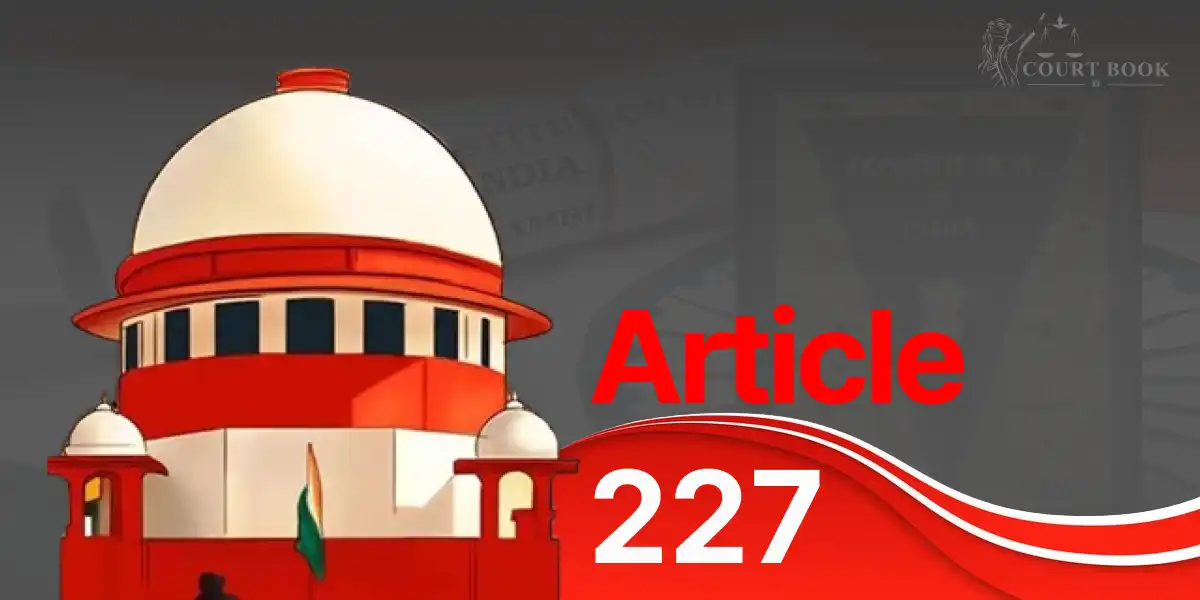
The Court underscored that the High Court exceeded its supervisory jurisdiction under Article 227 of the Constitution.
It clarified that:
• High Courts cannot act like appellate courts under Article 227
• They cannot reassess evidence or examine merits at this stage
• Interference is only justified in cases of jurisdictional error
The bench found no such error in the Appellate Bench’s decision to allow amendment.
Addressing another key issue, the Court rejected the blanket view that a landlord’s claim automatically ends with death.
It held that courts can consider subsequent events, including needs of legal heirs, if they are relevant to the case.
“Subsequent developments… can be taken into account to ensure justice,” the Court observed.
The Supreme Court set aside the Bombay High Court’s judgment dated August 7, 2024, and restored the order of the Appellate Bench allowing amendment of the plaint.
The Court directed the parties to appear before the Trial Court for further proceedings and clarified that it had not examined the merits of the eviction claim.
The civil appeal was allowed, with parties left to bear their own costs.
Case Details
Case Title: Vinay Raghunath Deshmukh v. Natwarlal Shamji Gada & Anr.
Case Number: Civil Appeal arising out of SLP (C) No. 8991 of 2025
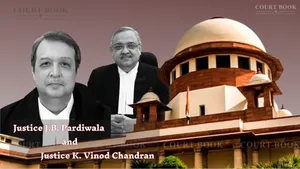
Judges: Justice J.K. Maheshwari & Justice Atul S. Chandurkar
Decision Date: April 24, 2026
Download Judgment



-300x169.webp)
-300x169.webp)